Explainer

RSS Feed
Sunlight_fading_through_ocean_layers

What is a halocline?

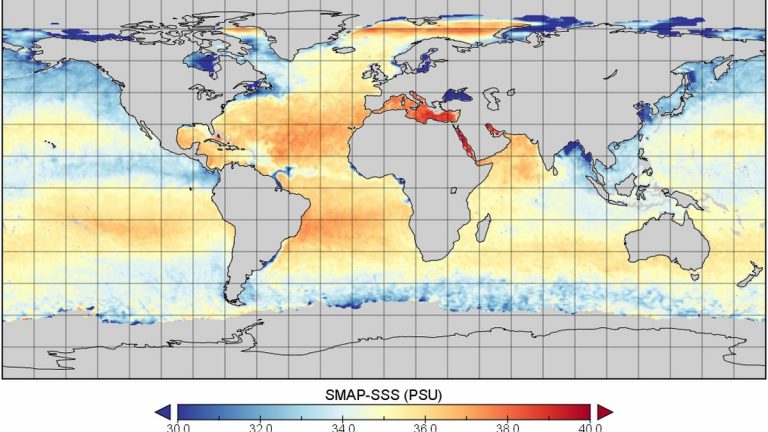
A halocline is a layer in a body of water where salinity changes rapidly with depth. Oceanographers recognize it by measuring a much larger salt difference over a short vertical distance than in the water above or below. The change may occur across several meters or span a much thicker band, depending on the place…

More

More in Explainer

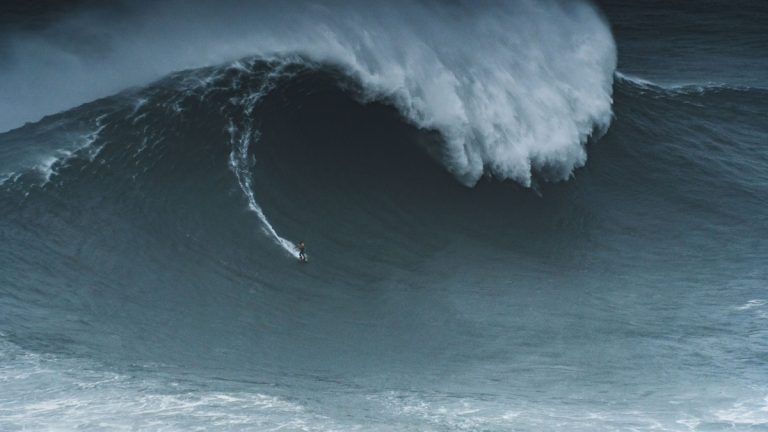
Surfer_below_a_giant_ocean_wave

What is a rogue wave?

A rogue wave is an unusually large, steep wave that appears among much smaller surrounding waves. Oceanographers commonly use a threshold of more than twice the significant wave height, the average height of the highest one-third of waves in a measured record. The definition makes rogue waves relative to the sea state rather than dependent…

Wave_lines_crossing_shallow_water

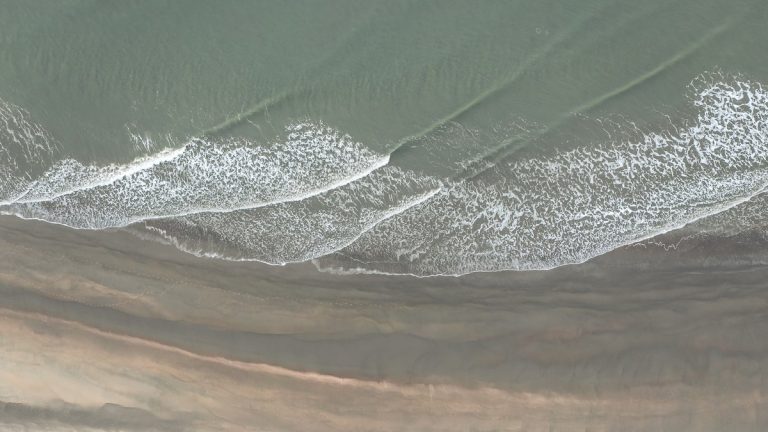
Deep-water vs. shallow-water waves

Deep-water and shallow-water waves are classified by comparing water depth with wavelength, not by judging whether the sea looks deep or shallow. A wave behaves as a deep-water wave when depth is greater than half its wavelength. It behaves as a shallow-water wave when depth is less than one-twentieth of its wavelength. Between those limits…

Breaking_green_ocean_wave

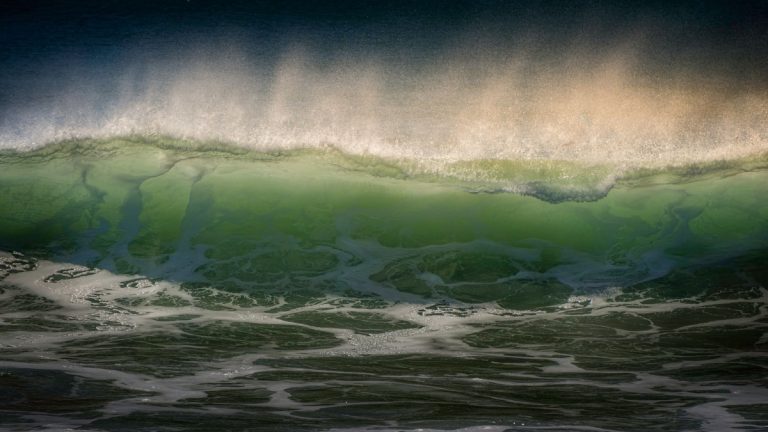
Why do ocean waves break?

Ocean waves break when they enter water shallow enough for the seabed to interfere with their motion. The lower part of the wave slows first. Its wavelength then shortens as the crest grows steeper. Once the crest moves faster than the water beneath can support it, the top pitches forward and releases the wave’s energy…