The European Space Agency’s Euclid announcement reports that the space telescope has discovered 31 ancient quasars from the universe’s earliest era, including two record-setting objects seen as they existed just 670 million years after the Big Bang. The discoveries are described in a study published in Astronomy & Astrophysics and they more than double the known population of such early quasars.
Each of the two most ancient objects shone with the light of about a trillion suns. That glow came from matter swirling into a central supermassive black hole, heating up and releasing extreme amounts of energy. For astronomers, the find opens a wider window onto a period when the first galaxies were still taking shape.
The result also sharpens a long-standing cosmic puzzle. Supermassive black holes seem to have grown to enormous sizes very early in cosmic history. Euclid’s wide view is now giving researchers a larger sample of these rare objects, which can reveal how quickly the first black holes fed and evolved.
Euclid discovers 31 ancient quasars
ESA’s Euclid space telescope found 31 previously unknown quasars in a distant slice of cosmic history. These objects fall in the redshift range from 6.6 to 7.8, which means their light began its journey when the universe was less than a billion years old.
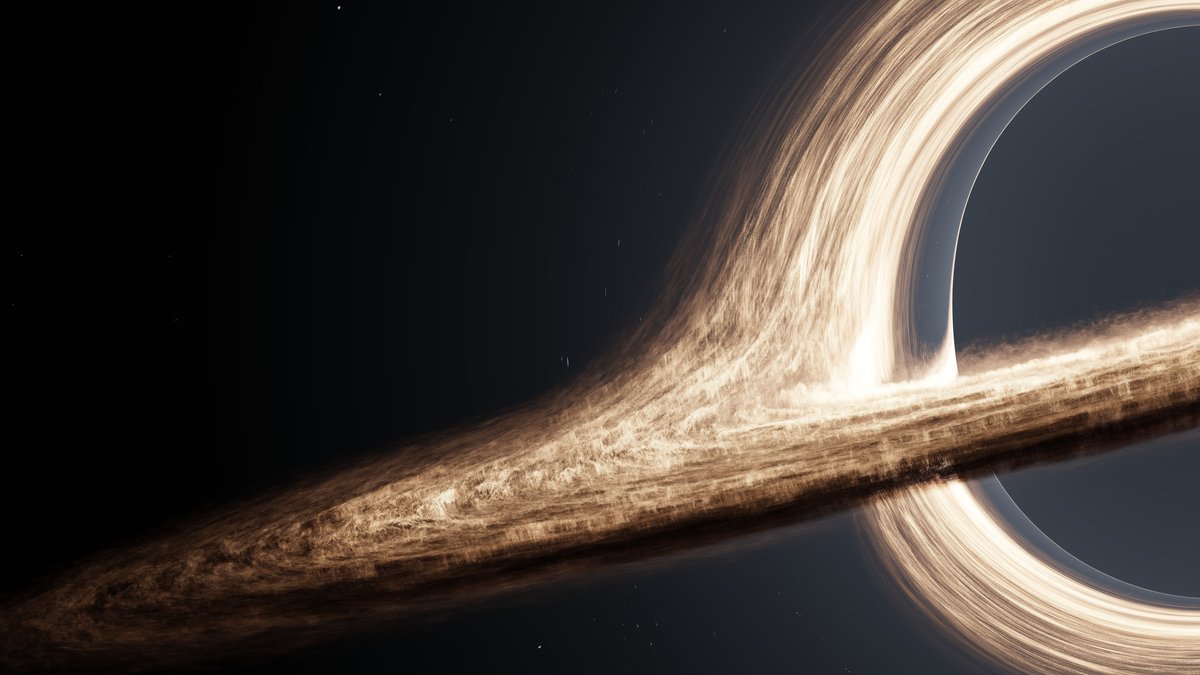
A quasar is the brilliant core of a galaxy powered by a feeding supermassive black hole. Gas and dust spiral inward, heat up and radiate across vast distances. The quasar can outshine the galaxy around it, which makes it visible even from the edge of the observable universe.
Euclid was built to map the dark universe, especially dark matter and dark energy. Its wide-field vision also makes it unusually powerful for finding rare objects scattered across large regions of sky. Early quasars fit that description perfectly. They are bright enough to see across more than 13 billion years of cosmic time, yet uncommon enough that astronomers need enormous surveys to find them.
The newly reported sample includes 12 quasars with redshifts of 7 or higher. That places them within the first 770 million years of the universe. Before this result, astronomers had identified only a small number of quasars from this epoch, which made the early population difficult to study in detail.
Two objects set a cosmic age record
The two most distant objects in the discovery are named EUCL J172902.75+641018.1 and EUCL J125308.55+705432.3. The first has a redshift of 7.77, while the second has a redshift of 7.69. According to ESA, they set a new record for the most ancient quasars ever found.
Those numbers describe how much the universe has stretched their light during its journey to Earth. As space expands, light from distant objects gets shifted toward redder wavelengths. A higher redshift usually points to an earlier cosmic time and a greater distance through the expanding universe.
In this case, the light left the quasars when the universe was only about 5 percent of its current age. The objects were already dazzling by then, which means their central black holes had formed and begun feeding at tremendous rates in a very short cosmic interval.
“These early quasars date back to the Universe’s infancy,” said Daming Yang of Leiden University, lead author of the Euclid discovery paper. The phrase captures why these sources are so valuable. They are beacons from a time when galaxies, black holes and the space between galaxies were all rapidly changing.
The mystery of fast-growing black holes
Supermassive black holes can contain millions or billions of times the mass of the Sun. In the modern universe, they sit at the centers of many large galaxies. Finding them so early raises a difficult question, how did they become so massive so fast?
Several possibilities are being explored by astronomers. The first black holes may have formed from the collapsed cores of massive early stars. Some may have started from heavier seeds, perhaps through the direct collapse of gas clouds. Once formed, they could grow by swallowing nearby material or merging with other black holes.
Quasars offer a way to test these ideas because their brightness is tied to black hole feeding. When material falls inward, it forms a hot disk around the black hole. Friction and gravity heat that disk until it shines fiercely. The more quasars astronomers find from the early universe, the better they can estimate how often these black holes were growing quickly.
“By finding and studying them, we can better understand how these enormous systems formed and grew so quickly,” Yang said. That work will depend on follow-up observations as well as the expanding Euclid survey. Spectroscopy can confirm redshifts, probe chemical signatures and help estimate the masses of the central black holes.
The finding also connects to a broader chapter in cosmic history called the epoch of reionization. During that era, radiation from early stars, galaxies and active black holes transformed the foggy hydrogen gas between galaxies. Bright quasars can act like flashlights shining through that ancient material.
Why faint quasars matter
The newly discovered objects help fill a gap in the census of early quasars. Astronomers have long been able to find the brightest examples. Those rare cosmic lighthouses revealed that massive black holes existed early, yet they gave only a narrow view of the full population.
Fainter quasars can tell a different part of the story. They may represent black holes with smaller masses, lower feeding rates, or different host-galaxy environments. A large sample lets researchers compare the extreme objects with the more ordinary members of the early quasar population.
Euclid’s strength comes from combining deep imaging with a very wide survey. A telescope that looks at only a tiny patch of sky can miss rare sources. A survey that covers huge areas at useful sensitivity has a better chance of catching objects that appear only sparsely across the heavens.
The study’s 31 discoveries show how that strategy is already changing the field. More objects mean stronger statistics. They also give astronomers more targets for powerful observatories on Earth and in space. Follow-up studies can measure black hole growth, quasar environments and the gas that surrounded young galaxies.
Redshift measurements are central to this work because they place each quasar on the cosmic timeline. Photometric observations can identify candidates by their colors. Spectroscopic observations can then confirm their distances and reveal physical details hidden in the light.
What Euclid could find next
Euclid’s six-year mission is designed to survey more than one-third of the sky. The 31 newly announced quasars represent an early glimpse of what that wide scan may deliver. ESA scientists expect the mission to uncover hundreds of similarly ancient quasars as more data become available.
The telescope carries instruments that observe visible and near-infrared light. That combination matters because light from the most distant quasars has been stretched into redder wavelengths by cosmic expansion. Euclid can search broad areas for the color signatures that mark these ancient sources.
“It’s a big step towards understanding these fascinating objects on a more fundamental level,” said Antonio La Marca, an ESA research fellow on the Euclid team. The step is especially important because each confirmed quasar becomes a laboratory for early black hole growth.
The mission’s wider goal is to build the largest 3D map of the universe. That map will help researchers study how cosmic structure grew over billions of years. The quasar discoveries show that the same survey can also reach back into the universe’s first billion years, where the earliest giant black holes were already blazing.
As Euclid continues scanning the sky, astronomers will be watching for more record-breakers and for the quieter majority hiding behind them. Together, those discoveries could reveal whether early black holes grew through intense feeding, massive starting seeds, rapid mergers, or a mix of several processes. For now, the oldest known quasars have given the young universe two brilliant new signposts.