Weightlessness exposed a hidden slip
A study in Scientific Reports followed 18 participants as they worked through a dual task during parabolic flight, the aircraft maneuvers that briefly create microgravity. The volunteers played a modified Pac-Man game as their main job while also listening for rare high tones in an auditory oddball test. Across 25 consecutive parabolas, the main game stayed stable from one gravity phase to the next. The weaker point appeared in the background task: during 0G, people missed more of the target tones.
The pattern is useful because it shows how performance can look steady on the job a crew is told to prioritize, even while a second stream of information starts to slip. Constance Badali and colleagues designed the experiment around that split. In spacecraft, crews often have to keep one task going while also catching sounds or warnings that arrive in the middle of demanding work.
The paper focused on three gravity states that arrived in direct succession during each parabola: normal 1G, about 1.8G hypergravity and then 0G. According to the study, the main game performance did not differ significantly across those phases and reaction times to the target tones also stayed statistically similar. Accuracy on the secondary tone task changed more sharply. In 0G, the error rate for target tones rose significantly compared with both normal gravity and hypergravity.
The team tested a game and a listening task at the same time
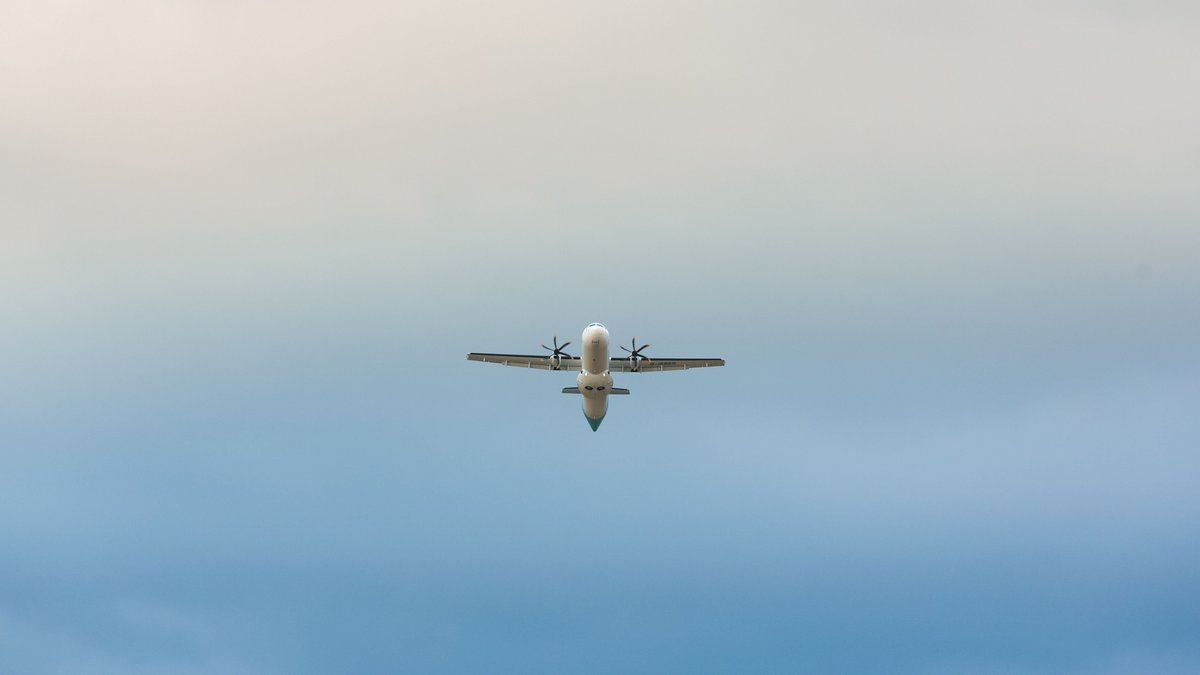
Researchers from the German Sport University Cologne, with co-authors linked to the European Space Agency and the University of Rostock, ran the study during parabolic flights on the A310 ZeroG aircraft operating from Bordeaux. The flight campaigns took place from September 2023 to June 2024. Each parabola gave the team a short window in which the volunteers moved from Earth gravity into heavier loading and then into weightlessness, all while staying seated and strapped in for safety.
The main task, called SpaceMan in the paper, used a modified Pac-Man game controlled with the right hand. The secondary task used an auditory oddball paradigm. Participants heard mostly low tones that they had to ignore, mixed with less frequent high tones that required a quick left-hand press on the space bar. The high tones made up 30 percent of the sounds, the low tones 70 percent. Each trial lasted 18 seconds, which let the researchers fit the test into the short altered-gravity phases of each parabola.
The instructions set the priorities. Participants were told to prioritize the game and aim for a high score, while treating the tones as secondary. That choice gave the experiment a practical edge. Space crews rarely divide attention evenly. They are usually trained to protect the task that carries the biggest operational cost if it fails. The study therefore asked a simple question with real mission relevance: when the brain has to ration attention, what gets preserved and what starts to give way first?
Brain signals suggested early hearing stayed intact while deeper processing weakened
Along with behavior, the team recorded EEG data from a 32-channel cap. The broad electrocortical measures did not show significant differences across the tested gravity levels, which matched the steady performance in the primary game. The more detailed event-related signals told a narrower story. The paper reports a pronounced N100-P200 complex, which the authors interpret as a sign that the oddball sounds were still being registered at an early perceptual stage.
Another signal, the fronto-central N200, appeared for both standard and target tones. The authors discuss this as mismatch negativity, an automatic neural response to an unexpected sound. In plain terms, the brain still noticed that one tone differed from another. The study did not show a P300 component, a later signal often linked with higher-level evaluation of a stimulus. The paper argues that this missing component points to a heavy draw on cognitive resources by the continuous game, leaving less capacity for fuller processing of the tone task.
That interpretation fits the behavioral result. Players kept the main task running, but the secondary task paid a price in 0G. The study does not claim that weightlessness simply shuts down attention. Its result is more specific. Under a setup where one continuous task had explicit priority, participants still perceived the tones at an early level, yet they were more likely to fail the required response when the aircraft entered microgravity.
Why the result matters for future crews
For space operations, the message is less about arcade games than about workload design. A crew member can appear to be performing normally on the task that is front and center, while a second channel, especially one that depends on quick discrimination and a timely response, becomes less reliable. In a cockpit or habitat, that second channel might be an alert tone, a checklist cue, or a communication that arrives at the wrong moment.
The authors connect that risk to cognitive bottlenecks. Human attention has limits and those limits become more important when gravity changes are added to an already demanding environment. Their discussion points toward task prioritization, training and automation as ways to reduce the load on crews. If some actions become more routine through practice, more capacity may remain available for unexpected events. The paper also argues that individual differences were substantial enough that personalized workload management could matter for mission safety.
Several limits keep the finding in bounds. The sample was small, the 0G periods were brief and the volunteers were seated rather than floating freely through a cabin. Everyone also received scopolamine for motion sickness, although the authors note that earlier work suggests standard anti-nausea doses do not meaningfully alter attention or the electrophysiological measures used here. The study therefore supports a careful conclusion: in short bouts of altered gravity, a well-practiced primary task may hold up, but a secondary signal-detection task can become more error-prone during weightlessness.
What the study does and does not settle
One reason this paper stands out is its task design. Earlier altered-gravity studies from related groups often used more discrete tasks such as mental arithmetic. Here, the primary task was continuous and game-like, with constant navigation demands. That difference may explain why the paper did not reproduce some earlier patterns, such as faster responses in microgravity. The authors suggest that the structure of the task itself may strongly influence how gravity affects the brain and behavior.
More work is still needed before these results can be treated as a general rule for astronauts. Parabolic flight creates short repeated transitions, rather than the long exposure found in orbit or on a planetary surface. Operational crews also manage richer streams of information than one game and one tone test. Even so, the study offers a concrete warning for spacecraft design and training: when workload rises, performance can remain solid on the job people are trying hardest to protect while a quieter secondary demand begins to fail.
For that reason, the article in Scientific Reports adds a practical piece to human spaceflight research. It suggests that monitoring only the most obvious task may miss an important part of crew readiness. The cleaner lesson is to watch how people handle the second thing, especially in moments when gravity shifts quickly and attention has to be spent with care.