A study in Science Advances has identified a strange class of cosmic dust that may come from a near-Earth asteroid unlike anything represented in meteorite collections. The particles, found in Antarctic samples and on urban rooftops, carry chemical fingerprints that point to a sulfur-rich parent body scientists have yet to recover as a larger meteorite.
The finding turns some of Earth’s tiniest space visitors into evidence for a hidden member of the Solar System’s small-body population. These particles are micrometeorites, grains of extraterrestrial material that drift into our atmosphere every day. Many burn, melt and cool into rounded beads called cosmic spherules.
Because these grains are so small, they can be collected in places where Earthly contamination is low, such as Antarctica. They can also be found in carefully sorted rooftop collections. In this case, both settings revealed particles with the same unusual traits.
A new fingerprint in cosmic dust
The researchers focused on a distinctive type of space dust with an oxygen isotope pattern that had puzzled scientists. Oxygen comes in several forms, or isotopes and their ratios can act like a fingerprint. In meteorites and micrometeorites, those fingerprints can reveal links to parent asteroids.
About 10% of known cosmic spherules belong to a category called Group 4. These grains are depleted in oxygen-16 compared with more familiar meteorite materials. That unusual signature has made them difficult to connect with any known meteorite group.
The Science Advances paper describes the particles as a “previously unidentified subset of micrometeorites.” The subset has been named SCumPo, short for sulfur-rich cumulate olivine. The name points to two key clues, the sulfur-rich chemistry and the way crystals accumulated as the molten particles cooled.
This matters because meteorites give scientists only a partial sampling of the objects crossing Earth’s orbit. Micrometeorites arrive far more often. If they preserve a rare chemical signature, they can reveal asteroid material that has escaped collection in larger rocks.
Tiny spherules from Antarctica and rooftops
The team examined 10 CumPo cosmic spherules collected in Antarctica. CumPo refers to a texture in which olivine crystals appear in clustered patterns. Those crystals gradually grow larger from one side of the spherule to the other.
That texture records part of the particle’s fiery entry through Earth’s atmosphere. When a dust grain hits the atmosphere at high speed, it can heat until it melts. As the droplet cools, minerals crystallize inside it. The resulting sphere can preserve hints of speed, heating and original composition.
Researchers also compared the Antarctic particles with similar grains recovered from urban rooftops. At first glance, rooftops seem like a messy place to study cosmic dust. Careful sorting and analysis can still isolate extraterrestrial particles from industrial debris and local dust.
The match between the two collections strengthened the case that the particles represent a real cosmic population. Their shared crystal textures, chemistry and oxygen isotope patterns all pointed to the same broad origin.
The sulfur-rich clue
The standout feature of the new subgroup is sulfur. The SCumPo particles contain sulfur-rich glass and frequently preserve tiny iron-nickel-sulfur droplets. Those droplets are valuable because sulfur is easily lost during heating, so preserved sulfides can speak to the original material and entry conditions.
Another clue comes from magnetite, an iron oxide mineral. The SCumPo particles contain very little magnetite. That suggests they experienced highly reducing conditions during atmospheric entry, a chemistry setting where oxygen is limited and metals can remain less oxidized.
The olivine crystals also carry a notable chemical signal. They show consistently low nickel concentrations. In meteorite studies, such element patterns help researchers sort out whether a particle resembles ordinary chondrites, carbonaceous chondrites, or material from a less familiar parent body.
Together, the sulfur-rich glass, sulfide droplets, low magnetite and low-nickel olivine crystals build a specific profile. It’s the kind of profile that can make a microscopic bead scientifically louder than its size suggests.
Oxygen isotopes point to mixed material
Oxygen isotope measurements gave the team one of the most important clues. Some individual spherules contained both oxygen-16-rich regions and oxygen-16-poor regions. That means a single grain carried more than one isotopic component before it entered the atmosphere.
One component resembles anhydrous material found in carbonaceous chondrites. Anhydrous materials formed or survived with little water bound into their minerals. The other component matches the oxygen-16-poor character associated with Group 4 cosmic spherules.
This combination suggests the dust grains were composite materials. In other words, their parent material likely contained multiple ingredients before atmospheric entry melted them into tiny spheres. The melting process blurred much of their original mineral structure, but the isotope record still preserved a memory of the mixture.
Oxygen isotope signatures are especially useful in this work because they can survive where textures alone become ambiguous. When heat destroys delicate mineral relationships, isotope ratios can still point back to broad families of Solar System material.
A fast path from near-Earth space
The researchers also used computer simulations to estimate how the particles entered Earth’s atmosphere. Their crystal textures are best explained by entry speeds of about 14 to 17 kilometers per second. Those speeds are relatively fast for dust arriving from Earth-crossing paths.
The modeling points toward near-Earth objects as the likely source population. These are asteroids and related bodies whose orbits bring them into Earth’s neighborhood. Dust shed from such objects can meet Earth at speeds and angles that shape the melting history of each particle.
The entry speed matters because the atmosphere acts like a natural laboratory. As particles plunge through air, they heat, melt, evaporate and crystallize. A particle’s final texture depends on how hot it became, how long it stayed molten and how quickly it cooled.
By comparing textures with simulations, scientists can work backward from a tiny sphere to a plausible orbital history. That connection gives the particles a route from a parent asteroid to a sample vial on Earth.
A missing meteorite parent body
The team’s interpretation points to a primitive, sulfur-rich carbonaceous asteroid related to the CM-CO-CY chondrite family. Carbonaceous chondrites are among the most chemically primitive meteorites. They can contain volatile elements, water-altered minerals and records of early Solar System chemistry.
The proposed parent body appears especially close to CY-like material. CY chondrites are known for signs of heating and dehydration in material that began as water-rich. The SCumPo grains suggest a parent asteroid that may have evolved from a hydrated body before shedding dust into a near-Earth orbit.
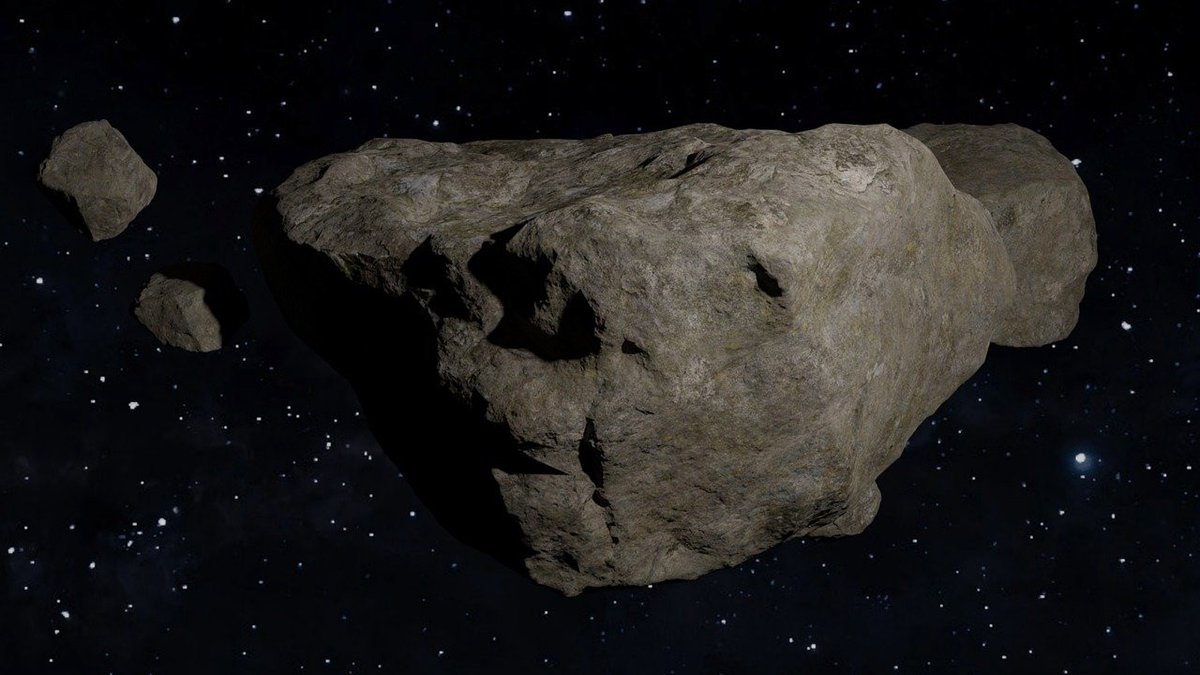
The Science Advances abstract describes the source as a “previously unsampled, primitive, sulfide-rich CY-like near-Earth asteroid.” That phrase captures the central surprise. Tiny dust grains appear to be sampling an asteroid type that larger meteorite collections have yet to capture.
That makes the finding useful for more than cosmic dust studies. It also helps refine the inventory of materials moving through near-Earth space. Every new parent-body signature adds detail to the story of how asteroids formed, changed, broke apart and delivered material to our planet.
Future asteroid missions and new meteorite finds could test the idea. If scientists eventually identify a larger rock with the same sulfur-rich chemistry and oxygen isotope pattern, it would give researchers a direct match for these strange microscopic visitors. Until then, SCumPo spherules remain tiny messengers from a missing meteorite parent body.