Brain scans from 16 astronauts found small signs of bleeding at rates that appeared unusually high for a healthy group of their age. The finding was strongest among astronauts who had flown on earlier missions, while scans taken after a typical six-month stay aboard the International Space Station showed no statistically clear short-term increase.
The marks, called cerebral microbleeds, are tiny areas where blood has leaked from small vessels in the brain. A 2024 study in Frontiers in Physiology examined whether exposure to spaceflight could affect their number. Researchers compared scans taken before launch with scans collected after astronauts returned to Earth.
The evidence remains preliminary because the group was small, the astronauts with previous missions were older and the study followed them for only seven months after landing. Even with those limits, the results raise an important question for future lunar and Mars crews: could damage to the brain’s smallest blood vessels appear slowly, years after a mission?
What cerebral microbleeds reveal
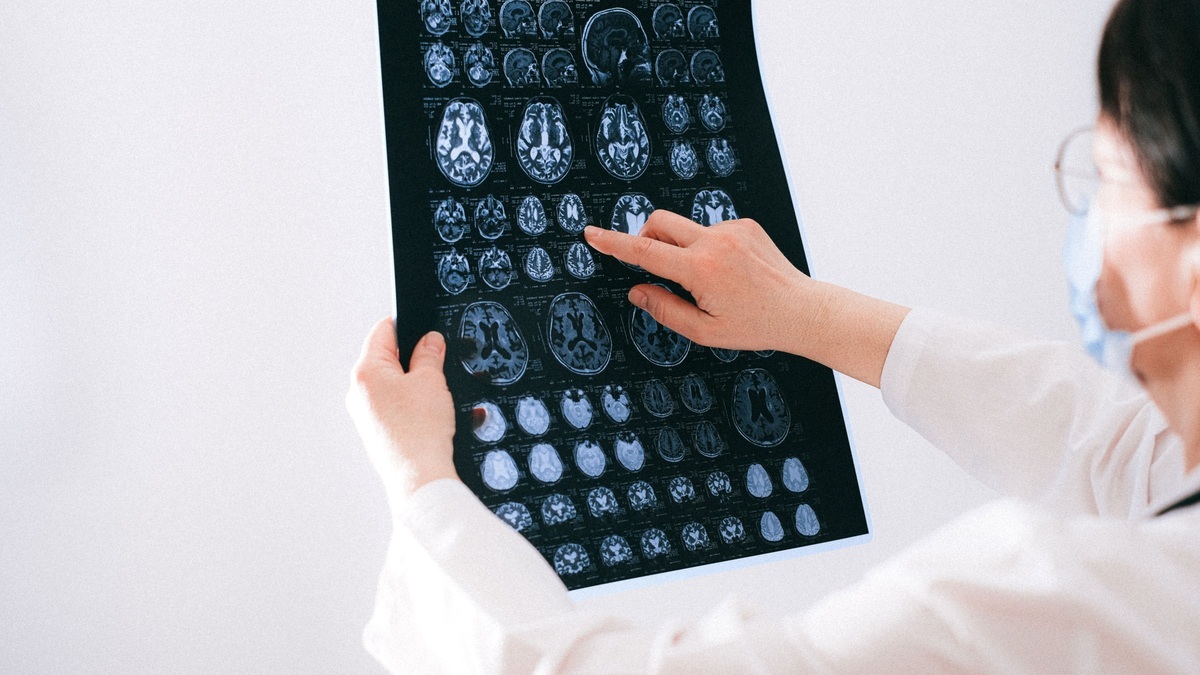
Cerebral microbleeds are usually less than 10 millimeters wide. They often cause no clear symptoms, so people may carry them without knowing. On certain MRI scans, they appear as dark, round spots left by blood products that contain iron.
Doctors use these marks as early clues of small vessel disease, a group of conditions that affect the brain’s fine network of arteries and capillaries. Larger numbers of microbleeds have been associated with a greater risk of stroke, problems with thinking and poorer health in older populations. A few spots in an individual scan cannot predict a specific outcome.
Location also gives doctors useful information. Microbleeds near the brain’s outer regions often have different causes from those deep inside the brain or near the brainstem. Researchers therefore record where each spot appears as well as the total count.
The astronaut study considered two related measures. Prevalence described how many people already had at least one microbleed. Incidence tracked new spots that appeared between scans. Keeping those measures separate helped the team compare earlier spaceflight experience with changes linked to the latest mission.
MRI scans followed 16 astronauts
The research team studied 16 astronauts, including seven women. Their average age at the first assessment was about 46. Six had already completed at least one spaceflight, while 10 were preparing for their first trip beyond Earth.
Each astronaut received a brain scan about seven months before launch and another roughly two weeks after landing. Fourteen returned for a third scan about seven months later. Their missions aboard the International Space Station lasted about 200 days on average.
The team used susceptibility-weighted imaging, or SWI, on a 3-tesla MRI machine. SWI is especially sensitive to iron left behind after a tiny blood leak, which makes it useful for finding microbleeds that may be difficult to see with more general brain scans. The complete study is also available through the PubMed Central archive.
Three raters examined possible spots while being kept unaware of identifying details. One was an experienced neuroradiologist with 10 years in clinical and academic practice. The raters first searched for candidates, then compared the same brain locations across all available time points. Final results were based on majority agreement.
Lead author Ford Burles and colleagues carried out the work through the Canadian Space Health Research Network and the University of Calgary. NASA’s Johnson Space Center and the university approved the human research procedures and every participant gave written consent.
Rates were high before launch
Six of the 16 astronauts already had microbleeds on their preflight scans. Together, those six people carried 15 spots, with individual counts ranging from one to six. The resulting prevalence of 37.5 percent appeared high when compared with earlier studies of healthy adults scanned using similar equipment.
The comparison studies reported prevalence rates of 8.7 percent, 14 percent and 19 percent. Their participants were also much older, with average ages ranging from nearly 64 to about 75. Age generally raises the chance of finding microbleeds, yet the astronaut group averaged about 46 years old.
Among the six astronauts with previous spaceflight experience, three had at least one microbleed before the mission examined in the study. Their 50 percent prevalence was higher than the estimates in the older comparison groups. Three of the 10 first-time astronauts also had spots, producing a prevalence of 30 percent.
The authors described the result cautiously because comparisons across separate studies can be affected by differences in scanners, image settings, health histories and participant selection. Their abstract states, “We identified evidence of higher-than-expected microbleed prevalence in astronauts with prior spaceflight experience.”
Six-month missions brought no clear short-term rise
Counts increased slightly across the three scanning periods. Researchers found 15 microbleeds before flight, 17 about two weeks after landing and 19 at the final assessment roughly seven months later. Statistical testing found that the changes could reasonably have resulted from chance within such a small group.
Three new spots appeared in one astronaut by the early postflight scan, while one spot in another astronaut was no longer visible. Two additional spots appeared in separate astronauts by the last assessment. Across all time points, the researchers identified 20 unique microbleeds, including the one that appeared to resolve.
No astronaut developed a first microbleed after the mission. Every new spot occurred in someone who already had at least one before launch. The result weakens a simple explanation in which a single six-month mission quickly produces visible microbleeds in previously unaffected astronauts.
A longer follow-up period could reveal a different time course. Damage to very small blood vessels may develop slowly after an exposure, or earlier injuries may become visible only after biological changes build up. The study’s seven-month postflight window could capture immediate effects more readily than changes that take several years.
Every microbleed appeared in the brain’s lobes
All of the spots were lobar microbleeds, meaning they appeared in or near the outer parts of the brain. None were identified in deep structures such as the thalamus and basal ganglia. The researchers also found none in the brainstem or cerebellum.
About 60 percent appeared in the frontal lobes, which support planning, movement, decision-making and aspects of behavior. Another 35 percent were in the temporal lobes, areas involved in memory and the processing of sound. A single spot appeared in a parietal lobe.
All positively identified microbleeds. Subject numbers correspond to those presented in Figure 1. Credit: Burles and colleagues, Frontiers in Physiology.
A pattern limited to the lobes can be associated with cerebral amyloid angiopathy, a condition in which a protein called amyloid beta collects in blood vessel walls. The scan pattern alone cannot establish that diagnosis. Cerebral amyloid angiopathy is more common in older people and firm confirmation usually requires examination of brain tissue.
The location may still help future research. If larger astronaut studies find the same distribution, researchers could compare it with patterns linked to radiation exposure, changes in fluid movement and other extreme environments. A repeated anatomical pattern would offer clues about which biological process deserves closer study.
Age clouds the link to earlier missions
The astronauts with previous flight experience were about nine years older, on average, than those preparing for their first mission. Age is a known influence on microbleed prevalence, so the study could not cleanly separate the effects of past missions from the effects of growing older.
Within the group of 16, age was not statistically linked with either the presence or number of spots. The relationship still pointed in the direction expected from earlier research, with older participants tending to have more. A sample this small has limited power to detect a modest age effect.
Astronaut selection adds another layer. Space agencies choose people who are generally healthy and physically capable, creating what researchers call the healthy astronaut effect. Astronauts often show lower rates of illness and death than broad population groups, especially when compared without careful matching.
Finding a microbleed prevalence similar to or higher than that of adults decades older therefore drew attention. A firm comparison will require a larger control group scanned on the same machine with the same SWI settings. Controls should also resemble the astronauts in age and cardiovascular health.
Researchers will need detailed records of each astronaut’s mission length and radiation dose. Other relevant information includes blood pressure, medical history and time since the last flight. With more participants, scientists could test how each factor contributes without allowing age to dominate the result.
Brain changes may unfold over years
Two major features of spaceflight could affect the brain’s blood vessels. Microgravity shifts fluids toward the head because gravity no longer pulls as much blood and water toward the legs. The shift changes pressure and flow through vessels in the head, while the body adjusts its heart and circulation to the orbital environment.
Ionizing radiation presents another possible route. Particles moving through tissue can damage cells lining blood vessels and may promote inflammation. Radiation can also contribute to stiffening or structural injury in vessels, although doses and exposure patterns in space differ greatly from those used in medical treatment.
The six experienced astronauts had returned from their earlier missions an average of more than seven years before their first scan in this project. Such a gap would provide time for a slow process to leave visible marks. The study cannot determine when their microbleeds formed because scans from the years surrounding those previous missions were unavailable.
Research involving people who received radiation therapy offers one example of delayed development. In one cited study, cerebral microbleed counts rose by about 18 percent per year after treatment and the greatest burden appeared in a person scanned roughly 15 years later. Cancer therapy delivers a different type and amount of radiation, so the comparison supplies a possible timeline rather than a direct model of astronaut exposure.
Other astronaut MRI studies have reported enlarged fluid-filled spaces around brain vessels after long missions. Those spaces appeared to change more clearly in first-time astronauts, while the microbleed study found its strongest prevalence signal among experienced fliers. The two features may respond over different periods, with fluid changes appearing sooner and vessel injuries developing more gradually.
MRI screening could catch delayed damage
When the paper was published in 2024, the authors reported that NASA’s then-current Lifetime Surveillance of Astronaut Health MRI protocol lacked the specialized sequences needed for reliable microbleed detection. Their recommendation applied to the monitoring program described at that time.
Adding SWI, or an equivalent sequence made by another scanner manufacturer, could help doctors track tiny blood leaks across an astronaut’s career. Quantitative susceptibility mapping offers another way to measure magnetic changes caused by iron. Newer multi-echo scans may collect several types of brain information during one session.
Consistent scans would be most useful when collected before an astronaut’s first flight and repeated at planned intervals after each mission. Long follow-up could show whether spots appear soon after landing, build slowly over many years, or remain stable. The University of Calgary team also stressed that larger samples are needed before assigning a cause.
Privacy poses a practical challenge because the astronaut corps is small and medical images contain sensitive information. International cooperation could increase the number of participants, provided agencies use shared scanning methods and strong privacy safeguards. NASA’s research highlights later included the study among work connected with astronaut health and human space exploration.
Future Moon missions and possible journeys to Mars will expose crews to longer periods away from Earth, with radiation protection and medical support more limited than aboard the space station. Regular brain imaging could reveal whether microbleeds remain rare markers in certain individuals or become a measurable long-term risk of repeated spaceflight. Broader mission context is available from NASA’s Human Research Program and NASA’s International Space Station overview.