Aurora Forecast Tonight
- Data updated
- Source data dated
- Editorially updated
The newest refresh was unsuccessful or delayed. The last verified data is shown.
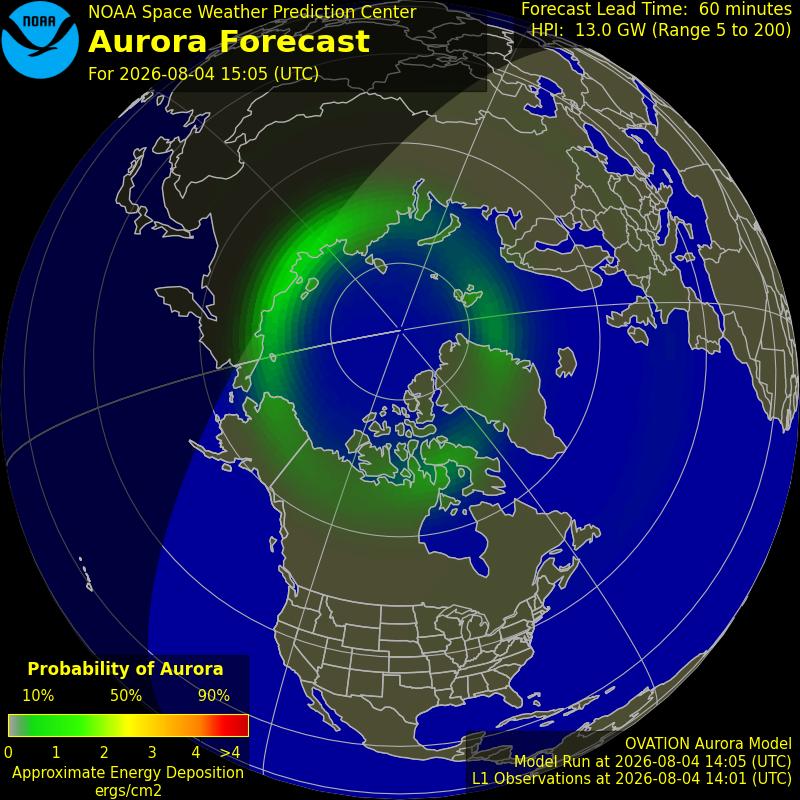
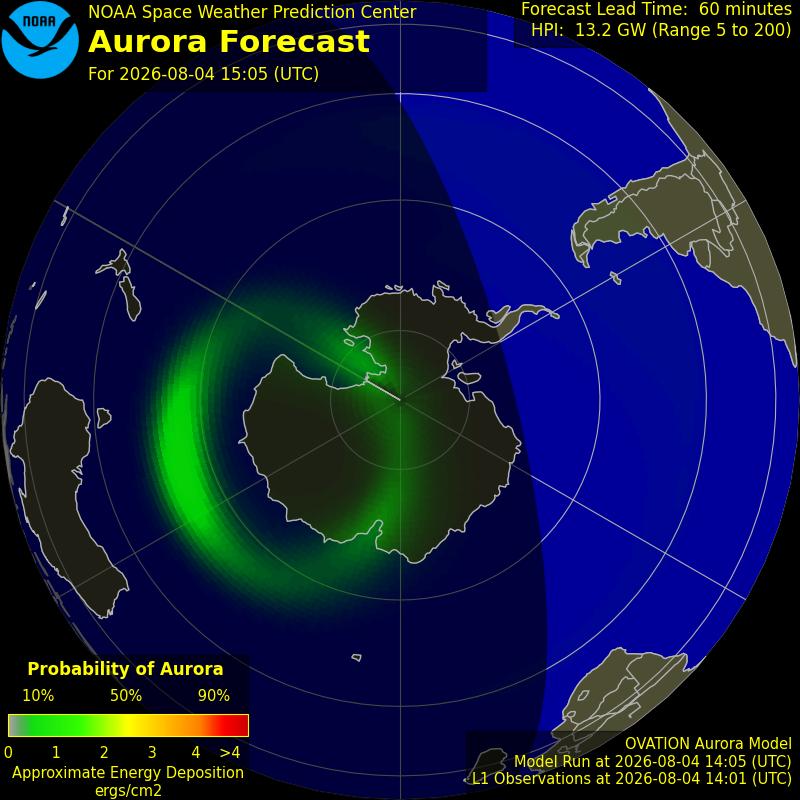
Visibility depends on more than the model. Cloud, daylight, moonlight, local darkness, and light pollution determine whether an aurora can actually be seen. The percentages describe modeled auroral occurrence, not your personal chance of seeing it.
The latest short-range aurora forecast
This page displays the NOAA Space Weather Prediction Center OVATION forecast for the Northern and Southern hemispheres. The model estimates the location and intensity of auroral activity roughly 30 to 90 minutes ahead.
How to read the colors and percentages
Brighter model colors indicate a greater modeled chance of auroral occurrence in the overhead area. They are not a personalized probability of seeing the aurora from the ground. A low aurora can sometimes be visible toward the poleward horizon beyond the most intense part of the oval.
How often it updates
ARGO.net checks NOAA every five minutes. The forecast can shift quickly when the solar wind and interplanetary magnetic field change.
Will it actually be visible?
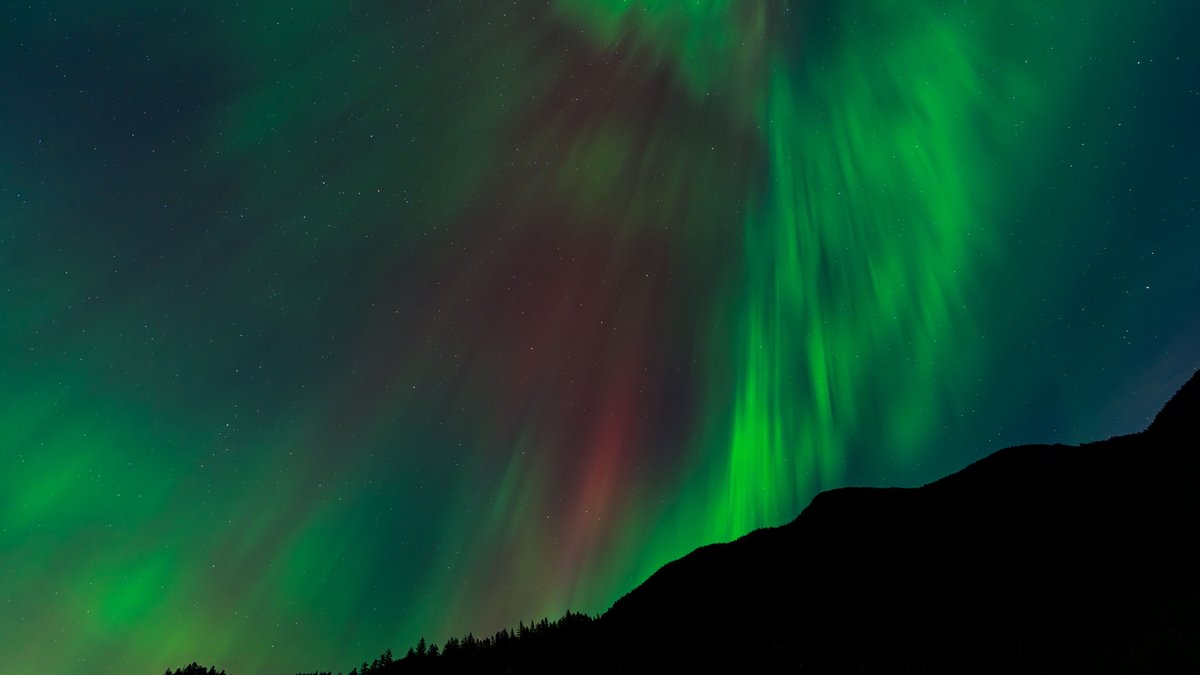
You still need darkness, a clear sky, and a reasonably unobstructed poleward view. Twilight, moonlight, cloud, haze, mountains, and artificial light can hide a forecast aurora. Cameras may record colors and structure that are difficult to see with the unaided eye.
For broader space-weather context
Use this short-range map together with ARGO.net’s Space Weather Today dashboard and NOAA’s watches, warnings, and alerts. Geomagnetic forecasts describe large-scale conditions; local visibility remains uncertain.