Space Weather Today
- Data updated
- Source data dated
- Editorially updated
The newest refresh was unsuccessful or delayed. The last verified data is shown.
For operational warnings and forecasts, always consult NOAA SWPC directly.
Space weather describes changing conditions produced by the Sun and the near-Earth space environment. Solar flares, eruptions of magnetized plasma and fast solar wind can disturb Earth’s magnetic field, alter the upper atmosphere and, in sufficiently strong cases, affect radio communication, satellite operations, navigation systems and power grids. They can also produce auroras at lower latitudes than usual.
The live display above summarizes current measurements and official products from the National Oceanic and Atmospheric Administration’s Space Weather Prediction Center (NOAA SWPC). Conditions can change quickly, but a single elevated measurement does not by itself establish that significant effects will occur at a particular location.
The main space-weather signals
Solar-wind speed measures the flow of charged particles passing observation spacecraft upstream of Earth. Typical conditions vary, while high-speed streams and coronal mass ejections can produce faster flows. Speed is only one part of the picture; the density and magnetic properties of the solar wind also matter.
Interplanetary magnetic field measurements describe the magnetic field carried by the solar wind. The north–south component, commonly called Bz, is especially important. When it turns southward for a sustained period, it can connect more efficiently with Earth’s northward magnetic field and transfer energy into the magnetosphere. A brief southward value is not enough to predict the eventual strength of a geomagnetic storm.
Kp is a planetary index of geomagnetic activity on a scale from 0 to 9. It is derived from ground-based magnetometer observations in three-hour intervals. A Kp value of 5 corresponds to the threshold for a minor, G1 geomagnetic storm under NOAA’s scale. Kp summarizes broad activity; local magnetic disturbance and aurora visibility can differ.
Solar X-ray flux is used to classify solar flares. Classes progress through A, B, C, M and X, with each letter representing a tenfold increase in peak X-ray flux. Strong flares can cause radio blackouts on the sunlit side of Earth, but a flare is not the same phenomenon as a coronal mass ejection, and the two do not always occur together.
NOAA’s three space-weather scales
NOAA communicates major conditions through three five-level scales:
- G1–G5 geomagnetic storms describe disturbances in Earth’s magnetic field.
- S1–S5 solar radiation storms describe elevated energetic-particle conditions.
- R1–R5 radio blackouts describe impacts associated with solar X-ray emissions.
The numbers are not interchangeable. A strong radio blackout does not automatically mean there is an equally strong geomagnetic storm or radiation storm. Each scale concerns different physical measurements and expected effects.
From the Sun to Earth
Electromagnetic radiation from a flare reaches Earth in about eight minutes, so associated radio effects can begin rapidly. Energetic particles may arrive later. A coronal mass ejection generally takes much longer—often one to several days—to travel from the Sun to Earth, and many eruptions miss the planet entirely.
Spacecraft located near the L1 point, roughly 1.5 million kilometers sunward of Earth, sample the solar wind before it reaches the magnetosphere. Depending on the flow speed, those measurements may provide tens of minutes of lead time. They are valuable for short-term awareness but are not a long-range forecast.
Aurora visibility
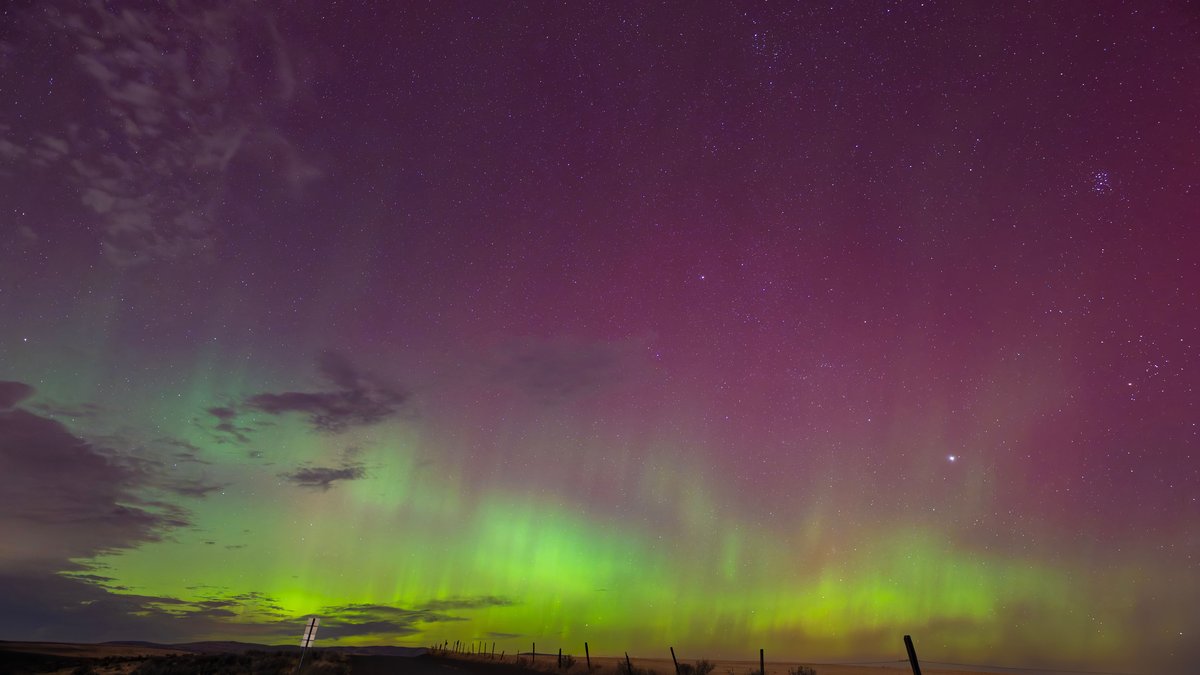
Geomagnetic activity can expand the auroral oval toward lower latitudes. Visibility still depends on darkness, cloud cover, light pollution, the timing and persistence of activity and the observer’s view toward the relevant horizon. A high Kp forecast is therefore an indication of potential, not a promise that an aurora will be visible from a specific city.
For viewing decisions, consult NOAA SWPC’s current aurora products together with a local weather forecast. Use dark-adapted eyes or a camera capable of longer exposures, but remain on safe public land and avoid stopping on roads.
Possible technological effects
Most routine space weather has little noticeable effect on daily life. Stronger events can increase atmospheric drag on low-Earth-orbit satellites, interfere with high-frequency radio, degrade satellite-navigation accuracy, induce currents in long conductors and increase radiation exposure at high altitude or in space. Operators use forecasts and alerts to take appropriate technical precautions.
Space-weather scales describe broad possible effects and do not establish that every listed effect is occurring. Official alerts from infrastructure operators and public agencies should take priority over generalized online summaries.
Methodology and sources
The live module retrieves selected machine-readable observations and summary products from NOAA’s Space Weather Prediction Center, including its real-time solar-wind products and public data services. ARGO.net presents the latest available values, may convert units and adds plain-language context. We do not produce independent operational forecasts or warnings.
Descriptions of storm levels follow NOAA’s official Space Weather Scales. Forecasts, watches, warnings and alerts should be verified on the SWPC website, particularly during rapidly developing conditions.
Limitations
- Real-time spacecraft data can contain gaps, spikes or provisional values.
- Kp represents planetary-scale conditions and is reported over a three-hour interval.
- A measurement at L1 does not guarantee a particular effect at Earth.
- Aurora forecasts have geographic, timing and local-weather uncertainty.
- This educational page is not a substitute for NOAA alerts or an operator’s safety procedures.
Update log
- July 2026: ARGO Space Weather Today launched with NOAA SWPC measurements, scale definitions and practical interpretation guidance.