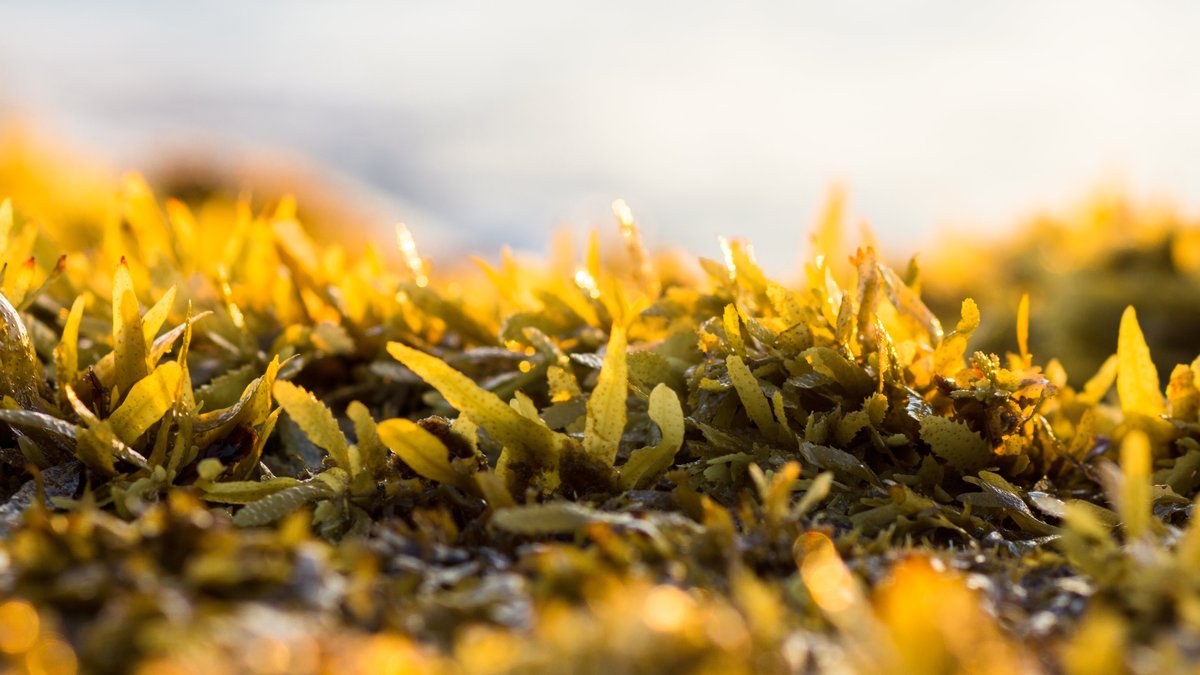
Ocean currents gather Sargassum into loose golden-brown rafts that drift across the sea. Each raft begins as a tangle of branches, leaflike blades and tiny round floats. Wind and currents can bring many rafts together into long weedlines that run across the surface. Far offshore, that living cover shelters animals in a place with few hiding spots. Near a crowded coast, the same seaweed can pile up in thick bands, change shallow-water conditions and create an urgent cleanup problem.
Sargassum is a genus of large brown algae, or seaweed. The kinds best known from the open Atlantic spend their entire lives afloat, rather than growing from a rocky seabed. Their round pneumatocysts are gas-filled sacs that supply buoyancy. NOAA Ocean Exploration describes how this design lets the algae form island-like masses at the surface in its Sargassum overview. The detail matters because floating seaweed has a very different role from seaweed rooted along a shore.
That role is increasingly visible. Satellite observations have tracked recurring accumulations across the tropical Atlantic since 2011. Some stay far from land. Others travel into the Caribbean, Gulf of Mexico and Florida waters, where waves and onshore winds can push them onto beaches. Sargassum therefore has two connected stories. It is a productive open-ocean habitat and it can become a damaging coastal inundation when too much arrives in the wrong place.
A seaweed built to drift
Most familiar seaweeds attach to the bottom with a holdfast, a rootlike structure that grips rock or another hard surface. The pelagic Sargassum of the Atlantic follows another path. It drifts freely and can reproduce while afloat. That life history lets it persist in waters far from a coast. The buoyant sacs lift its leafy branches toward sunlight, where the algae can photosynthesize and make the energy it needs to grow.
Up close, a mat is more than a single plant. Its tangled structure slows water and creates pockets of shade and cover. Small shrimp and crabs can shelter there. Juvenile fish find food and protection from larger hunters. Sea turtles use mats during early life stages, when open water offers little refuge. The sargassumfish, a camouflaged frogfish relative, is especially tied to this floating world and spends its life among the fronds.
As the algae ages, storms break it apart and currents spread it around. Some fragments remain at the surface. Some eventually lose buoyancy and sink. NOAA notes that sinking material can carry carbon into deeper food webs, where fishes and invertebrates can use it as energy. This natural turnover helps explain why a patch of Sargassum at sea is a moving ecosystem with a continuing role below the surface.
The Sargasso Sea is shaped by currents
The Sargasso Sea is the region most closely associated with these floating mats. It sits within the North Atlantic subtropical gyre, a broad circulation of currents. The Gulf Stream forms much of its western edge, while other major currents mark its northern, eastern and southern sides. Its borders shift with the currents, so the sea has no coastline. NOAA calls it the only sea defined entirely by ocean currents in its description of the Sargasso Sea.
Within that circulating water, Sargassum creates habitat that supports a wide food web. Turtles, crabs, shrimp, fishes and seabirds use the rafts. The area also matters to migratory species and to fish that support coastal fisheries. For managers, the value of these mats has practical consequences. NOAA Fisheries identifies offshore Sargassum as important habitat for species including tuna, dolphin fish, wahoo and billfish.
Conditions change sharply when mats collect in shallow bays or along a beach. Light can no longer reach seagrasses and corals as easily. Large piles decay in warm water, drawing down dissolved oxygen and altering local water chemistry. The same organism that offers shelter in the open ocean can strain a coastal ecosystem after it becomes densely concentrated. Location and amount determine which ecological effect dominates.
A belt visible from space
Since 2011, researchers have repeatedly observed the Great Atlantic Sargassum Belt, a broad band of floating algae that can extend across the tropical Atlantic from waters near West Africa toward the Caribbean and Gulf of Mexico. A 2019 Science study documented the belt using nearly two decades of satellite imagery. The researchers found that it often recurred seasonally and varied greatly in size from year to year.
Satellite sensors do not photograph every clump in detail. They detect surface patterns and colors associated with dense floating algae across very large areas. Scientists combine those observations with knowledge of currents, winds and past blooms. The result is a regional picture that ships and beach surveys could not provide alone. It also helps forecasters alert communities to heightened risk across a basin, while leaving precise beach conditions to local monitoring.
Several forces may influence a large bloom. Nutrients can reach the ocean through river runoff, atmospheric deposition and upwelling, which brings deeper water toward the surface. Sea-surface temperatures, circulation and sunlight also affect growth and movement. Researchers are still separating the weight of these influences across regions and years. That uncertainty is important. A single cause cannot fully explain every episode or every shoreline arrival.
Why beach landings can become harmful
Fresh Sargassum at sea is part of a living food web. A large mass stranded on shore enters a different environment. As it decays, microbes break down the plant material and release gases including hydrogen sulfide and ammonia. Hydrogen sulfide has a rotten-egg odor. The U.S. Environmental Protection Agency explains that these gases can irritate people and can pose greater concern for children, older adults and people with existing respiratory or other health conditions in its health guidance.
Water quality can suffer before the seaweed reaches dry sand. Dense accumulations in warm, shallow water reduce light for corals and seagrasses. Decay also lowers dissolved oxygen available to fish and bottom-dwelling animals. EPA warns that these changes can produce low oxygen, low pH and elevated levels of hydrogen sulfide and ammonia. Beach visitors may also encounter tiny organisms living in the mats, including jellyfish larvae that can irritate skin.
Coastal economies feel the impact quickly. Resorts and municipalities may need to clear beaches before visitors arrive. Fishing access and boating can be affected when material blocks nearshore water. Handling the seaweed presents a further challenge because it can contain trapped debris and accumulated contaminants. Large-scale removal needs planning that considers worker safety, disposal, beach erosion, nesting wildlife and the loss of sand taken away with the seaweed.
Forecasts help communities prepare
Scientists now use satellite monitoring to watch the belt over time. The University of South Florida’s Optical Oceanography Lab publishes regional outlooks based on satellite observations and historical patterns. Its June 2026 outlook bulletin reported record-high June amounts in the Caribbean and five million metric tons in the Gulf, then warned that beaching could continue around the Caribbean and southeast Florida. The bulletin is a regional outlook, not a forecast for one specific beach.
That distinction guides a sensible response. A traveler or local resident can check a beach’s own advisories and current conditions. Coastal managers can use wider outlooks to prepare crews, equipment and health messaging. Early action may reduce the time that material decomposes near people and sensitive habitats. Still, collection itself can disturb sand, turtle nests and shoreline plants when heavy machinery is used without care.
Sargassum will remain a striking sign of how connected the Atlantic is. Ocean circulation can carry a floating habitat across immense distances, then turn it into a local problem within days. Protecting the open-ocean ecosystem and reducing coastal harm require the same starting point: accurate tracking, cautious cleanup and attention to the changing conditions that help these blooms grow and move.