Video cameras lowered to the floor of Challenger Deep found a small and strange animal cast. Footage from a site 10,908 meters below the surface recorded shrimp-like crustaceans called amphipods. It also showed elpidiid holothurians, a type of sea cucumber. The same seafloor held giant xenophyophores. Those organisms look animal-like from a distance, yet they are single-celled foraminiferans.
That remarkably direct record comes from a Deep-Sea Research study that analyzed submersible video and lander observations in the Mariana and New Britain trenches. It gives the clearest careful answer to a popular question. Animal life reaches extremely close to the deepest part of the ocean, but the exact community at Challenger Deep is far less varied than the broader range of creatures known from the hadal zone.
What cameras found at Challenger Deep
Challenger Deep lies within the Mariana Trench in the western Pacific. The Smithsonian describes the trench as roughly 11 kilometers, or about 7 miles, at its greatest depth. Conditions at the bottom combine cold water, total darkness, scarce food and pressure that rises enormously with depth. The detail in that description matters because a trench is a large, varied landscape with many distinct patches of bottom.
The 2015 video study reported the deepest epibenthic community then analyzed at its 10,908-meter Challenger Deep site. Epibenthic simply means living on or just above the seafloor. The reported community contained elpidiid sea cucumbers, amphipods and xenophyophores. Sea cucumbers and amphipods answer the animal part of the question. Xenophyophores belong to a separate group of enormous, single-celled organisms that build delicate structures from sediment particles.
That direct observation sets a useful boundary around the evidence. It supports a short list for one extremely deep location and one set of observations. A larger list of hadal organisms needs its own depth and location for every record. The Smithsonian’s Mariana Trench overview, for example, names the deep-sea crustacean Hirondellea gigas as an animal living in the trench. Its presence in the Mariana Trench should be kept distinct from a documented sighting at the 10,908-meter camera site.
Video has a particular strength in this setting. It records animals where they are, without pulling them through the water or changing the seafloor before the first image is taken. It also has limits. A camera sees only the area lit by its lamps and some small or buried species can remain invisible. Researchers combine video with baited landers, traps and samples when conditions allow, then report which method produced each record.
Animals found across the hadal zone
Scientists call ocean depths from about 6,000 to 11,000 meters the hadal zone. It is made mainly of ocean trenches that are separated from one another by much shallower seafloor. A foundational review in Trends in Ecology & Evolution describes hadal communities as active and diverse, while emphasizing that each trench has its own setting, food supply and history.
Across hadal trenches, researchers have documented sea cucumbers and worms. Bivalves, anemones and isopods also live on the bottom. The wider inventory includes amphipods and snails. These names describe a regional inventory. Depth limits vary by species and trench. A sea cucumber recorded in one trench, or an amphipod collected at a shallower hadal site, cannot automatically be placed at Challenger Deep’s deepest surveyed locations.
Amphipods are especially conspicuous because many gather at baited landers to feed on carrion. Some are scavengers. Others may eat smaller animals or organic material in the sediment. Their bodies and behavior can suit a world where large meals arrive rarely. The sparse video community at Challenger Deep therefore fits a broader pattern in which small crustaceans and animals living on the sediment are important members of trench ecosystems.
Why fish disappear before the bottom
Fish do occur in the hadal zone, including snailfish in some trenches. Their range has a lower boundary well above the deepest Challenger Deep observations. The direct community list from the 10,908-meter site contains no fish and this is one reason an answer centered on the deepest part should not lead with a dramatic deep-sea fish.
Pressure places special demands on every cell. Proteins must keep their shape, membranes must remain flexible enough to work and eggs or young animals must also develop under those conditions. Different animal groups meet those demands in different ways. Crustaceans, sea cucumbers, worms and single-celled organisms can occupy depths where bony fishes have not been documented.
Depth alone does not decide whether an animal can survive. Temperature and oxygen also matter. Food, reproduction and the shape of the trench add further limits. Scientists therefore avoid treating the hadal zone as one uniform habitat. A fish record from a different trench can show how far vertebrates have reached, while still leaving the Challenger Deep community to be described from its own direct observations.
How animals find food in permanent darkness
There is no sunlight at hadal depths, so animals on the seafloor depend heavily on material that sinks from far above. Dead plankton, fecal pellets and other particles drift downward through the water. A carcass can provide a rare, large meal. The steep walls of a trench can also help funnel this material toward the bottom, creating patches of richer seafloor sediment.
Sea cucumbers process sediment and extract edible organic material. Amphipods can quickly locate carrion with chemical cues in the water. Xenophyophores catch particles and help shape tiny habitats on the bottom. These jobs show why a sparse-looking seafloor can still host a working food web. Energy that began near the sunlit surface can eventually reach nearly 11 kilometers down.
Microbes also carry out much of the invisible work. A 2015 PNAS study found microbial ecosystems in Challenger Deep waters down to 10,257 meters. These organisms belong to other branches of life and form part of the setting in which the observed animals live. Their presence helps researchers trace how organic material is broken down and recycled in the deepest water and sediment.
Why the deepest animal list is still short
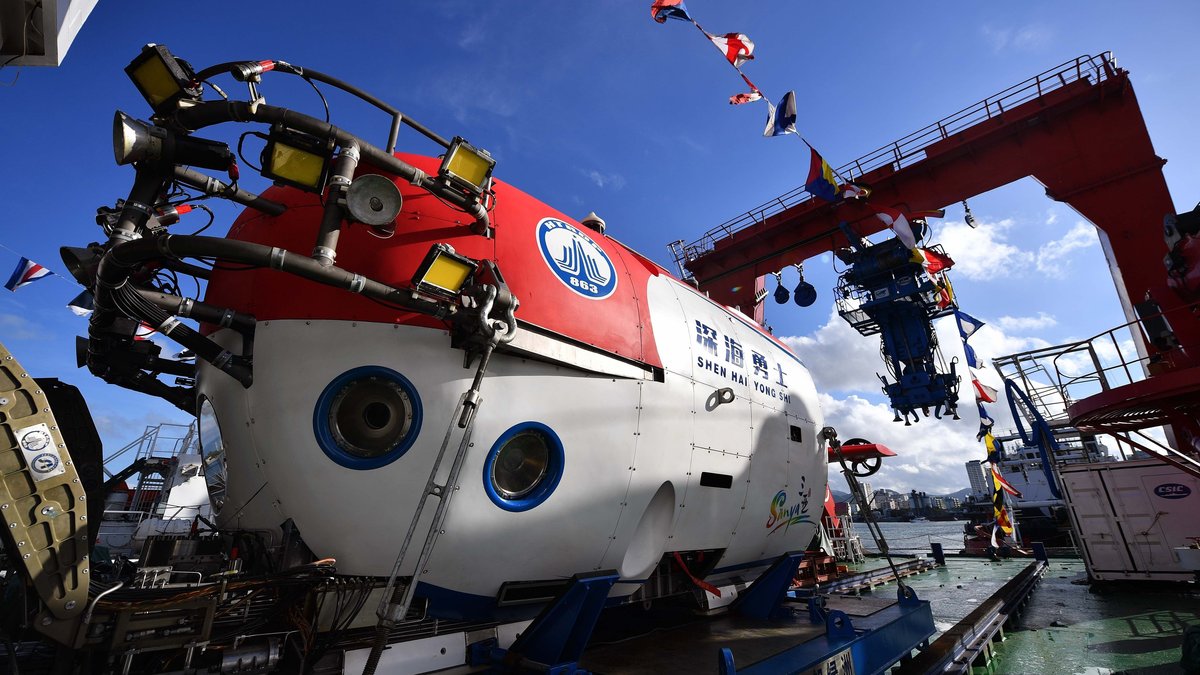
Exploring a trench floor is difficult even with modern full-ocean-depth submersibles and deep-sea landers. Instruments must survive the pressure, reach a precise spot, illuminate a dark seafloor and return usable video or samples. Each dive samples a very small area. The careful animal list for Challenger Deep reflects the limits of where scientists have looked as well as the limits imposed by the habitat itself.
Depth measurements also have margins of uncertainty and several basins sit within the Challenger Deep area. NOAA Ocean Exploration explains why the deepest named point is best treated as a carefully measured location rather than a single magical coordinate on a simple map. Its ocean-depth overview places Challenger Deep in the wider task of mapping an immense seafloor that remains difficult to survey directly.
Animal names also take time to confirm. A clear video may show the shape of a sea cucumber or an amphipod, yet species-level identification can require a physical specimen or genetic material. That is why the most trustworthy descriptions often use cautious group names. The approach leaves room for discovery while preserving the difference between an observed animal, a collected specimen and a species inferred from DNA.
Future dives, cameras, traps and genetic samples will refine the list. For now, the strongest answer is precise: at a 10,908-meter site in Challenger Deep, researchers observed amphipods and elpidiid sea cucumbers alongside giant xenophyophores. Elsewhere in the hadal zone, the roster expands to include many more kinds of bottom animals. Keeping those two evidence levels separate makes the deepest ocean more accurately strange.