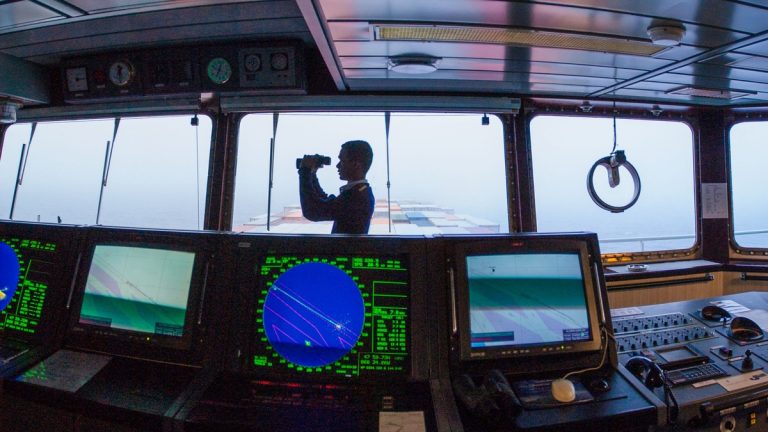
A July 2026 study in Biological Invasions warns that the long lay-up of commercial ships after the Strait of Hormuz closure could create a rare chance for marine life to hitchhike around the world. The international team, led by the University of Maryland Center for Environmental Science, describes a possible bioinvasion super-spreader event if heavily fouled vessels later fan out along normal trade routes.
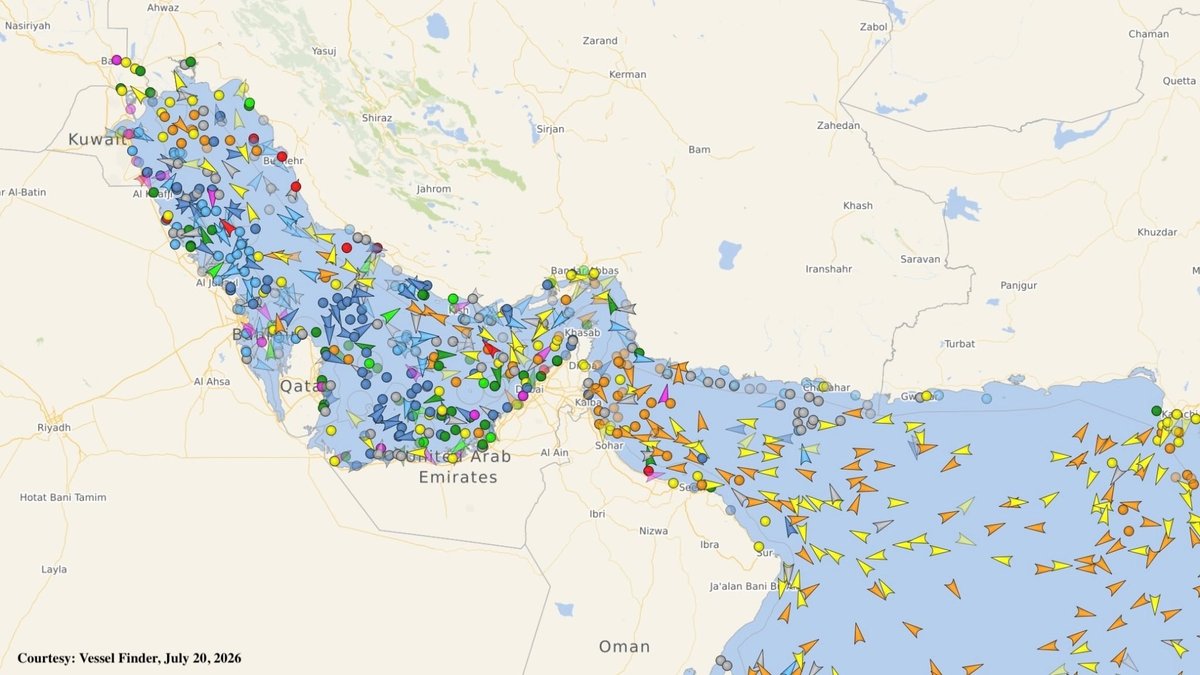
The warning centers on more than 1,500 ships reported at anchor for months in the Persian and Arabian Gulf. It is a modeled risk assessment, built around the known biology of organisms that settle on submerged surfaces and the unusual scale of the vessel lay-up. Its outcome will depend on what grew on individual ships, where each vessel goes and how hulls are managed before departure.
A crowded lay-up creates a new pathway
More than 1,500 vessels gathered in one warm-water region gives the scenario its unusual scale. The researchers say lengthy stays at anchor can allow dense communities of algae, barnacles, mussels and other invertebrates to build up on hulls. When shipping resumes, those communities could leave the Gulf on many separate journeys.
For a vessel, the underwater hull is a moving hard surface. Larvae and tiny organisms in the water can settle there. Some grow into visible layers, while others occupy protected recesses. A ship that has been moving often experiences different water flow from one that is sitting in an anchorage for a prolonged period.
Many ships leaving the same anchorage would not follow a single route. They could head toward different regions over different time periods. That branching pattern is why the researchers use the language of a super-spreader event. A large cluster of stationary hulls could become many separate transport opportunities once normal trading patterns return.
The study calls this possibility a global marine biosecurity concern because one disruption could connect many future destinations. The authors are assessing conditions that may raise the chance of spread. Their analysis does not document a new invasion from the Hormuz lay-up and it leaves the eventual destinations and survival of any passengers uncertain.
Hull life can travel with the fleet
Biofouling is the buildup of living organisms on a wet surface. It can include microbes, plants, algae and animals. The International Maritime Organization identifies hull fouling and ballast water as the two main ways ships can move aquatic species into new environments.
That pathway becomes important when an organism survives the trip, arrives in suitable water and establishes a breeding population. Temperature and salt level matter. Food, predators and timing also shape that chain of events. Each port presents a different ecological test, so a fouled ship does not produce the same risk everywhere it visits.
Transport alone therefore sits at the beginning of a longer process. A species must first remain attached or sheltered during a voyage. It must then survive the conditions at the destination and reproduce there. That sequence is one reason researchers and port managers need records of both vessel history and local observations rather than a simple count of ships at anchor.
WHOI biologist Carolyn Tepolt, who contributed to the research, said, “Marine invasive species have profound ecological and economic impacts on coastlines across the globe.” The WHOI announcement says the disrupted trade pattern may create favorable conditions for warm-water species to reach new ports.
Protected spaces make inspection harder
A smooth painted hull is only part of the picture. Niche areas such as sea chests, propeller spaces, bow thrusters and other sheltered features can protect organisms from water flow. They can also make growth harder to see during a quick external check.
The IMO says biofouling can begin within hours after a ship enters the water. Its severity varies with a ship’s design, operating pattern and maintenance history. Coating condition, water temperature and salinity matter as well. Those details explain why the Hormuz analysis cannot assign the same amount of growth or the same transport risk to every stranded vessel.
Inspection plans can take those differences seriously. A vessel’s time at anchor, recent maintenance, route and underwater design can help guide attention toward the places where organisms are most likely to hide. The goal is practical evidence. Visual checks, targeted sampling and careful records can make a broad warning more useful for decisions about an individual ship.
The authors list algae, barnacles, mussels and other invertebrates as likely kinds of hitchhikers. They do not identify which species are present on particular vessels or predict which one would establish at a receiving coast. That gap matters because an organism can travel far without becoming invasive.
A risk scenario needs close tracking
The paper’s warning is strongest as a call to prepare before fleets disperse. Vessel movement records could help agencies identify routes that link long-term anchorages with sensitive coastlines. Port managers could then focus monitoring at high-risk ports instead of treating every arriving ship as an identical case.
Pre-departure checks, well-kept biofouling records and targeted hull inspections could provide useful evidence about each vessel’s condition. Follow-up surveys at ports could look for unfamiliar organisms soon after arrival. Faster reporting between ship operators, port authorities, regulators and scientists would also make a response more practical if a concerning species is found.
Vessel movement records add another layer. They can show how long a ship remained in the affected region and which ports lie ahead. Combined with information on hull maintenance, those records could help officials sequence inspections and surveys. The paper specifically calls for better forecasting of vessel movements and coordinated rapid response efforts.
The period after ships begin moving could be especially informative. Inspectors can compare a vessel’s lay-up history with its maintenance documents and planned calls. Port surveys can then look for organisms that deserve expert review. This approach does not promise that every risk will be caught, yet it gives managers a way to direct effort where the analysis suggests the potential for transfer is greatest.
Cleaning requires care as well. The IMO notes that in-water cleaning can damage protective coatings and can release debris or invasive organisms into the surrounding water. Its 2023 Biofouling Guidelines provide a common approach for managing these risks, while the organization works toward a legally binding framework.
Why prevention carries the greatest weight
Once a marine species forms a self-sustaining population, removing it can be extremely difficult. Tepolt’s warning points to ecological and economic stakes for coastlines. Fisheries, aquaculture, tourism and infrastructure can be affected. Prevention acts earlier in the chain, before a ship moves a settled community into a new harbor.
Early monitoring also gives agencies a chance to learn from the event. A finding at a port would need careful identification and comparison with local records before anyone could connect it to a particular ship or lay-up. That scientific caution helps prevent false alarms while ensuring that observations reach the people who can assess a genuine threat.
For the Hormuz situation, the next evidence will come from ship movements and hull condition. Inspections and observations at receiving ports will add to that record. Those data can show whether the modeled threat is shrinking or becoming more urgent. They can also help focus limited monitoring resources on the routes with the clearest connection to the lay-up.
The event has placed a familiar shipping pathway under extraordinary pressure. The study turns that pressure into a specific question for marine managers: how to reduce the chance that months of still water and stationary hulls will reshape distant coastal ecosystems. Coordinated surveillance and careful ship biofouling management offer the clearest tools named by the researchers.