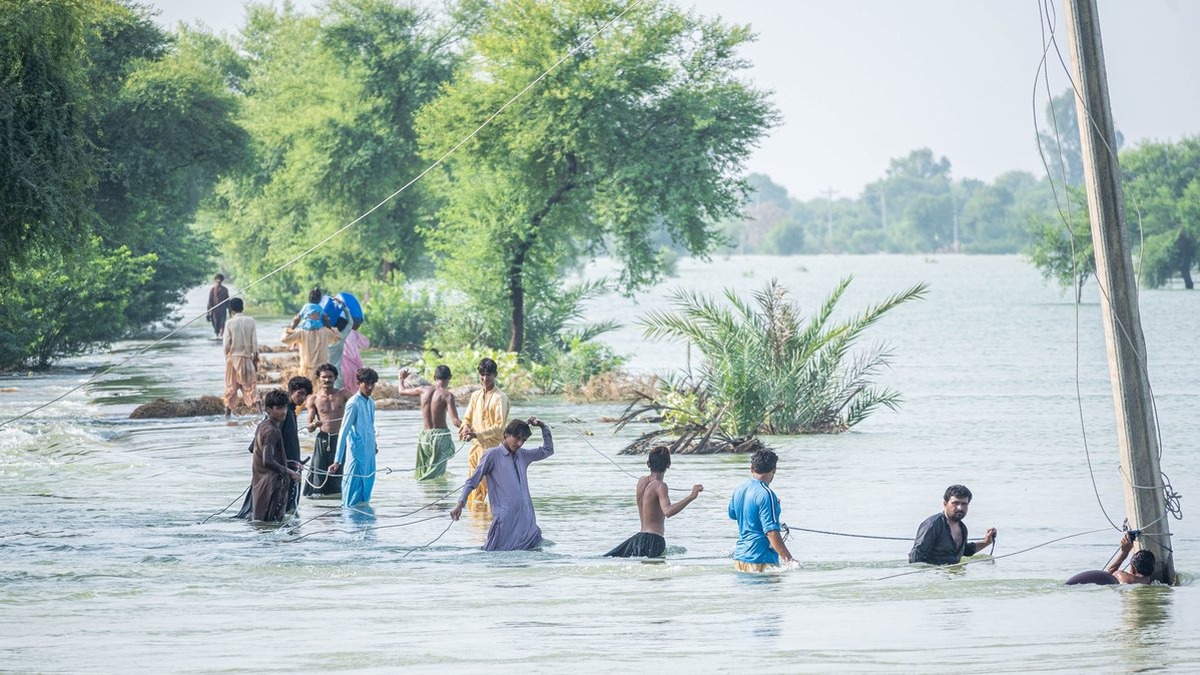
People placed in moving water consistently judged it as faster than it really was and the gap grew as the flow became deeper. Their estimates also influenced how much danger they felt, according to an experiment involving 76 adults.
Prior experience added another layer. Participants who had encountered rip currents or tropical cyclones responded differently as water speed increased, suggesting that direct contact with severe weather can influence later judgments about flowing water.
The PLOS ONE study, published in 2013 by Gregory D. Webster and colleagues, combined psychology with flood engineering. Researchers from the University of Florida placed volunteers in a specially built channel, varied the depth and speed, then asked each person to estimate the flow and rate the risk of injury.
How researchers tested moving water
Earlier flood research often examined the conditions that cause a person to lose balance. Webster and his colleagues approached the problem from another direction. They wanted to learn how people sense water speed before deciding whether a flow seems safe to enter or cross.
The team recruited 76 University of Florida students between 18 and 40 years old. The group included 58 men and 18 women, with an average age of about 23. Each participant first reported any experience with tropical cyclones and rip currents.
Participants then put on waders and raincoats. A safety harness connected each volunteer to a metal cage that could be lowered into a rectangular water flume, which is an artificial channel designed for controlled flow experiments. The channel measured about 70 feet long, 4 feet wide and 4 feet deep. A jet system from a personal watercraft moved the water through it.
Every person experienced six conditions. The water was either 0.45 or 0.90 meters deep, about 1.5 or 3 feet, while its surface moved at 0.4, 0.8, or 1.2 meters per second. Those speeds equal roughly 0.9 to 2.7 miles per hour. The order was randomized and each exposure lasted about 20 seconds.
After each immersion, volunteers estimated the water speed and rated their chance of injury on a scale from zero to 10. Researchers withheld the actual water speed until testing was complete, which prevented participants from adjusting later answers around a known measurement.
Deeper flows seemed faster than they were
Average estimates exceeded the measured speed in all six test conditions. The study abstract states, “People increasingly overestimated water speeds as actual water speeds increased or as water depth increased.” In other words, faster water seemed even faster, while deeper water raised estimates despite the same surface speed.
Water depth can change what a person feels because a deeper flow pushes against more of the body. Someone standing in waist-deep water receives pressure across a larger area than someone standing in a shallow stream. The experiment found that depth influenced judgment, although it did not isolate the exact visual and physical cues used by each participant.
At the highest tested speed, the way estimates rose across conditions came closer to the pattern of the real measurements. Participants still placed the overall speed too high. Their sense of how much the flow had increased became more consistent even while the estimates remained inflated.
Overestimation may sound protective because a person who senses greater speed may feel more cautious. Flood decisions are more complex. An inaccurate sense of speed can interfere with a person’s ability to compare one flow with another, understand a warning, or recognize how quickly conditions are changing.
Past storms changed speed estimates
People with prior rip current experience produced a weaker rise in estimated speed as the real flow increased. Their estimates were closer to the relationship researchers would expect if perceived speed followed measured speed. Participants without such experience showed a steeper increase and greater overestimation.
A similar result appeared for storm experience. Volunteers who reported living through more tropical cyclones showed a flatter relationship between actual speed and estimated speed. People reporting no storms produced the steepest rise in their estimates as the water accelerated.
Experience may provide a mental reference point. A person who has felt a strong coastal current or stood near storm-driven water may have more physical memories available when judging a later flow. The experiment established a statistical relationship between experience and perception, while the mental process behind that relationship remains open for further testing.
The storm result also requires caution. Four participants reported experiencing at least 10 tropical cyclones, a number the researchers considered unlikely given their ages and historical storm records. Some volunteers may have counted severe thunderstorms or other weather events as tropical cyclones.
When the team removed those four responses, storm experience still influenced the relationship between real speed and estimated speed, although the statistical evidence became weaker. Rip current experience produced a clearer result in the original analysis.
Perceived speed raised personal risk
Both deeper water and faster flow increased the danger reported by participants. Their own speed estimates also predicted their risk ratings, leading the study abstract to conclude, “The faster the moving water, the greater the perceived risk.”
The researchers examined whether perceived water speed helped connect the physical flow with the feeling of danger. Part of the effect followed a clear path: rising water speed increased a participant’s estimate and the higher estimate then raised the participant’s risk rating.
Measured speed still influenced risk after the researchers accounted for estimated speed. Other sensations therefore contributed to the judgment. Pressure against the legs, the effort needed to remain steady and the amount of the body under water could all provide information about danger, although the experiment did not measure each possible cue separately.
Prior experience slightly changed the strength of the indirect link between actual speed, estimated speed and personal risk. The pathway through estimated speed was somewhat stronger among people lacking rip current experience or reporting fewer storms. Their larger estimation changes carried more of the effect into their risk ratings.
Limits of the controlled water channel
A laboratory channel gave the team control over speed and depth, yet natural floods contain far more complicated motion. Real floodwater may swirl around buildings, rush through narrow streets, or carry branches and loose material. Waves and uneven ground can also upset a person’s balance.
The controlled channel was designed to keep the flow reasonably uniform. Researchers used turning vanes to reduce large motions upstream, but they did not measure turbulence. The setup therefore could not reproduce the changing currents found in flash floods or hurricane storm surge.
Safety equipment also changed the experience. Participants knew that a harness and steel cage would help protect them, which may have affected their sense of danger. A person standing beside a flooded road at night could face poor visibility, uncertain footing and no immediate support.
The sample placed further limits on the findings. Most participants were young men attending one university. Responses from older adults, children, people with disabilities, or residents from other regions could differ. Each rating was also a personal report rather than a physical measure such as heart rate or blood pressure.
Even with those limits, the study included more participants than several earlier experiments on human stability in flowing water. Its repeated design also allowed every volunteer to experience each depth and speed, giving researchers a direct view of how individual judgments changed across controlled conditions.
Flood warnings in human terms
Flood messages often describe expected water depth in feet or inches. Depth provides vital information, while flow speed adds another part of the physical danger. A shallow current moving quickly can push hard against a person and rising depth exposes more of the body to that force.
The researchers suggested that emergency messages could eventually combine speed and depth in human-scale warnings. A warning might explain that a predicted flow could knock down a person of a certain size or move a vehicle. Such comparisons could help residents connect measurements with a familiar physical result.
Reliable warnings of that kind would require additional experiments across more realistic conditions and a wider population. Vehicle movement depends on water depth, flow, vehicle weight, road surface and the angle of the current. Human stability also varies with height, strength, footwear and mobility.
Clear communication can still build on the central lesson. A person cannot judge moving water from depth alone and visual estimates of speed can be inaccurate. Previous encounters with storms or rip currents may change those judgments, but experience does not remove the physical danger.
The flume experiment offers an early framework for studying how people interpret floodwater before making a risky choice. By connecting measured conditions with human perception, future research could support warnings that describe what flowing water can physically do, giving residents more useful information before they approach a flooded road or storm-surge zone.