A study in Nature Physics has found molecular-level evidence that liquid water can shift between two local structures, giving scientists a fresh clue to one of chemistry’s oldest puzzles. Using unsupervised deep learning and large molecular dynamics simulations, the research team identified patterns that support a long-debated idea called the two-state water model.
The result points to a hidden choreography inside a familiar liquid. In the simulations, water molecules moved between a more compact local arrangement and a looser one. These structures did more than appear side by side. They converted into one another through pathways that changed with temperature and pressure.
The work was led by Liwen Li and Xiao Cheng Zeng, with affiliations including City University of Hong Kong and China University of Petroleum (East China). The study remains a computational finding, so direct experimental confirmation will be an important next step. Even so, it offers a rare molecular view of why water behaves so differently from many other liquids.
Water’s strange behavior gets a molecular clue
Water has always been a scientific troublemaker. The Nature Physics paper opens with a simple statement from its abstract: “Water exhibits a variety of anomalous behaviours.” That line captures why researchers keep returning to a substance that fills oceans, cells, clouds and lab beakers.
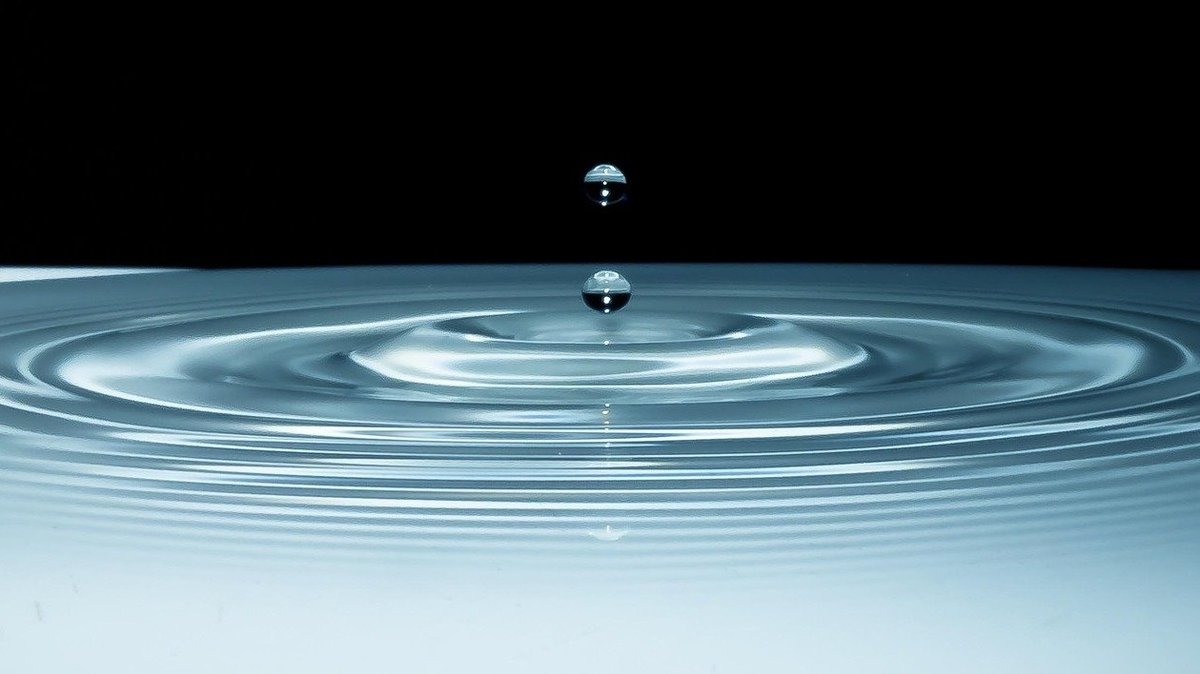
Most liquids become steadily denser as they cool. Water reaches its highest density near 4 degrees Celsius, then expands as it approaches freezing. That’s why ice floats. It’s also why lakes can freeze from the top down while liquid water survives below.
Water also stores heat unusually well. It resists temperature swings, shapes climate and helps living systems stay stable. Its viscosity and compressibility change in ways that have long encouraged physicists and chemists to look for a deeper explanation.
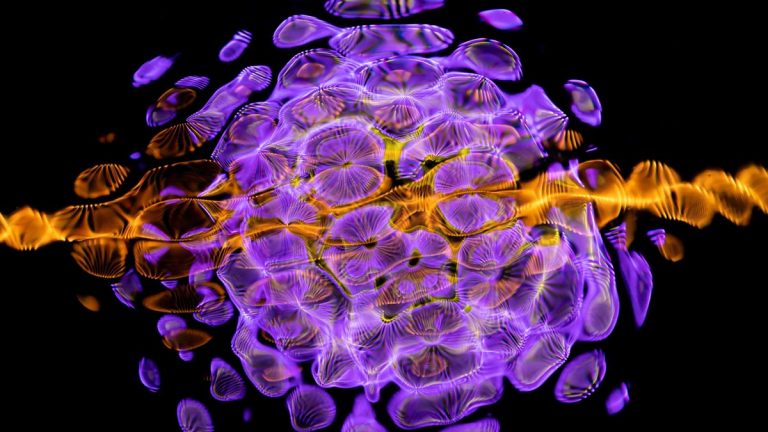
The two-state water model offers one possible answer. It proposes that liquid water contains two interconvertible local structures. One resembles high-density liquid water, while the other resembles low-density liquid water. The new study gives that idea a more detailed molecular map.
In plain language, the study suggests that water’s oddities may arise from shifting neighborhoods around individual molecules. Each water molecule feels the pull of nearby molecules through hydrogen bonding. Those local arrangements can tighten, loosen and reorganize as conditions change.
AI tracked millions of molecular movements
To search for the hidden structures, the team used molecular dynamics simulations. These simulations follow atoms and molecules step by step, using physics-based rules to calculate how they move. For a liquid as restless as water, that produces a huge amount of data.
The researchers then turned to AI pattern detection. Their deep learning approach was unsupervised, which means the system searched for patterns without being handed a preset label for each molecular arrangement. That makes the method useful for problems where scientists suspect a pattern exists but lack a clean way to define it in advance.
The simulations were carried out with GROMACS, a widely used package for molecular dynamics. The deep learning models were built with TensorFlow. The paper also reports code availability through GitHub and supporting data through Zenodo, giving other researchers a path to inspect or build on the work.
A key goal was to find reaction coordinates. These are compact mathematical descriptions of how a system changes from one state to another. For water, the coordinates helped describe how local molecular structures move between high-density-like and low-density-like forms.
That step matters because raw molecular motion can look impossibly messy. Every molecule is vibrating, rotating and forming or breaking hydrogen-bond patterns. The AI helped compress that complexity into a smaller set of variables that exposed the conversion pathways.
Two pathways for the same liquid
The study found that water’s local structures can interconvert through different routes. Near the boundary between high-density and low-density forms, the simulations revealed a full-loop reaction pathway. This pathway involved three saddle points, which are energy barriers that molecules must cross during the transition.
Away from that boundary, the picture became simpler. The reactions followed a semi-loop pathway with a single saddle point. That difference suggests that water’s molecular rearrangements depend strongly on where the liquid sits in the pressure and temperature landscape.
The paper focused on high-density liquid and low-density liquid behavior in a simulated water model known as TIP4P/Ice. This model is often used to study ice, supercooled water and phase behavior. In this study, it served as the virtual liquid where the team could watch molecules rearrange in detail.
The full-loop pathway is especially interesting because it appears near a phase boundary. Phase boundaries are regions where matter can shift between forms. In water research, scientists have long studied whether deeply supercooled water contains a transition between two liquid phases.
The new result gives that broader debate a molecular mechanism. It shows how local structures could convert into one another in a way that changes near the high-density and low-density boundary. That adds a dynamic piece to a question that has often been discussed in terms of phases, density and thermodynamics.
Why the finding could matter beyond physics
Water’s behavior shapes far more than frozen lakes. It surrounds proteins, salts, minerals, membranes and drug molecules. Any improvement in how scientists model water can ripple into chemistry, biology, climate science and materials research.
Inside cells, water is the medium where many molecular interactions happen. Proteins fold in water. Ions move through water. Drugs dissolve in water before they can reach many biological targets. The arrangement of nearby water molecules can influence those processes at tiny scales.
The new study doesn’t claim immediate medical or engineering applications. Its contribution is more fundamental. By identifying interconvertible local structures, the work could help researchers improve how they think about water as an active molecular environment.
That distinction is important for smart caution. The study uses simulations and machine learning. It offers molecular-level evidence within a water model and it points toward mechanisms that experiments may be able to test. Practical uses will require more validation and more links to measurable properties.
Still, the finding could help explain why water’s density, viscosity, heat capacity and compressibility behave so strangely. If the balance between two local structures changes with temperature and pressure, then the bulk liquid can show unusual behavior as those microscopic populations shift.
The next test is real-world evidence
Experimental confirmation will be the next major hurdle. Water molecules rearrange extremely quickly and the difference between local structures can be subtle. Capturing those transitions in real liquid water will require sensitive tools that can probe molecular environments without blurring the signal.
Spectroscopy, scattering methods and ultrafast measurement techniques may be part of that future effort. Earlier experimental work has already suggested evidence for two-state behavior in water, especially under supercooled conditions. The new study adds a computational route that researchers can compare against those measurements.
The team’s result also shows how machine learning can help with old physics questions. AI did more than speed up a calculation. It helped identify coordinates that revealed how local water structures transform. That approach could be useful for other liquids with complicated microscopic behavior.
For now, the study gives scientists a clearer way to describe water’s inner motion. A glass of water may look still, but its molecules are constantly reorganizing. According to the simulations, that motion includes switches between compact and loose local arrangements through pathways shaped by pressure and temperature.
The finding turns a familiar substance into a sharper scientific mystery. Water remains ordinary in daily life and extraordinary under the microscope. With AI now helping decode its molecular patterns, researchers have a new way to test why the world’s most common liquid behaves in such uncommon ways.