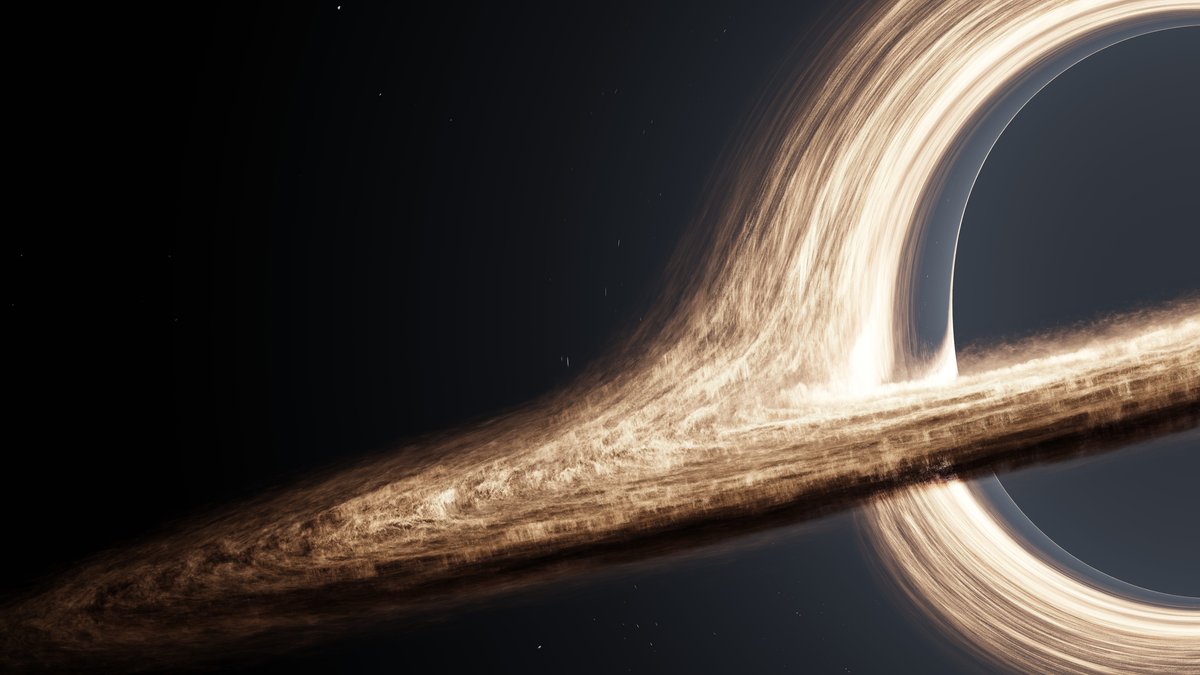
NASA’s Chandra X-ray Observatory has delivered the sharpest X-ray view yet of the jet launched by the supermassive black hole in Messier 87, the galaxy that became famous in 2019 when the Event Horizon Telescope captured the first direct image of a black hole’s shadow. The new Chandra work follows the jet across 13 years and shows that this extreme structure is changing in ways astronomers can now measure in remarkable detail.
The black hole at the center of Messier 87, often called M87, sits about 55 million light-years from Earth and contains about 6.5 billion solar masses. Its jet is a narrow stream of high-energy material that reaches far beyond the region shown in the historic black hole image. By tracing the jet in X-rays, researchers can follow some of the hottest and most energetic particles tied to the black hole’s activity.
The team, led by Camille Poitras of Laval University, used observations from NASA’s Chandra X-ray Observatory spanning 2012 to 2025. The result turns a famous cosmic portrait into something closer to a time-lapse movie. Bright knots shift, fade and separate into smaller structures that earlier views could blend together.
The famous M87 black hole is still changing
The 2019 Event Horizon Telescope image made M87’s central black hole a scientific landmark. That orange ring showed the glow of material near the black hole and the dark shadow at its center. Chandra’s new view moves outward from that iconic scene and follows the much larger jet that emerges from the same central engine.
A black hole gains its reputation from gravity so intense that light cannot escape once it crosses the event horizon. Around the black hole, however, matter can become wildly active before that final boundary. Gas, dust and charged particles spiral through extreme magnetic fields and some of that energy is redirected outward in a jet.
In M87, the jet is one of the best natural laboratories for this kind of physics. It is close enough by cosmic standards for telescopes to track structure inside the jet. It is also powerful enough to glow across many wavelengths, from radio waves to visible light to X-rays.
The Chandra results show that the jet is evolving over human timescales. Astronomers can compare images taken years apart and see changes in bright features. That kind of long baseline is especially valuable for studying a galaxy tens of millions of light-years away.
Chandra tracked the jet for 13 years
Chandra observed the M87 jet across a 13-year span, giving researchers a rare long-term X-ray record of a relativistic black hole jet. The team used advanced image processing to sharpen details below the usual blur of the telescope’s point-spread pattern. That work helped separate structures that had previously appeared blended.
“We could already see changes in the jet, but never with this level of detail in X-rays,” Poitras said. The quote captures the main advance. The study did more than add another image of M87. It improved the ability to track how individual features in the jet behave over time.
One important region is known as HST-1, a bright knot in the jet that has been studied for decades. In the new Chandra analysis, HST-1 separates into multiple components. That matters because blended structures can make motions and brightness changes look misleading.
The researchers also examined downstream knots farther along the jet. These features appear as compact bright regions where particles may be accelerated or where the jet’s flow interacts with its surroundings. By comparing their positions and brightness across different observing epochs, the team could build a clearer picture of the jet’s internal motion.
Knots in the jet appeared to move faster than light
Some features in the M87 jet appeared to move at up to 4.8 times the speed of light. This effect, called superluminal motion, has been seen in other relativistic jets and is a powerful clue about geometry. It tells astronomers that the material is moving extremely fast and that the jet is angled partly toward Earth.
The apparent motion does something useful for scientists. It acts like a speed and direction marker for the jet’s flow. When researchers measure how far a knot seems to move between observations, they can infer how the jet is organized and how its bright features may be traveling through space.
Care is needed because a bright knot may contain more than one moving component. If the telescope blends those components together, a measured velocity can be biased. The new Chandra processing helps reduce that problem by revealing finer structure inside the jet.
That is why the 13-year record is so valuable. A single image can show where a bright region is at one moment. Repeated observations show whether the feature is drifting, fading, splitting, or holding its position while the jet streams through it.
Why the jet can look faster than light
The faster-than-light appearance comes from perspective and timing. If material is moving close to light speed and partly toward Earth, light emitted later from the moving material has a shorter distance to travel. To an observer, the feature can seem to cover more sky than light-speed motion would allow.
The material itself remains within the rules of relativity. The illusion is created by the combination of high speed, viewing angle and the arrival times of light. Astronomers use this effect to learn about jets that would otherwise be too distant and too fast to measure directly.
For a familiar comparison, think about watching a fast object between brief glances. Its position can seem to jump. In M87, that everyday idea is stretched across thousands of light-years and pushed to speeds near the cosmic limit.
The Chandra measurements add X-ray detail to that picture. X-rays trace especially energetic particles, so the apparent motions reveal how the highest-energy parts of the jet change. Combined with other telescopes, the X-ray data help connect motion, brightness and particle acceleration.
X-rays reveal fading high-energy particles
The Chandra study found that X-ray emission across the jet declined by as much as 84 percent in some measurements. That fading is a key clue. X-rays in this setting are linked to extremely energetic particles and those particles can lose energy as they radiate.
The process is known as synchrotron cooling. Charged particles spiral through magnetic fields and emit radiation. As they radiate, they lose energy. In a black hole jet, that loss can show up as fading X-ray brightness over time.
The team used the observed fading to estimate magnetic field strengths in parts of the jet, including HST-1 and another region known as knot A. These estimates help connect the light astronomers see with the invisible magnetic structure that shapes the jet.
X-rays are especially useful because they probe the most energetic end of the particle population. Lower-energy particles can remain visible in radio or infrared light after the X-ray glow weakens. By comparing wavelengths, astronomers can infer where particles are being energized and where they are cooling.
The finding also gives researchers a way to test models of particle acceleration. Any successful model has to explain the jet’s brightness, its motion, its fading and its shape. M87 supplies all of those clues in a single nearby cosmic system.
Webb and Hubble sharpen the picture
The Chandra team compared the X-ray structures with observations from Hubble, JWST and ALMA. Each observatory sees a different part of the jet’s radiation. Together, they provide a layered view of the same structure.
Hubble observes visible and ultraviolet light. JWST is especially strong in infrared wavelengths. ALMA traces radio and millimeter emission from cooler or lower-energy components. Chandra adds the X-ray view of the most energetic particles.
In the new comparison, the principal X-ray features align more closely with jet widths and knot locations seen at lower energies. The X-ray emission is generally shifted upstream. That pattern is useful because it may indicate where particles are first accelerated before they radiate at lower energies farther along the jet.
Multiwavelength work is essential for an object like M87. No single telescope captures the whole story. A black hole jet contains fast particles, magnetic fields, shocks and changing brightness patterns. Different wavelengths reveal different pieces of that system.
The result gives astronomers a more complete map of M87’s jet. It also shows why older observations remain scientifically valuable. When a telescope keeps watching for years, each new image gains meaning from everything that came before it.
Why black hole jets shape galaxies
Black hole jets can influence their host galaxies by moving energy from a tiny central region into much larger surroundings. In a giant elliptical galaxy such as M87, that energy can affect hot gas around the galaxy and the broader environment of the Virgo Cluster.
M87 contains several trillion stars and a huge population of globular star clusters. At its center, the supermassive black hole acts as an engine that can launch material across thousands of light-years. The jet’s reach makes it important for galaxy evolution.
The details matter because energy transport depends on structure. Knots, fading regions and apparent motions all reveal how the jet carries energy outward. They also show where particles may be accelerated and where energy may be deposited into surrounding gas.
Chandra’s long view of M87 highlights the value of patient astronomy. The famous black hole image captured a dramatic central shadow. The newer X-ray record follows the activity that connects the black hole to its galaxy.
Future comparisons with Chandra, Hubble, JWST, ALMA and other observatories can refine this picture further. M87 remains one of the clearest places to watch a supermassive black hole affect space far beyond its event horizon.