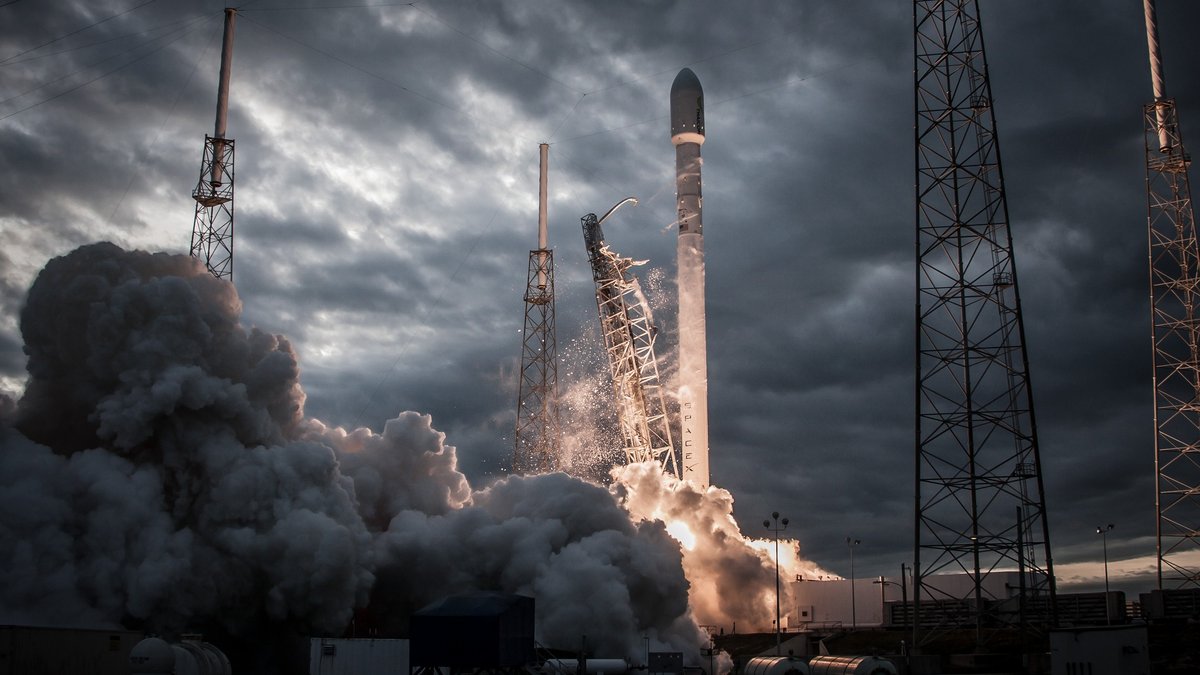
NASA’s latest launch selection points to a quiet puzzle at the heart of climate science: how the Sun’s changing energy and Earth’s high ice clouds shape the planet below. The agency has chosen Rocket Lab to launch two science missions, TSIS-2 and PolSIR, using three Electron rockets from Launch Complex 1 in Mahia, New Zealand.
The plan sends a compact solar observatory and a pair of cloud-watching CubeSats into orbit in 2027. Together, they will strengthen two lines of observation that matter deeply for climate models. One mission will measure the energy arriving from the Sun. The other will examine ice clouds in the tropics and subtropics, where storms, heat and water vapor interact in complex ways.
NASA Kennedy summed up the arrangement in a crisp phrase: “Two missions, three rockets.” That simple count captures a broader shift in space science. Smaller spacecraft, dedicated launches and commercial rockets are giving researchers more precise ways to place instruments where the science requires them.
Three Electron rockets for two NASA missions
NASA selected Rocket Lab to provide launch services for the agency’s Total and Spectral Solar Irradiance Sensor-2 mission, known as TSIS-2 and the Polarized Submillimeter Ice-cloud Radiometer mission, known as PolSIR. The missions will operate independently once they reach orbit, but both are aimed at improving measurements that feed into Earth science and climate research.
The launch plan uses three dedicated Electron rockets. One Electron will carry TSIS-2, while two more will launch the two PolSIR satellites. The PolSIR launches are planned no earlier than June 2027. TSIS-2 is planned for early 2027 from the same New Zealand launch site.
This setup gives each payload a tailored route to orbit. For science missions, that can matter as much as the rocket itself. A spacecraft built to measure sunlight or track cloud evolution needs the right vantage point, the right timing and enough control over deployment to begin its work as planned.
The selection falls under NASA’s Venture-Class Acquisition of Dedicated and Rideshare program. The VADR contract is designed to give NASA flexible, fixed-price launch options for smaller payloads. That model is especially useful for CubeSats and compact science spacecraft that need more control than a conventional rideshare can provide.
TSIS-2 will measure the Sun’s energy
TSIS-2 is built around a central question in climate science: exactly how much solar energy reaches Earth and how does that energy vary across different wavelengths? The mission will measure the Sun’s brightness at the top of Earth’s atmosphere, including energy in ultraviolet, visible and infrared light.
The spacecraft continues a long-running record of solar irradiance measurements. Its predecessor, TSIS-1, operated from the International Space Station. TSIS-2 moves the instrument suite to a free-flying spacecraft, which allows the mission to make solar observations without being tied to the orbit and operating limits of the station.
Two main instruments will do the work. The Total Irradiance Monitor measures the Sun’s total energy reaching Earth. The Spectral Irradiance Monitor separates that energy by wavelength. Together, they cover nearly the full range of solar energy that affects Earth’s climate system, including roughly 96% of the solar spectrum.
Those measurements help scientists track changes in the energy that drives Earth’s atmosphere, oceans and surface. Even small variations in solar output can matter when researchers are trying to separate natural changes from other climate influences. TSIS-2 data can also support studies of the ozone layer, seasonal cycles, atmospheric chemistry and ocean circulation.
NASA’s Goddard Space Flight Center manages the TSIS-2 mission. The Laboratory for Atmospheric and Space Physics at the University of Colorado Boulder contributes to the instrument work, while General Atomics Electromagnetic Systems is responsible for the spacecraft. That mix of NASA, academic and industry teams reflects the mission’s goal: keep a critical solar record going with modern hardware in a dedicated orbit.
PolSIR will watch tropical ice clouds
Tropical ice clouds play an important role in Earth’s climate, especially because they form high in the atmosphere where they can influence how heat and radiation move through the air. PolSIR is designed to study those clouds in tropical and subtropical regions, where powerful storms and warm ocean waters help shape global weather patterns.
The mission will use two 16U CubeSats. Each spacecraft will carry an instrument that studies electromagnetic radiation linked to ice particles in clouds. By examining those signals, scientists can estimate how ice content changes over time and how those changes affect the atmosphere around it.
Ice clouds can trap heat rising from Earth while also reflecting incoming sunlight. Their overall effect depends on where they form, how thick they become, how high they sit and how their ice particles evolve during the day. PolSIR is meant to give researchers more frequent views of those changes than a single satellite could provide.
NASA’s announcement states that “Rocket Lab will launch PolSIR aboard two of its dedicated Electron rockets.” The separate launches allow the two satellites to be placed into staggered orbits. That geometry is central to the mission’s science plan.
Vanderbilt University leads PolSIR through its principal investigator. Science operations are managed by the Space Science and Engineering Center at the University of Wisconsin. The spacecraft are being built by Blue Canyon Technologies, bringing another commercial partner into the mission architecture.
Why staggered CubeSats matter
One satellite can provide a snapshot. Two satellites in staggered orbits can help reveal how a scene changes. That distinction matters for clouds, which can grow, thin, spread and dissipate over only a few hours.
PolSIR’s paired spacecraft are designed to pass over similar regions at different times of day. Those separated observations can show how ice clouds evolve as sunlight changes, storms develop and atmospheric conditions shift. The result is a more dynamic view of cloud behavior than a single daily measurement can provide.
This timing is especially important in the tropics. Tropical and subtropical regions are major engines of Earth’s weather system. Warm water feeds convection, convection builds tall clouds and those clouds move energy from lower layers of the atmosphere into higher ones.
Scientists use cloud data in climate and weather models, but ice clouds remain difficult to represent. Their particles can vary in shape, size, density and altitude. More direct measurements from orbit can help modelers test whether their simulations are capturing the real behavior of these clouds.
PolSIR’s design also shows why small spacecraft have become valuable for Earth science. A pair of compact satellites can be aimed at a specific measurement strategy. When their orbits are planned together, they can act like a time-lapse system for processes that would otherwise be missed between passes.
A small-launch path for high-value science
Rocket Lab’s role in the NASA selection reflects a growing place for dedicated small launch vehicles in research missions. The Electron rocket can place compact spacecraft into specific orbits without requiring them to share a ride with larger missions that may have different priorities.
For TSIS-2, that means the solar instruments can be sent toward the orbit needed to continue careful irradiance measurements. For PolSIR, it means the two CubeSats can be deployed through two dedicated flights that support the mission’s staggered observing plan.
Launch Complex 1 in Mahia, New Zealand, provides access to orbits useful for Earth observation. That geography gives mission planners flexibility when designing paths for satellites that need consistent viewing conditions. For climate and atmospheric science, the orbital details can directly affect the value of the data.
The broader strategy is clear. NASA is pairing focused spacecraft with commercial launch services to answer specific scientific questions. In this case, the questions reach from the Sun to the upper atmosphere, linking the energy entering the Earth system with the clouds that help regulate how that energy moves.
If the missions launch as planned in 2027, TSIS-2 will extend a key solar record while PolSIR adds new observations of high-altitude ice clouds. The instruments are small compared with flagship observatories, but their targets are enormous: the Sun’s energy output, the behavior of tropical storms and the climate processes that connect them.