One of the study’s central puzzles was simple enough for any traveler to recognize. People can come home from a striking day in nature feeling amazed, calmer and more connected to the living world, yet those feelings do not all point toward the same kind of next step. A survey-based study of 228 tourists visiting two coastal protected areas in southern China found that two psychological responses, awe and nature connection, lined up with different kinds of environmental intentions after the trips were over.
The split mattered because the researchers did not treat every green promise as equal. Some intentions asked for low-friction habits, such as recycling or sorting trash. Others asked for more demanding commitments, such as donating to conservation, volunteering time, or speaking up when other people harm the environment. In the model reported in a Heliyon study, awe helped predict the easier set of intentions, while nature connection showed the stronger link to the costlier, more social and more time-consuming set.
Marine protected areas have long been expected to do more than shelter wildlife. Managers also hope these places can help visitors carry some form of care back into everyday life. The new paper suggests that this hope may work through more than one mental route and each route may be better at supporting a different kind of promise. That distinction gives reserve educators a more precise question to ask: are they trying to inspire a quick personal habit, or build a deeper bond that supports sacrifice and social effort?
Why the study separated easy and costly environmental choices
The paper focused on pro-environmental behavior intentions, which means what people say they plan to do after a learning experience. Researchers split those intentions into two baskets. Low-effort intentions covered actions such as protecting resources, recycling garbage, sorting garbage and using non-plastic trash bags. High-effort intentions covered actions that ask for more commitment: reminding others to avoid harmful behavior, donating money for conservation and volunteering for environmental projects.
That split is more useful than it may sound at first glance. Recycling a bottle or carrying a different kind of bag can fit into a routine with little social cost. Donating money and volunteering take time and speaking up to another person can carry awkwardness or conflict. By separating the easier choices from the harder ones, the researchers could test whether the same emotional response after a reserve visit was linked to both kinds of intentions or only one.
Earlier work had already hinted that environmental learning does not move people through a single channel. A study in the Journal of Environmental Management described several learning pathways behind visitor engagement in protected areas. Another paper in Frontiers in Psychology argued that awe can support environmentally responsible intentions among tourists. The new marine-reserve study brought those ideas together and asked whether awe and connection to nature might sort visitors toward different kinds of action.
What the tourists did at the reserves
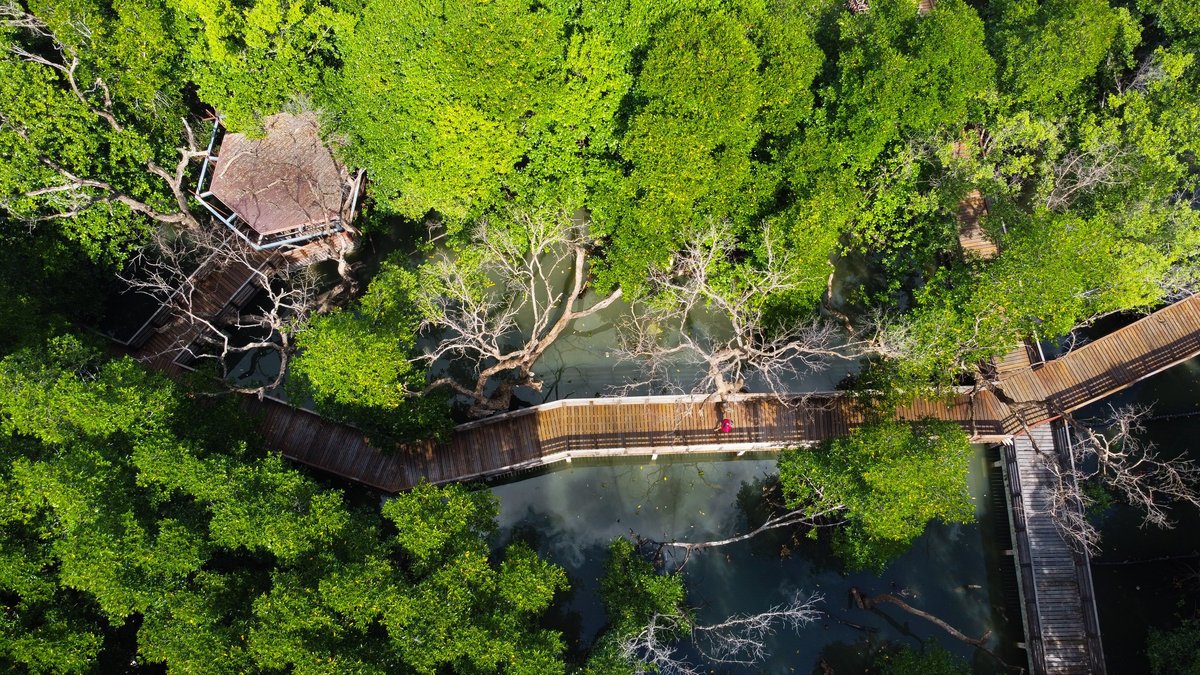
The research took place in two marine protected areas on Qi’ao Island in Zhuhai, on China’s southeast coast. One site was the Pearl River Estuary Chinese White Dolphin National Nature Reserve, where educational content centered on biodiversity, the role of reserves, the biology of the Chinese white dolphin and the damage that human garbage can cause. The other was the Guangdong Qi’ao-Dangan Island Provincial Nature Reserve, where visitors learned about mangroves, birds and the protected coastal ecosystem.
Ecological experiential learning in the study was hands-on rather than classroom-only. Visitors heard biodiversity briefings, toured the Chinese White Dolphin Science Museum or mangrove science trail and took part in beach or reserve cleanup work. The program therefore mixed information with direct sensory contact. People were not only told that marine pollution harms wildlife; they were also placed in settings where they could see habitats up close and physically remove litter from them.
Method also matters here. The final analysis used valid questionnaires from 228 tourists, then applied a structural equation model to test how ecological experiential learning, awe, nature connection and environmental intentions fit together. The sample was large enough to estimate relationships between these psychological factors, but the data still came from one island setting and from self-reported intentions gathered after organized activities. The study therefore offers a careful map of associations rather than proof that one reserve trip permanently changed future behavior.
Measures in the survey help show what the researchers meant by each mental state. Awe was captured with words such as amazing, extraordinary, unforgettable and reverence toward nature. Nature connection was broader and steadier. It included feeling a sense of oneness with the natural world, feeling calm in nature, feeling close to animals and plants and seeing humans as part of nature rather than outside it. Those are related experiences, yet the survey treated them as distinct enough to test separately.
Why awe linked best with the easier promises
The model showed that ecological experiential learning was positively associated with both categories of intention. For low-effort intentions, the total estimated effect was 0.401 and the direct path from learning to intention remained positive after the mediators were added. Awe also carried a significant indirect path to low-effort intentions, with an estimated effect of 0.081 and a confidence interval that stayed above zero. Nature connection carried a second significant path in the same low-effort category, with an indirect effect of 0.124.
The intriguing part is that awe helped only on one side of the split. In the high-effort category, the indirect path through awe was estimated at 0.060, but its confidence interval crossed zero, so the paper rejected that mediation path. A reserve visit could still leave a person amazed, impressed and emotionally elevated, yet that feeling alone did not reliably track the harder promises that demand time, money, or social courage.
Psychology offers a plausible reason for that pattern. An influential review of awe in the Annual Review of Psychology describes the emotion as a response to perceived vastness and a need to adjust mental frames. In tourism settings, awe can sharpen attention and make a place feel memorable. A memorable feeling may be enough to support small habit-level intentions, especially when the action is concrete and easy to picture. It may do less on its own when the next step requires planning, sacrifice, or a willingness to confront other people.
The survey items fit that reading. Recycling, sorting garbage and saving resources are actions a visitor can imagine immediately after a reserve experience. They do not require permission from anyone else. They do not depend on a schedule. They do not carry much public risk. A strong emotional lift at the end of a trip may therefore help a person say yes to these familiar behaviors, even if that same lift is too brief or too general to carry them toward volunteering or donating.
Why nature connection tracked the costly commitments
Nature connection showed the clearest link to the harder promises. The indirect effect from experiential learning through nature connection to high-effort intentions was 0.252, far larger than the corresponding awe estimate and its confidence interval stayed well above zero. In plain language, people who finished the learning activities with a stronger felt bond to the natural world were more likely to say they would donate, volunteer and challenge harmful behavior.
A bond of that kind may matter because the costly actions ask for identity as much as emotion. Donating or volunteering often makes sense when a person sees environmental care as part of who they are and part of the relationship they hold with other living things. The survey’s nature-connection items point in exactly that direction: feeling close to animals and plants, feeling sad when they suffer and believing humans have no right to destroy the natural environment. Those ideas are closer to a durable worldview than to a passing burst of amazement.
Other research has pointed the same way. A 2018 Psychological Science study reported that direct experiences with nature in childhood help explain later environmental behavior. The marine-reserve paper also cited work showing that connectedness to nature often travels with ecological behavior in both tourism and everyday settings. Taken together, the pattern suggests that educators who want visitors to accept higher personal costs may need to cultivate belonging and moral closeness, not only spectacle or surprise.
The difference between these paths also clarifies why protected areas can feel powerful without always producing the same public outcome. A visitor may leave a dolphin museum or mangrove trail saying the day was unforgettable. Another may leave feeling that the coast, its birds and its mammals are part of a shared living system to which humans also belong. Both responses are valuable, but the second one appears better suited to support actions that demand effort after the trip has ended.
What reserve educators can learn and what the paper cannot prove
The practical lesson is less dramatic than a slogan, yet more useful. Reserve programs may need to match their design to the behavior they hope to encourage. If the goal is a quick shift toward waste sorting or everyday resource care, emotionally vivid experiences that trigger visitor awe may help. If the goal is to encourage donations, volunteerism, or public advocacy, then longer-lasting forms of connectedness to nature may deserve more attention in program design.
The study also reported one demographic signal worth noting. Older participants showed higher low-effort environmental intentions than younger participants, while sex, education and prior visit frequency did not produce clear differences in the main comparisons reported in the paper. That age pattern fits broader findings on environmental behavior across the lifespan, including work in the Journal of Environmental Management and related studies cited by the authors, though the present paper was not built to explain why age differences appear.
Several limits keep the result grounded. The researchers studied intentions rather than observed long-term behavior. The questionnaires came from a specific tourism setting on one Chinese island and the modeling approach can estimate compatible pathways without settling every causal question. People also answered after structured educational activities, so the findings do not automatically describe what happens after an unguided beach holiday or a short scenic stop. Programs elsewhere may draw very different audiences and very different emotional responses.
Even with those limits, the paper sharpens a stubborn human question in conservation. Beautiful places can move people, but different kinds of movement lead to different promises. In these marine reserves, awe aligned with the lighter promises that fit easily into daily habit, while a deeper sense of kinship with living systems aligned with the heavier promises that ask people to give time, money, or social effort. For managers of coastal protected areas, that is a more actionable lesson than the broad hope that any inspiring day in nature will lead to every form of conservation behavior.