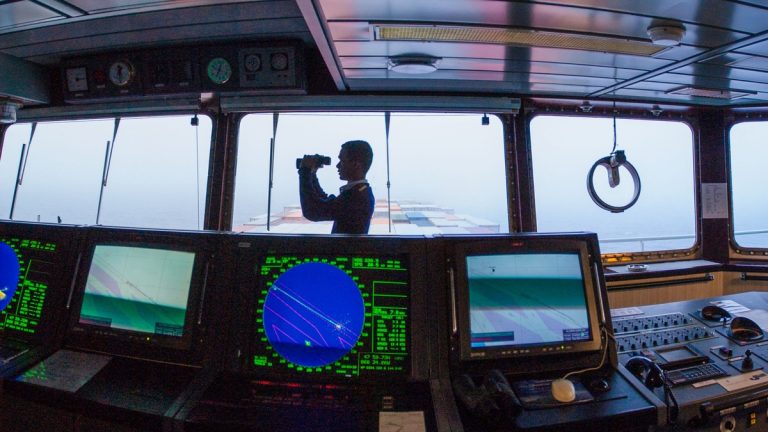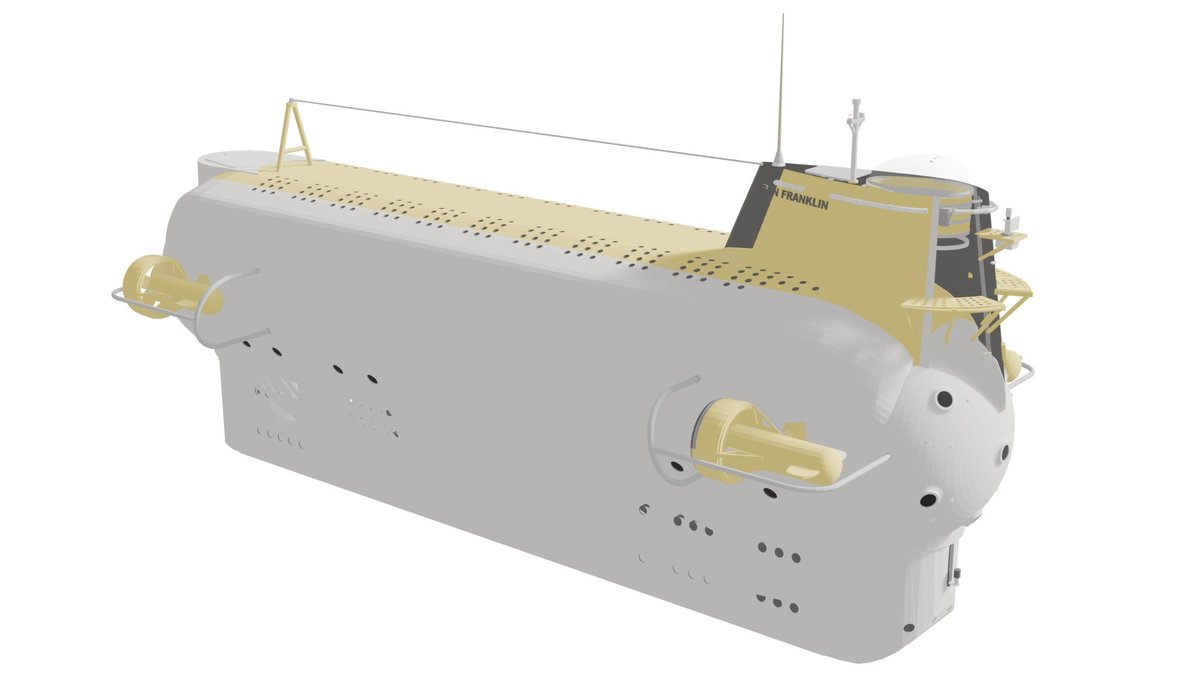
Thirty days inside a powerful ocean current placed six men and their research vessel in a setting that few people had ever experienced. In the summer of 1969, the submarine Ben Franklin let the Gulf Stream carry it north from Florida. The crew lived underwater through the changing conditions of the current. Their route ended far from the launch point, near the waters south of Nova Scotia.
NASA records that the vessel entered the Atlantic off Palm Beach, Florida, on July 14 and surfaced on August 14 after traveling 1,444 nautical miles. The agency’s Ben Franklin record places the drift between 600 and 2,000 feet below the surface. The planned work joined ocean observations with a close look at how people and equipment held up during a long closed-environment voyage.
That combination gives the expedition a special place in the history of Gulf Stream research. It produced direct observations from a vessel moving with the water. Its crew managed air, power, supplies and instruments. Daily routines continued in a confined space. The mission also unfolded during the days when Apollo 11 became one of the world’s most closely followed events.
Drifting inside a moving river
The Gulf Stream is often described as a river within the ocean because it moves warm water through the North Atlantic. That image helped explain the challenge facing the mission. A research ship can choose a course across a current. The Ben Franklin spent much of its voyage carried along within it. This gave the crew a changing view of water conditions along one long path.
The Smithsonian account identifies Swiss oceanographer Jacques Piccard as the leader of the crew of six. It describes the expedition as a joint U.S. Navy and NASA effort. The program measured current speed and watched marine life. It also recorded sound, monitored light levels and mapped parts of the continental shelf. Those activities connected the voyage to several fields of ocean science.
Its name also linked the vessel to a much older effort to make sense of the current. In 1769, Benjamin Franklin published a Gulf Stream chart after learning from mariners who crossed the Atlantic. NOAA recounts that history in its account of the map. Two centuries later, the submarine named for him brought observers beneath the surface of the same broad flow.
A laboratory beneath the surface
NASA listed several goals for the voyage. The team would investigate the Gulf Stream, study the effects of a stressful long-duration closed-environment voyage on people and demonstrate operational ideas for extended submersible work. Those aims made the Ben Franklin a working laboratory as well as a transport. The crew had to maintain the vessel while making observations in a setting with little room for error.
The surviving captain’s log shows how routine tasks shaped the scientific mission. Entries note depth changes, power checks, humidity and air-cleaning materials. They also record lights used for observation. The record describes internal waves that moved the vessel up and down at depth. Such notes capture the practical conditions surrounding every measurement and every day of work.
On July 20, the crew learned through its support ship that Apollo 11 had landed on the Moon. The timing was striking. Their own mission had begun less than two days before the lunar launch and it continued while the astronauts completed their journey. Smithsonian notes that the Moon landing overwhelmed public attention to the ocean voyage, even as the Ben Franklin remained underwater.
What the instruments could show
One Grumman research memorandum preserved by NASA describes planned optical measurements of chlorophyll, minerals, colored dissolved material and bioluminescence. The plan called for observations at least three times a day. Many were expected at night and within the upper few hundred feet, when background light would be lower. The work aimed to compare readings as the vessel shifted depth or location.
These measurements offered a view of conditions along the crew’s particular drift track. The mission could also observe animals, light, sound and changes in the water around the submarine. Its results belong to the long record of Gulf Stream exploration, which includes ship surveys, coastal observations and later satellite measurements. The Ben Franklin added the uncommon perspective of people living inside the current for more than a month.
The expedition also tested the link between ocean operations and spaceflight planning. NASA wanted evidence about sustained confinement, a concern for crews who would spend long periods away from ordinary support. The voyage demonstrated that a six-person crew and a long-endurance submersible could continue a planned program through a demanding drift. It supplied operational experience that NASA could consider alongside its wider human-spaceflight research.
Keeping a place in the current
Drifting required active work by the Ben Franklin crew. The current had edges and changing layers and the crew sometimes adjusted the vessel’s position. On July 25, the captain’s log placed the submarine about 90 miles south of Cape Fear at roughly 200 meters. The entry says the boat crossed the north wall of the Gulf Stream. The crew then used two motors to try to return to the main flow.
The following day brought a further operational decision. The effort to return was unsuccessful, so the Ben Franklin began a slow ascent and its support vessel towed it. The crew kept the submarine sealed during the surface interval. That preserved the closed-environment conditions that mattered to the NASA study. The archive records a return to the dive site on July 27, followed by continued work.
These turns help define the mission’s scientific value with care. Its long track combined movement with the current, depth changes, equipment management and occasional intervention to sustain the program. Each observation belongs to the location and conditions in which it was made. The resulting record gives historians and ocean researchers a detailed view of an early extended submersible operation, along with the limits that come from following one complex current route.
Researchers reading the expedition’s measurements can also place them beside the operating conditions recorded by the crew. The optical plan made time of day and depth part of the measurement strategy because ambient light affected the instruments. The captain’s log adds a day-by-day account of the shipboard choices that created those settings. Together, the files preserve both the environmental observations and the practical framework needed to interpret them responsibly. That context marks the times and conditions under which instruments were used. It also makes the voyage easier to place beside other ocean observations.
Why the voyage still matters
Apollo 11 gave July 1969 an enduring public image of exploration. At the same time, the Ben Franklin followed a less visible route beneath the Atlantic. Both journeys depended on careful life support, disciplined crews and constant attention to equipment. The difference in public attention shaped how the submarine’s story was remembered, even though it was a major oceanographic undertaking of its era.
NASA reported that the craft and crew were in good condition when they surfaced about 300 miles south of Halifax. That ending matters because the mission had carried its people, equipment and experiments through more than 1,400 nautical miles of moving water. The complete voyage gave investigators a coherent record of a long drift, from descent off Florida to recovery in the northwest Atlantic.
Today, the Ben Franklin story helps show why the U.S. Navy, NASA and ocean researchers treated the sea as a demanding environment for human exploration. Its enduring contribution is a detailed, human-scale record of observing a major current from within, while testing the habits and systems needed for extended work below the surface.