NOAA Ocean Exploration’s historical account preserves Jacques Piccard’s description of the January 23, 1960 descent of the Trieste bathyscaphe to Challenger Deep. Piccard and U.S. Navy Lt. Don Walsh became the first people to reach the deepest known part of the ocean, then measured at roughly 35,800 feet. Their dive showed that people could enter an environment once reachable only by instruments and imagination.
The journey also carried a moment that would have stopped almost anyone else. At 32,400 feet, the crew heard a shudder and a sharp noise. They continued downward, reached the bottom after almost five hours and had about 20 minutes there before beginning the long return. The mission’s real legacy was larger than a record. It helped prove that careful engineering could bring observers to the seafloor’s most extreme terrain.
A vessel built for a crushing environment
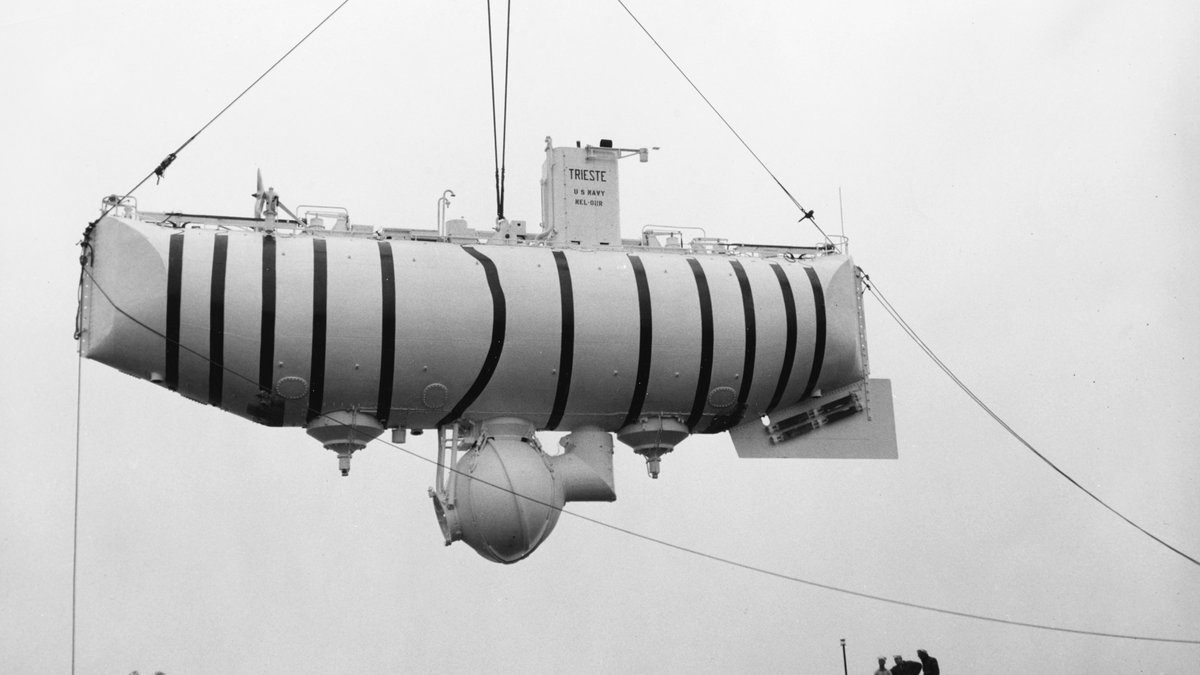
Trieste was a bathyscaphe, a type of deep-diving vehicle built around a small crew compartment and large buoyant floats. The craft had been designed by Auguste Piccard, Jacques Piccard’s father and built in Italy. The U.S. Navy bought it in 1958 for research and deep-submergence work. It later received a stronger German-made sphere whose walls were about five inches thick, according to the Naval History and Heritage Command.
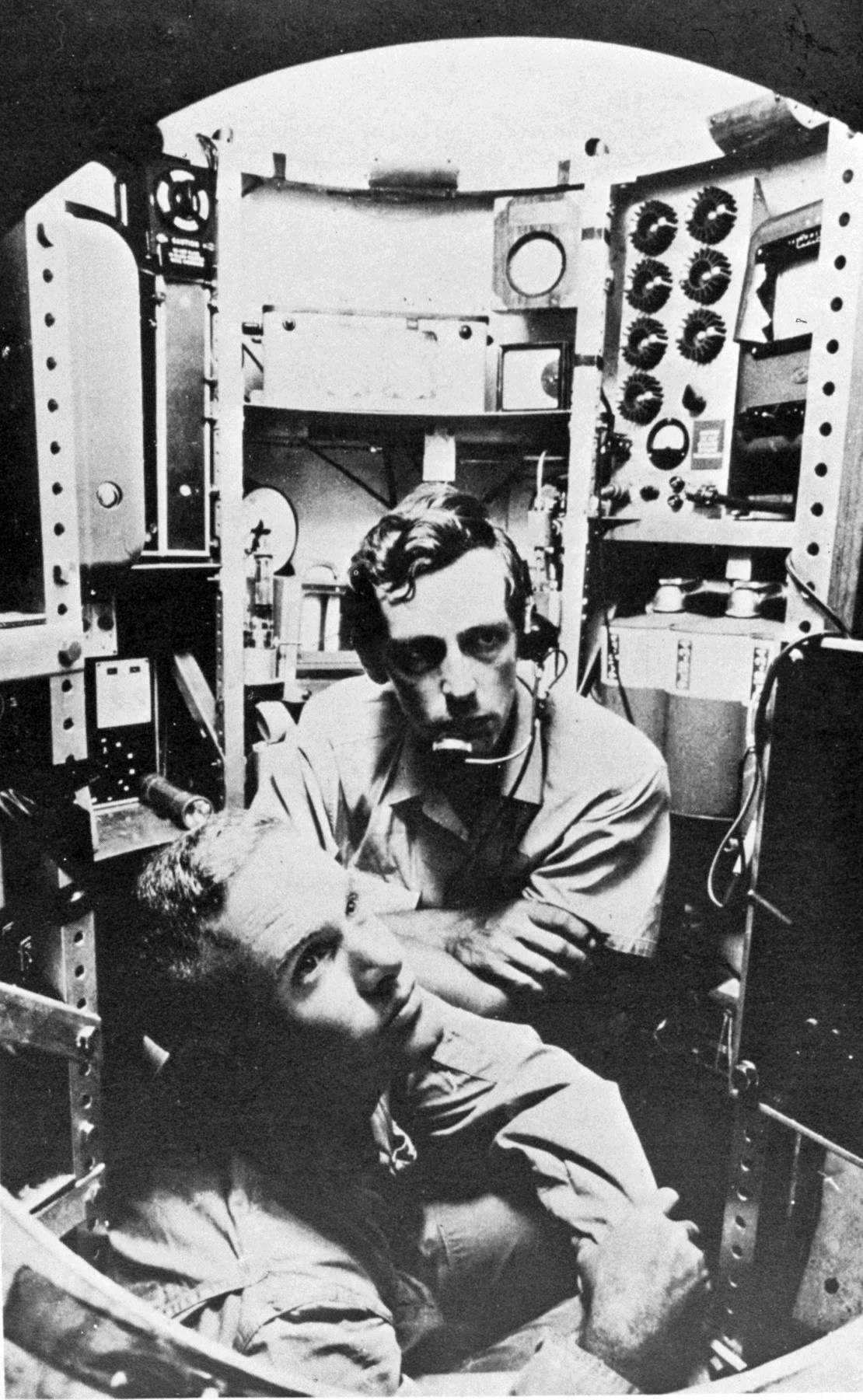
Inside that pressure sphere, Piccard and Walsh had room for only two people and essential equipment. The sphere sat below floats filled with gasoline, which remained buoyant under great pressure. Water ballast helped control the descent. Iron ballast supplied the weight needed to sink and could be released to start the return trip. The design was simple in principle, yet every part had to work after hours in near-freezing darkness.
The arrangement also explains why a bathyscaphe could descend without a large propulsive system. Buoyancy came from the gasoline-filled floats. The crew controlled the journey by taking on or releasing weight. That approach made Trieste unusually capable of reaching great depth, but it also left the vehicle with limited maneuverability and a narrow set of observations it could make once it arrived.
The slow descent toward Challenger Deep
Project Nekton began with test dives near Guam before the record attempt. On January 23, Trieste was towed to a location above Challenger Deep in the Mariana Trench. The Navy chose the site because it was the deepest known point in the global ocean. In 1960, the exact shape and depth of the trench were still being refined by soundings and later calculations.
Walsh and Piccard began descending in the morning. The trip took about four hours and 47 minutes. Their onboard gauge later proved to be incorrectly calibrated, which explains why it read 37,800 feet at the bottom while later estimates placed the dive closer to 35,800 feet. Official histories vary by a few feet. Examples include 35,797 feet and 35,814 feet. They all describe the same historic descent to the floor of Challenger Deep.
The crack heard 32,400 feet below the surface
At 32,400 feet, Trieste jolted and the men heard a loud noise. Historical accounts describe a crack in an outer Plexiglas panel in the entrance tube. The immediate danger was hard to judge from inside the sphere. Walsh later recalled that a catastrophic failure would already have crushed them, so the crew weighed the remaining evidence and chose to continue.
The cause is often simplified as pressure, yet the Naval History and Heritage Command says the crack was later linked to temperature change in the free-flooded entrance tube. That distinction matters because the main crew sphere remained intact. The event still narrowed their margin for error. On the ascent, they had to take care while using compressed air to empty the entrance tube, since a broken panel could have complicated their exit.
Twenty minutes on an almost unseen seafloor
Trieste reached bottom at about 1:06 p.m. The landing stirred up sediment, which limited visibility and shortened useful observation time. Piccard described a light-colored floor of fine ooze. The crew used a searchlight, communicated with the support ship above, checked the area for radiation and watched sparse animal life near the seabed. The planned bottom stay was about 30 minutes, while the reported useful time became roughly 20 minutes.
Communication with the support ship came as another surprise. The Naval History and Heritage Command says the crew could still communicate with USS Wandank while on the seafloor, even though that outcome had not been expected. The link gave the surface team confirmation that the two men had arrived safely. It also made the record immediate for the people waiting above, who had followed a descent lasting almost five hours without being able to see the vehicle.
One detail from the dive has taken on a life of its own. Piccard wrote that he saw an animal resembling a flatfish. Later scientists and naval historians treated that identification with caution because bony fish are not believed to live at that depth. The sighting’s scientific status remains unresolved and it is best treated as a disputed firsthand observation in the hadal zone. Shrimp and other sparse life were also reported and later deep-ocean research confirmed that life can persist in trenches under severe pressure.
Why the record changed ocean exploration
Reaching the seafloor mattered because it turned a theoretical engineering claim into a demonstrated capability. The Office of Naval Research, which acquired Trieste for the Navy’s deep-submergence program, described the dive as a landmark for ocean science and naval technology. The same broad effort supported work on submarine rescue, deep vehicles and later seafloor observation.
Trieste also showed the limits of early deep-diving craft. It could travel extraordinarily far down, but it had little room, weak maneuverability and a very small window for observation. Later research submersibles were designed to move more precisely, carry instruments, collect samples and support repeat dives. Those capabilities helped marine geologists, biologists and engineers ask better questions about the deep sea.
Why Challenger Deep’s historical depth changes
Challenger Deep has been measured repeatedly with improved methods and its reported depth has changed as instruments and reference systems improved. That is why modern descriptions should avoid treating every historical figure as a permanent exact value. For Trieste’s achievement, the important historical point is clear: it reached the seafloor at the deepest known location in the ocean, at a depth close to 36,000 feet.
A NOAA reference on ocean questions records the 1960 dive at 35,800 feet and notes a descent of four hours and 48 minutes with a return of three hours and 17 minutes. The NOAA reference also captures the scale of the trip, while a Navy history account describes the nine hours spent submerged. Those numbers make the mission feel less like a single dramatic moment and more like a long test of equipment, planning and nerve.
A foundation for deep-submergence science
More than six decades later, the dive still stands as a sharp reminder of how much of the ocean had remained beyond direct human reach. Trieste’s short visit established a proven route for later mapping, sampling and biological inquiry. Engineers learned that a carefully designed crew sphere could survive the descent and oceanographers gained a powerful example of why direct observation matters.
The voyage also left a useful lesson for science history. The famous crack, the changing depth figures and the disputed flatfish account are part of a real expedition recorded by people working at the edge of what their technology could verify. Keeping those details in view gives the achievement more weight. Trieste’s 1960 dive became an early milestone in deep-submergence science and its story still explains why the seafloor remains one of Earth’s hardest places to explore.