Oceans beyond Earth probably exist on several worlds beyond Earth, although most known examples are hidden beneath ice rather than spread across a planet’s surface. Evidence points to global or regional reservoirs inside moons of Jupiter and Saturn. Ancient Mars and Venus also preserve signs that liquid water once shaped their surfaces, while some distant exoplanets may contain large amounts of water.
Earth remains the only world known to have long-lived surface oceans and life. NOAA’s overview of oceans beyond Earth highlights Europa and Enceladus, two moons with strong evidence for salty subsurface water. Gravity and magnetic fields provide part of the evidence. Geology and plumes supply independent clues, as does the motion of an icy shell.
Earth is the only confirmed surface ocean world
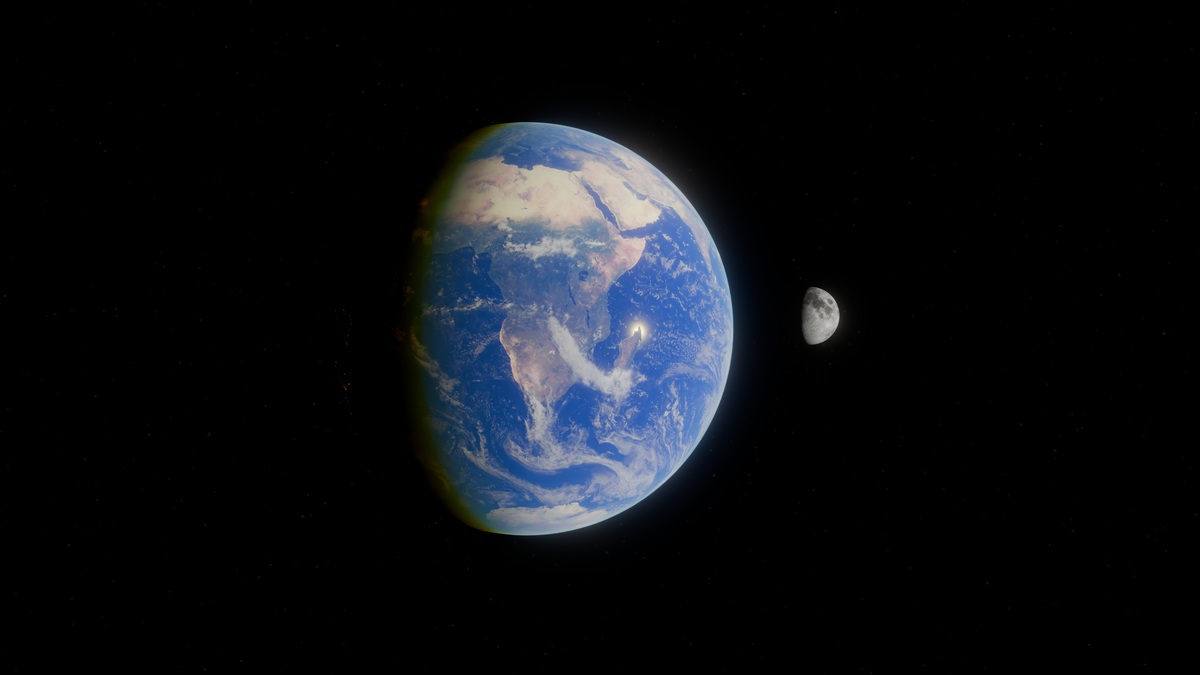
Liquid water covers about 71 percent of Earth’s surface. Atmospheric pressure and temperatures permit water to remain liquid across vast areas. The water cycle continually moves it among the atmosphere and land, then through ice and ocean. No other known planet combines those conditions at the surface today.
Distance from a star helps set temperature, but the habitable zone is only a first filter. A planet also needs suitable pressure and an atmosphere able to support liquid water. Cloud cover and surface reflectivity affect climate, as do rotation and greenhouse gases. Internal heat can preserve water far outside the traditional habitable zone when an ice shell slows heat loss.
Venus may have held water earlier in its history, but its present surface is extremely hot and dry. Mars has valleys, deltas, lake beds and minerals formed in water. The NASA Mars facts page describes evidence for a wetter ancient environment, though today most Martian water is frozen or bound in minerals.
Earth’s visible ocean is therefore one member of a much broader physical category. Planetary scientists define an ocean by a large body of liquid, regardless of whether an atmosphere touches it. Methane lakes on Titan are surface liquids too, although their chemistry differs from the water oceans central to the search for familiar life.
Europa probably hides a global ocean
Jupiter’s moon Europa has a young-looking icy surface crossed by ridges and disrupted terrain. Spacecraft measurements found an induced magnetic field consistent with a conductive layer beneath the ice, with salty liquid water as the leading explanation. Geological patterns also suggest the outer shell can move independently from the deeper interior.
NASA’s Europa ocean evidence explains that the moon may hold more than twice as much water as Earth’s oceans combined. Estimates remain model-dependent because no instrument has drilled through the shell. Its depth and salt composition remain uncertain. Scientists also need to know how much liquid touches rock.
Europa stays warm inside because Jupiter’s gravity flexes the moon along its slightly eccentric orbit. Friction from this tidal deformation produces heat. If liquid water touches a rocky seafloor, chemical reactions could provide energy and materials relevant to habitability.
The Europa Clipper mission is designed to investigate the moon during repeated flybys. Its instruments will study the ice and surface composition. Gravity and magnetic observations will probe the interior, while other instruments will examine possible plumes. The mission will assess whether Europa has conditions that could support life rather than search directly for organisms.
Enceladus sprays ocean material into space
Saturn’s small moon Enceladus offers unusually direct access to a hidden ocean. Jets erupt from fractures near its south pole, feeding a plume of ice grains and vapor. NASA’s Cassini spacecraft flew through this material, allowing instruments to sample compounds that came from inside the moon.
Measurements support a global salty ocean beneath the ice. Cassini detected molecular hydrogen in the plume, which can be produced when hot water reacts with rock. The NASA profile of Enceladus also describes organic compounds found in ejected material. Organics are carbon-bearing molecules and their presence alone is not evidence of life. Tidal heating supplies energy because Saturn’s gravity deforms Enceladus as it orbits. The active south polar region loses heat and material through its fissures. Scientists still investigate how long the ocean has existed and whether its chemistry remains favorable over geological time.
A future spacecraft could analyze fresh plume particles without landing or drilling through kilometers of ice. Samples collected in space would still require strong contamination controls and careful interpretation because nonliving chemistry can produce many compounds associated with biology.
Enceladus demonstrates why the idea of an ocean world no longer implies a blue surface. A world can keep liquid water in darkness beneath frozen crust, sustained by internal energy rather than sunlight.
Plume grains also provide clues about conditions at the seafloor. Tiny silica particles detected by Cassini are consistent with hot water interacting with rock before material entered the ocean and escaped. The interpretation relies on laboratory chemistry and models, so a future mission would seek additional measurements rather than treating one particle type as decisive.
Several other moons may contain water
Ganymede, the largest moon in the solar system, has magnetic and auroral evidence consistent with a salty internal ocean. Models suggest water may be arranged in layers separated by high-pressure forms of ice. Callisto also shows signs of a conductive layer that may be liquid.
Saturn’s Titan has methane lakes on its surface and is also thought to contain a water-rich ocean deep below. Mimas, once considered geologically inert, has measurements that can be explained by a relatively young subsurface ocean. Neptune’s moon Triton and the dwarf planet Pluto are additional candidates.
Exoplanet oceans are harder to confirm
Thousands of exoplanets orbiting other stars are known, but their oceans cannot yet be photographed like Earth’s. Astronomers estimate a planet’s size and mass before examining its orbit. For some worlds, they can also analyze atmospheric gases. Those measurements can suggest a water-rich composition without proving that liquid covers the surface.
Some planets may be water worlds with deep global oceans. At great depth, pressure can create exotic ice phases below the liquid layer, potentially separating water from rock. Other cold planets could conceal oceans beneath ice if radioactive decay or tidal forces provide enough internal heat.
A NASA study examined 17 icy exoplanets that might maintain internal oceans and even geysers under modeled conditions. The work produced predictions rather than detections. Better measurements of atmospheric composition and heat may help test such ideas.
Atmospheric water vapor is easier to detect than an ocean, but vapor has several possible sources. Clouds can hide deeper atmospheric layers and a planet’s measured radius may allow multiple interior compositions. Claims about exoplanet oceans therefore carry larger uncertainties than evidence from spacecraft visiting moons in our solar system.
Finding water is one step in assessing habitability. Scientists also look for usable energy and essential elements. Chemical gradients must persist under conditions stable enough for biology. An ocean could still be too hot or too cold for known life, while isolation from rock may restrict its chemistry.
How scientists decide an ocean is present
No single clue settles every case. Gravity measurements reveal how mass is distributed inside a world. Magnetic observations can detect electrical induction in a conductive liquid. Surface fractures may record movement above water, while plumes can carry interior material outward.
Radar may probe ice thickness and internal structure. Spectrometers identify surface compounds and thermal instruments locate warm regions. Scientists compare all of these observations with physical models, looking for an explanation that accounts for several independent data sets.
Confirmation becomes stronger when predictions succeed. A hidden-ocean model gains support when it correctly anticipates magnetic behavior and shell motion. Agreement with plume composition narrows the alternatives further. Even then, estimates of depth or salinity retain uncertainty until missions gather more precise evidence.
The strongest cases currently belong to nearby moons because orbiters and flyby spacecraft can measure them in several ways. Exoplanet telescopes observe a point of light blended with its star. Both fields are advancing, but the word ocean should be read as a measured inference whose confidence depends on the available evidence.
Related reading: what extremophiles reveal about habitability and how hydrothermal vents differ from cold seeps.