The short answer is no: Earth’s ocean contains no astrophysical black holes. A true black hole is a cosmic object with gravity so intense that light cannot escape from its event horizon. The sea has deep pits, powerful spinning currents and dark places that can look startling in photos or videos. Each has a physical explanation rooted in rock, water, wind, or light.
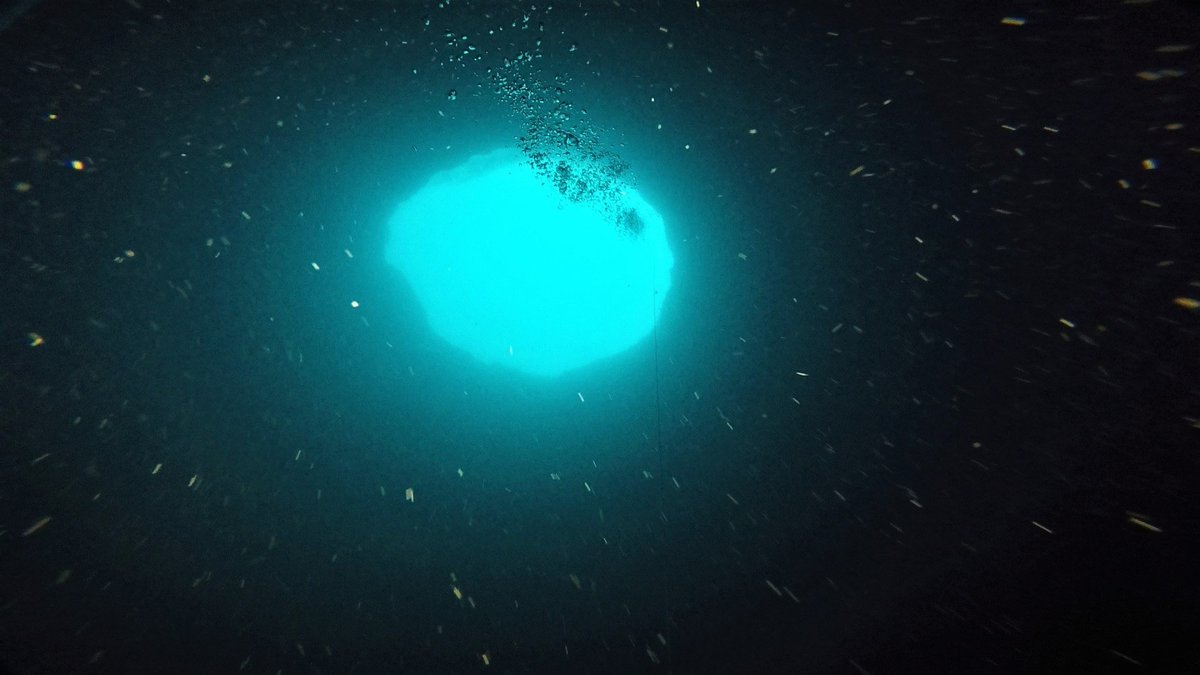
Much of the confusion begins with the words people use for dramatic ocean features. NOAA Ocean Exploration’s work at Amberjack Hole documents one of the most compelling examples, a submerged sinkhole off Florida’s Gulf coast. Its deep opening and striking blue water make a memorable image. The feature belongs to karst geology, a landscape shaped when water dissolves soluble rock.
What an astronomical black hole is
An astrophysical black hole forms in space, far beyond Earth’s oceans. It is an extreme concentration of matter in a tiny region. NASA explains that the boundary around such an object is called an event horizon. Matter and light that cross that boundary cannot return to the outside universe.
The astronomical definition depends on enormous mass compressed into a very small volume. Water pressure in the deep sea can be crushing for divers and equipment, yet it does not produce the gravity of a black hole. A deep trench, cave, or sinkhole remains part of Earth’s surface system. Its water, rock, organisms and sediments all respond to ordinary gravity.
Scientists locate cosmic black holes by studying their effects on nearby stars, gas, light and space-time. NASA’s black-hole overview describes several clues. Observable clues include hot disks of gas, unusual stellar orbits, gravitational waves and bent light. The observations belong to astronomy. Oceanographers study the seafloor and water column with ships, divers, sonars and sampling instruments.
The difference matters because an astronomical black hole has an event horizon and an ocean feature does not. Deep water can block sunlight, hide a bottom and create the visual sense of a void. Darkness is an effect of light and depth. It does not signal a cosmic object under the waves.
Blue holes are flooded sinkholes
Blue holes are underwater sinkholes, often found where limestone and other carbonate rocks have been shaped by water over long periods. The U.S. Geological Survey explains that sinkholes commonly develop where groundwater dissolves rock and leaves spaces or caverns. In a coastal or offshore setting, seawater can fill those openings and make a deep, round, blue feature.
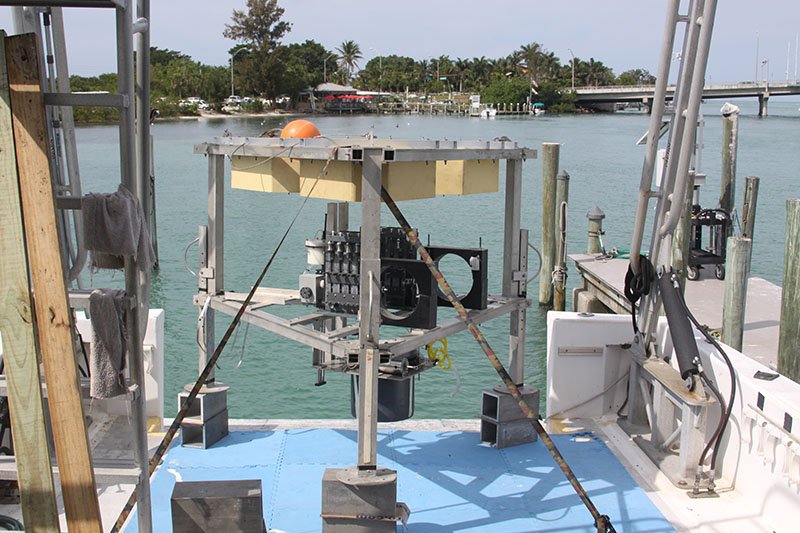
Florida’s offshore blue holes are part of a wider karst landscape that includes springs and caverns. NOAA’s Amberjack Hole expedition brought technical divers and a benthic lander to the site. The rim lies about 34 meters below the surface and the bottom extends beyond 107 meters. Researchers collected water and sediment samples to study nutrients, carbon-based compounds and microscopic life in and around the hole.
From above or from a diver’s view, the opening can resemble a dark circle cut into the seafloor. Clear water absorbs different colors of light along a long path, while the shaded interior and depth reduce what an observer can see. The visual effect is real, although the “black hole” label is a metaphor. The geology involves dissolved rock and submerged cavities, as the USGS account of sinkhole formation shows.
Blue holes can also be important habitats and scientific sites. NOAA reports that Amberjack Hole samples contained layered microbial communities and markers that suggest a groundwater connection. Researchers also documented nutrient movement from bottom sediment into the water. Seafloor observations help explain why a deep hole in the seafloor can affect nearby life and water chemistry without invoking any exotic physics.
Whirlpools and vortices are moving water
A whirlpool has a very different story. It is a visible rotation in water. It can form where currents meet, water passes through a narrow channel, tides change, or flow encounters an obstacle. A small drain swirl and a large tidal whirlpool share the basic idea of water circling around a center, although their scale and power differ greatly.
Ocean scientists call many spinning water features vortices or eddies. They can form at the edges of currents, behind islands, near coastlines and where water masses move at different speeds. Their centers may look like funnels from above. Water still moves through these systems according to fluid motion, pressure differences, friction and Earth’s rotation.
NOAA notes that ocean currents can be driven by wind, density differences and gravity. Storms, earthquakes and the shape of the seafloor can also influence flow. A current squeezed through a confined opening can become especially strong. Such a flow may be dangerous to swimmers, boats, or scientific equipment, yet it has no event horizon and no one-way gravitational boundary.
Videos sometimes make a spinning patch of ocean seem to pull the whole sea downward. Perspective, foam, shadows and a fast camera angle can heighten that impression. In reality, water that enters a vortex follows a path controlled by the local flow. Conditions change as tides, wind, shoreline shape and current strength change. Mariners assess those conditions as hazards of moving water.
Why the ocean metaphor is so persuasive
Dark openings, circular currents and unknown depths invite familiar comparisons. The term “ocean black hole” usually describes something that appears to draw in water, light, floating material, or attention. It is a popular image rather than a scientific category. Using the actual name for a feature keeps its history and behavior clear.
Some mix-ups involve black smokers, the dark mineral-rich plumes from certain hydrothermal vents. Seawater can circulate through cracks in ocean crust near volcanic settings, heat up and rise again through a vent. NOAA’s hydrothermal-vent resource describes that cycle. The dark color comes from minerals in the hot fluid, not from light trapped by gravity.
Ocean depth adds another layer to the metaphor. Sunlight weakens with depth and the deep seafloor can appear pitch black except for vehicle lights or living bioluminescence. Pressure rises with depth as the weight of water above increases. Extreme pressure and darkness make exploration difficult and give deep places an air of mystery, while their processes remain measurable.
The ocean is full of features that deserve their own names. They include submarine sinkholes and caves. Other examples include trenches, eddies, tidal channels and hydrothermal vents. Calling them by those names separates geology from astronomy and flow from gravity. It also points toward better questions, such as how a blue hole formed, why its water chemistry differs, or what forces are driving a whirlpool.
Scientific precision still leaves room for wonder. A diver looking into a blue hole or a sailor watching water twist through a strait is seeing a powerful natural scene. Research turns the scene into evidence about rock and groundwater. It also tracks currents, life and the changing ocean. The result is every bit as remarkable as the metaphor and far more useful for understanding what is actually there. It also helps people judge dramatic claims in photographs and videos. A dark patch may reflect depth, a shadow, clear water, or a change in the seafloor. A spinning patch may reveal local currents. Careful ocean exploration connects the image with measurements of depth, water chemistry, flow and geology. Scientists use several independent observations before drawing a conclusion. Multibeam sonar maps the seafloor shape. Instruments can measure temperature, salinity, dissolved gases and nutrient concentrations. Samples can reveal microbes and sediments. Geologic and biological evidence lets a surprising scene become a map of connected processes. It also shows why a label taken from astronomy cannot replace a geologic or oceanographic description. Researchers repeat such measurements across seasons and locations because water conditions can change quickly. Patient observation turns an eye-catching opening into a well-defined feature within the larger ocean system.