The ocean contains animals with transparent bodies, light-making organs, dangling tentacles and mouths that seem designed for a science-fiction set. Unfamiliar body plans can make a first encounter feel uncanny. The scientific answer to the question is clear, though: there is no evidence of extraterrestrial aliens in Earth’s ocean.
Across all of science, no verified evidence points to extraterrestrial life in the ocean. NASA’s astrobiology program says no life beyond Earth has been found and it reports no evidence that alien life has visited this planet. Ocean animals can be astonishing, yet their bodies, habitats and relationships with other living things are studied as part of Earth’s biosphere.
The setting helps explain the confusion. NOAA Ocean Exploration describes a deep ocean shaped by darkness, cold, scarce food and enormous pressure. Over long spans of evolution, those conditions favor distinctive ways of sensing and feeding. They also shape how animals hide and move compared with those people usually see near shore.
What the evidence says
Science needs observations that can be checked. For an extraordinary claim about extraterrestrial life in the sea, researchers would need specimens, measurements, or other testable evidence that cannot be explained by known Earth biology. No such evidence has been verified. A strange outline in a submersible video, a deep-water sound, or an unfamiliar animal is a reason to investigate carefully.
Known marine species belong to lineages that scientists compare through anatomy, development, behavior and chemistry. They often use DNA too. A lanternfish, octopus, sea cucumber, or comb jelly may look unfamiliar to human eyes. Each fits within the immense and still-growing record of life on this planet. New species can be genuinely new to science without being visitors from another world.
Undiscovered ocean life would still be part of Earth’s biosphere, while many marine species remain undocumented. Scientific evidence grows through repeatable observations and independent checks. Curiosity about odd creatures can lead to better questions about evolution and ecology. It does not provide a shortcut to a claim that reaches beyond the available data.
A good scientific investigation keeps several possibilities open at the start. An image may show a poorly lit animal, an unfamiliar viewpoint, a rare behavior, or an organism that deserves formal description. Researchers can compare footage with prior records, observe the habitat and collect a sample when that can be done responsibly. The strongest answer comes from that accumulated evidence.
Why deep-sea animals look alien
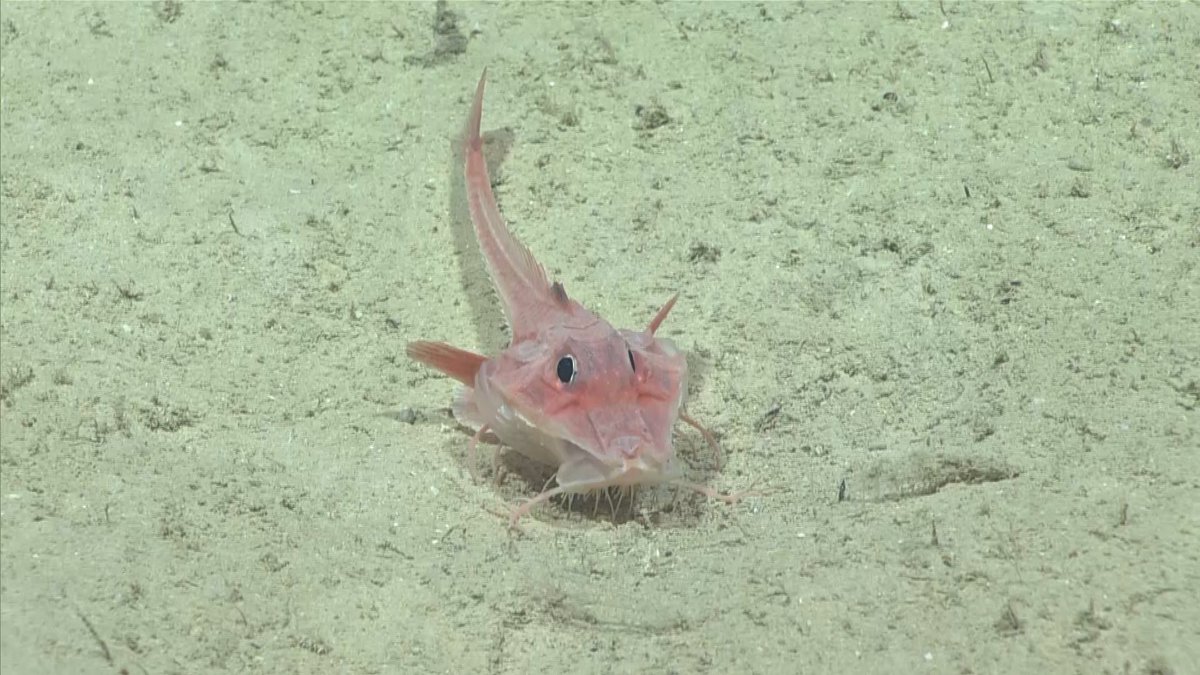
Human expectations are built around daylight, air and familiar land animals. Deep-water life developed under a very different set of pressures. Many species are soft, translucent, or red. Some have oversized eyes, while others rely heavily on touch, vibration, or chemical signals. A body that seems bizarre at the surface may be well suited to its own neighborhood.
Light is one reason. NOAA explains that bioluminescence is light made through a chemical reaction in an organism. In the ocean water column between 200 and 1,000 meters, NOAA says 80 percent of animals are bioluminescent. Blue light travels well through seawater, so a flash or glow can help with defense, finding food, or reproduction.
Form is another reason. Delicate colonial animals called siphonophores can look like a single creature at first glance. They are made of specialized units that work together. Cephalopods can use transparency, dark coloring and gelatinous bodies in the deep. Such features are adaptations shaped by selection in a habitat that people rarely visit.
Color can be deceptive as well. Red light does not reach the deepest zones, so red animals can appear dark to animals that rely on the available blue light. Long feelers, loose tissues and wide jaws may also seem exaggerated in a camera image. A close look at habitat and behavior gives those shapes a clear ecological purpose.
Surviving a world without sunlight
Below about 200 meters, sunlight is absent, according to NOAA Ocean Exploration. The loss of sunlight removes the energy source used by plants and algae near the surface. Food still arrives from above as marine snow, a slow fall of dead organisms, waste and other organic particles. It supports many animals that wait, drift, or feed on what sinks through the water.
Some deep-sea communities have another route to food. Chemosynthesis lets bacteria and other organisms use energy from chemicals such as sulfides or methane to make food. Chemosynthetic microbes may be eaten directly, or they may live in close partnerships with larger animals. Chemosynthesis supports life where sunlight cannot reach.
Darkness also changes how animals communicate and avoid danger. A glowing signal may attract a mate, lure prey, or confuse a predator. Camouflage can involve transparency or colors that vanish under the available light. Bioluminescence and unusual anatomy may look theatrical in a camera beam, yet they serve practical jobs in a place where every meal and encounter can matter.
Food is patchy at depth and many animals must use energy carefully. Some drift through the water column, while others wait on the seafloor for material to arrive. Limited food helps account for slow movement, expandable stomachs and feeding structures that look dramatic in photographs. In biology, a striking feature usually becomes more understandable when it is connected to a daily task.
Pressure shapes life at depth
Water pressure rises by about one atmosphere for every 10 meters of depth. At the bottom of the Mariana Trench, NOAA says pressure reaches about 1,000 times the standard atmospheric pressure at sea level. The trench is more than 11,000 meters below the surface. The deep ocean is a severe physical environment for humans and surface equipment.
Many organisms avoid one major problem because they lack lungs and other large gas-filled spaces. NOAA’s pressure overview notes that water is incompressible, so animals that are largely water can be less affected by compression than an air-breathing visitor. Their cells and proteins still need to work under pressure, which is why bringing deep animals to the surface can complicate study.
Cold adds another challenge. NOAA describes average water temperatures of about 4 degrees Celsius below roughly 200 meters. Together, low temperature, darkness and limited food create a demanding environment. Ocean pressure adds another constraint that rewards efficiency. Darkness, cold and pressure can make deep-sea life seem distant from ordinary experience while remaining fully part of Earth life.
Pressure also means that methods used in a shore laboratory may not capture the animal’s normal condition. A specimen can be damaged during collection or change as it rises through the water. Video observations from the animal’s own environment are therefore valuable. They show posture, movement, neighbors and behavior before a sample reaches the surface.
How the deep sea is explored
Much of the deep ocean is difficult to reach, which leaves room for real surprises. Scientists use sonar, cameras, sample containers and instruments that measure water conditions. A creature first seen on a video feed may need repeated observations and close study before researchers can decide whether it represents a known species, a new species, or an unusual behavior.
Remotely operated vehicles help make that work possible. Tethered remotely operated vehicles can send live video to a ship while collecting samples and environmental data. NOAA’s Deep Discoverer, for example, gives researchers access to deep habitats without putting people under extreme pressure.
Careful observation and verification reveal how unfamiliar Earth life survives. The sea has produced extraordinary adaptations and many organisms remain poorly known because they are hard to observe or collect. Each well-documented discovery adds to the map of Earth’s biodiversity. So far, that map contains no verified ocean aliens, only a remarkable planet full of life that has had billions of years to diversify.