By asking adults how ocean decline made them feel, a study in Frontiers in Psychology found a striking split in public reaction. In a nationally standardized U.S. sample of 1,226 adults, 27 percent said they felt overwhelmed by the dire state of the ocean and what they could do to help.
The same feeling was linked with more concern about conservation and with several reported actions, including reducing carbon footprints and taking steps to protect the marine environment. The paper, published in Frontiers, treats the finding as a psychological clue about ocean stewardship, because worry may sit close to action for some people and close to helplessness for others.
Chris O’Halloran, the study author, framed the work as an exploratory test of ocean-related eco-anxiety, conservation behavior and emotional connection to the marine environment. The survey used a single yes-or-no item, “I am overwhelmed by the dire state of the ocean and what I can do to help.” That narrow measure is important because it captures one clear feeling, while leaving out other parts of eco-anxiety such as repeated worry, sleep problems, or guilt about personal environmental impact.
What the survey asked
The study drew on an anonymous online survey conducted on May 18 and 19, 2022. Respondents had to be adults living in the United States, literate in English and able to complete the survey online. The final group was standardized by age, gender and geographic region, a design choice meant to make the sample closer to the adult U.S. population on those measures.
Participants answered closed-ended questions about their ocean activities, beach visits, ocean knowledge, emotions, health experiences near the sea and conservation behavior. The questionnaire also asked whether people had joined beach cleanups, donated to ocean nonprofits, eaten sustainable seafood, voted for ocean conservation, recycled, or reduced plastic use. Those answers let the author compare emotional overwhelm with practical signs of ocean stewardship.
The eco-anxiety measure was intentionally simple. The paper describes it as an exploratory single-item measure of emotional overwhelm, which differs from longer scales such as the Hogg Eco-Anxiety Scale or climate worry scales. A single question can be easy for respondents to answer, yet it can miss the wider mix of thoughts and behaviors that scientists often include when they study climate or ecological anxiety.
The 27 percent result
Twenty-seven percent of the sample, 328 people, said yes to feeling overwhelmed by the state of the ocean and what they could do to help. In everyday terms, roughly one in four adults in the survey placed themselves in that emotionally stressed group.
The number sits close to earlier environmental research mentioned in the paper, where about 30 percent of participants reported feeling overwhelmed by ocean degradation and the conservation action it might require. O’Halloran’s study adds a direct ocean-focused U.S. survey to that wider picture, with the ocean treated as both an ecological system and a source of emotional strain.
The study also gives the sample enough detail to keep the result grounded. Most participants were White, just over half were female, the largest age group was 45 to 60 and the largest income group reported less than $50,000 per year. Because the sample was standardized on age, gender and region, the headline result is stronger than a casual poll, while the online volunteer panel still leaves room for selection bias.
Anxiety linked with conservation concern
The strongest association in the final model involved ocean concern. Respondents who said they were very concerned about ocean conservation were 30 percent more likely to report ocean-related eco-anxiety, with a risk ratio of 1.30 and a 95 percent confidence interval from 1.24 to 1.36.
Fear also tracked with the overwhelmed response. People who agreed that fear motivated them to take conservation action had a 20 percent higher likelihood of reporting ocean-related eco-anxiety. The paper treats that link carefully: negative emotions may motivate some action, even as severe overwhelm can make action feel harder.
Several reported behaviors moved in the same direction. Respondents who had reduced their carbon footprint were more likely to report ocean-related eco-anxiety, as were those who said they took actions to protect the ocean and marine environment. The results also linked eco-anxiety with saying that being near the ocean decreased depression, which suggests a complicated emotional bond with the sea: the ocean can be a source of distress when people think about damage, while proximity to it may also feel restorative.
Government responsibility stood out
One result points to how personal agency may enter the picture. Respondents who agreed that ocean protection is the sole responsibility of government were 13 percent more likely to report ocean-related eco-anxiety. The paper interprets that association as a possible sign that lower personal agency may increase distress when people face large environmental problems.
Public policy remains central. Ocean threats such as warming, acidification, biodiversity loss, plastic pollution and overfishing require laws, enforcement, funding and international cooperation. The survey result suggests that people who feel ocean protection belongs only to government may also feel more overwhelmed by the scale of the problem.
Age added another clue. Adults aged 30 to 44 were significantly less likely to report ocean-related eco-anxiety than the reference group in the final model. The paper leaves the reason for that age pattern open, while showing that emotional responses to ocean decline varied across the adult population.
Why the ocean can affect mood
Ocean eco-anxiety belongs to a wider family of eco-emotions, including worry, grief, fear, anger and sadness about environmental damage. The paper notes that the ocean covers about 71 percent of Earth’s surface and plays major roles in climate regulation, heat absorption, carbon cycling, oxygen production and the water cycle. Damage to such a vast system can feel abstract and personal at the same time.
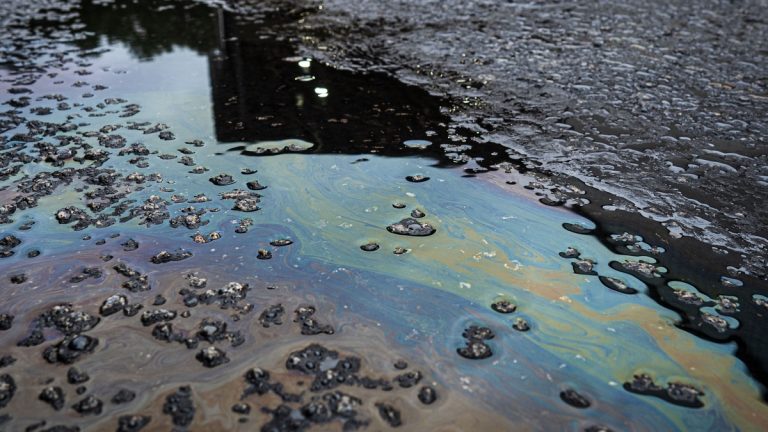
For coastal communities, the ocean can also carry work, identity, memory and culture. Even for people who live inland, images of coral bleaching, plastic waste, oil spills, coastal flooding and marine wildlife losses can make ocean decline feel close. The survey measured one common response: feeling overwhelmed by the problem and by the question of useful action.
The study examines emotions, pro-environmental behaviors and demographic predictors of ocean-related eco-anxiety. Its focus reaches beyond the condition of the sea to ask how environmental change enters daily life through attention, concern and choices.
The limits are central
The study design was cross-sectional, meaning the survey measured feelings, beliefs and behaviors at one period, with no follow-up across years. Because of that design, the results show associations. They cannot show whether ocean-related anxiety caused conservation action, whether people already taking action became more aware and anxious, or whether another factor influenced both.
Self-reporting adds another caution. People may forget details, answer in socially desirable ways, or differ from adults who avoid online survey panels. The author also notes that all constructs, including eco-anxiety and the covariates, were measured with single-item questions. That makes the study efficient, but it limits reliability and may miss the layered nature of emotional responses to environmental decline.
Within those limits, the survey points to a group of adults who feel overwhelmed and also show stronger conservation concern or reported action. Future studies using longer validated scales, repeated surveys and experiments could test whether certain messages help people move from distress toward useful action without deepening helplessness.
What stewardship messages can learn
Ocean conservation campaigns often lean on facts about damage: rising heat, plastic waste, biodiversity loss and threats to coastal habitats. The new study suggests that emotional design also deserves attention. If fear and concern can be linked with action, then conservation messages may need to offer a clear path for involvement, so people face a large threat with a next step in reach.
That path could include local beach cleanups, plastic reduction, sustainable seafood choices, donations, voting and support for stronger ocean policy. The survey leaves action rankings and real-world environmental outcomes for other research. It does show that pro-environmental behaviors and emotional overwhelm were connected in the responses.
For mental health, the key lesson is restraint. Ocean-related eco-anxiety in this study was a self-reported feeling of overwhelm, separate from a clinical diagnosis or full disorder. A careful response would treat distress about the ocean as a real emotional signal, while helping people find social support, trustworthy information and achievable ways to participate in conservation.
The study’s most useful message is a balanced one. A large share of U.S. adults in the sample felt overwhelmed by ocean decline and that feeling appeared beside stronger concern and more reported stewardship. The evidence supports attention to emotion in ocean conservation, while the causal story remains open for better studies to test.