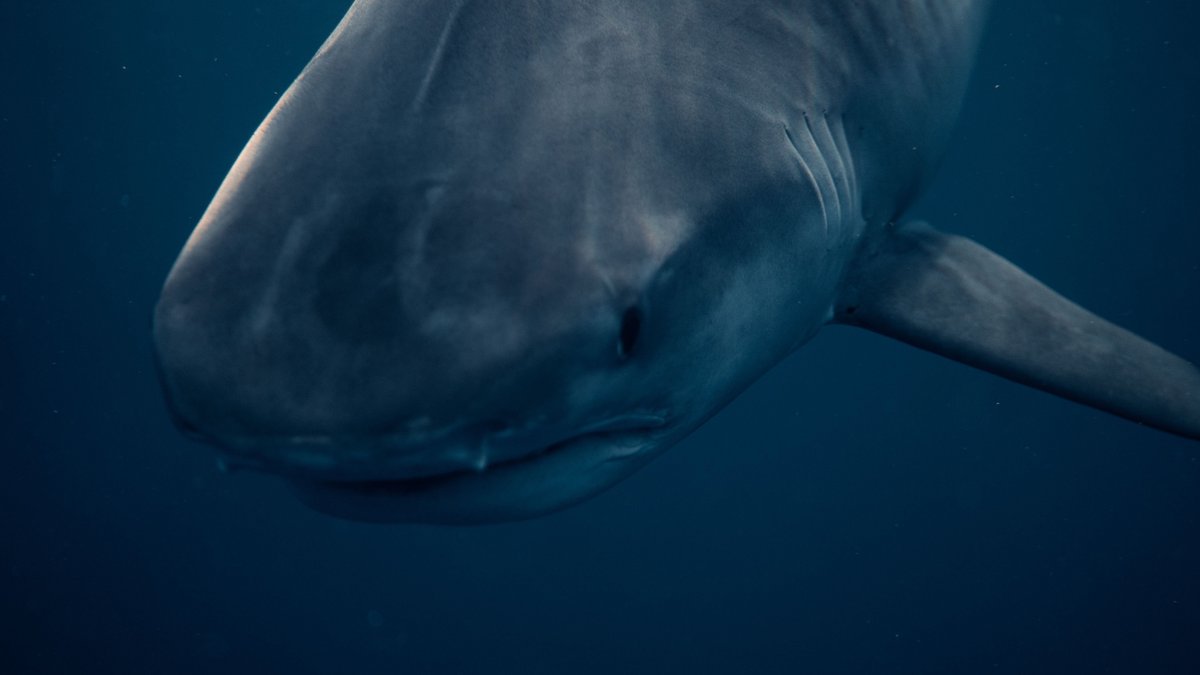
Which animal sits at the top of the ocean food chain? The answer changes with the place, the prey and the connections that make up a food web. Ocean food webs have many branches, so one predator can eat prey from more than one level. Its position can also shift during its life. Scientists examine diet, prey abundance and species interactions to describe those roles. A predator can hold a high position around a coral atoll, in an Antarctic bay, or within a kelp forest while another predator takes a similar role elsewhere. Ecologists call that position a trophic level, which describes where an animal gets its energy in a particular web of feeding relationships.
That local view makes the ocean more interesting. NOAA’s overview of sharks describes how predators can influence prey and habitats through top-down effects. Predators affect prey directly through feeding. Their presence can also change where prey feed or gather. The list groups 10 animals by the food webs where they hold high-level roles. NOAA’s food-web primer also shows why removing a top predator can send changes through several connected populations. Scientists describe these effects cautiously. Water temperature, habitat, fishing pressure and prey numbers can change the response. The goal is to trace connections within each ecosystem. Marine scientists compare these relationships over time, which helps distinguish short-term events from changes that persist across seasons. That evidence can guide decisions about habitats and fisheries.
1. Killer whales and great white sharks
Killer whales, also called orcas, belong near the top in many marine systems. They live in every ocean, yet their diets can differ greatly among populations. In the eastern North Pacific, resident killer whales mainly eat fish, especially salmon. Bigg’s killer whales mainly take marine mammals and squid. Their coordinated hunts can bring several relatives together around prey, a behavior described by NOAA Fisheries. Diet determines which prey populations each group affects most directly. It also shows why an orca’s ecological role depends on its population and home waters.
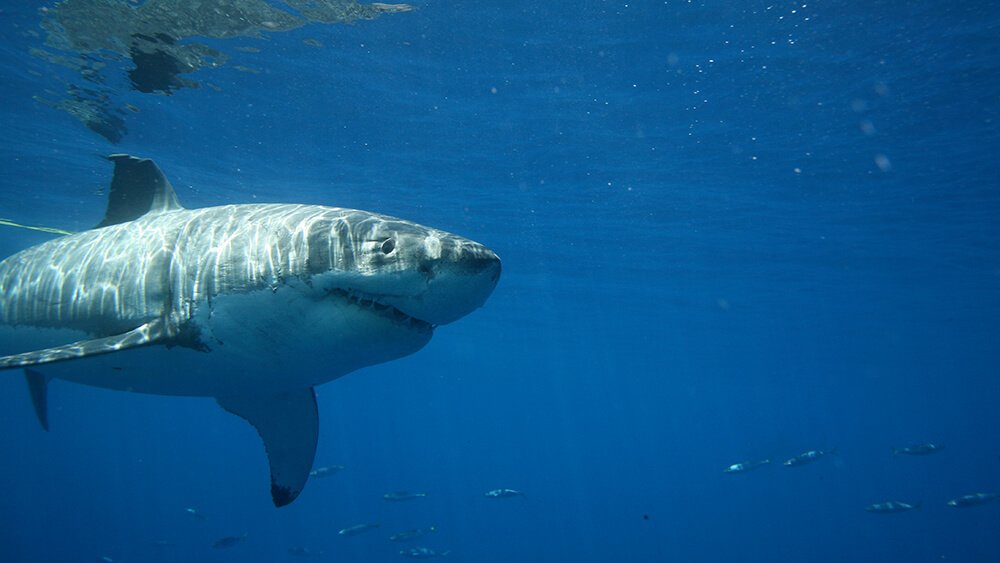
Great white sharks hold a comparable high-level role in many coastal food webs. Adults can feed on seals and sea lions as well as fishes and rays. Younger sharks often take smaller prey. That shift matters because a food web changes as an animal grows. White sharks can also become prey in rare encounters with orcas, a reminder that marine relationships have several layers. Their influence comes from their place in particular coastal systems, where prey behavior and numbers can respond to the presence of a large hunter. Each seasonal movement can connect feeding areas that look separate on a map. A coastal food web therefore includes both the shark and the places its prey use.
2. Tiger sharks and Galapagos sharks
Tiger sharks are broad-diet predators of warm coastal waters. They eat fishes, rays and sea turtles. Seabirds and other sharks can also become prey. This flexible diet lets them connect several parts of a local food web. NOAA’s sanctuary account notes that tiger sharks are among the sharks known to prey on green sea turtles. That interaction can influence where grazers feed, which can matter in seagrass habitats. The strength of that effect depends on local conditions and the species present. A turtle feeding ground and a shark hunting area can overlap only at certain times of year.
At Pacific atolls, Galapagos sharks are part of a group of powerful reef predators. NOAA Fisheries describes Galapagos sharks and giant trevally as dominant in number and biomass among the predator assemblage at Papahānaumokuākea Marine National Monument. Large Galapagos sharks have also preyed on Hawaiian monk seal pups at French Frigate Shoals. These observations show a top-predator role shaped by a precise setting. Reef size, prey abundance and the presence of other large hunters all affect the role. Researchers can study those relationships without assuming that one site represents the entire Pacific.
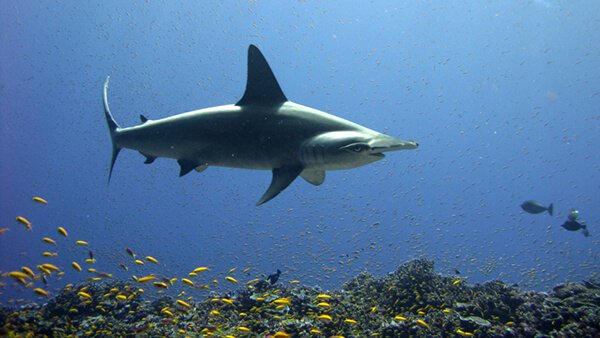
3. Scalloped hammerheads and bull sharks
Scalloped hammerheads bring the top-predator idea to Pacific coral reefs. NOAA’s shark ecology article identifies them as apex predators that help keep grazers and mid-level predators in check. When predators affect a mid-level hunter, the impact can reach the herbivorous fish that graze algae. That chain can influence conditions for corals, although every reef has its own mix of species and pressures. Reef health also depends on water quality, temperature, fishing and many other forces. This is why scientists study the whole web instead of measuring a predator’s importance by size alone.
Bull sharks occupy a different setting. They use coastal waters and can enter brackish estuaries and freshwater. NOAA education material lists bull sharks as hunters of other sharks, turtles and birds and places sharks at the top of an estuarine food web. A large adult bull shark can therefore act as a high-level predator in a bay or river mouth. Estuaries join rivers to the sea, so their food webs combine marine and coastal connections. Young sharks have different diets and face more dangers, so their position can change with age and location.
4. Leopard seals and polar bears
Leopard seals fill an apex-predator role along parts of the Antarctic coast. Their prey can include penguins, fish, squid and other seals. NOAA Antarctic research describes leopard seals as apex predators with top-down effects on animals such as fur seals and penguins. Scientists track their movements, dives, diets and body condition to learn how the Southern Ocean food web responds to changing conditions. Those measurements help connect an individual seal’s hunt to wider changes in the Antarctic ecosystem.
Polar bears are marine mammals that hunt at the Arctic ice edge. Ringed seals form a major part of their diet, with bearded seals also important. The FWS profile calls polar bears top predators in the Arctic marine ecosystem. Sea ice provides the hunting platform that links bears to seal prey. The role depends on an ice-covered marine environment, even when a bear rests or travels on land. Changes in ice conditions can therefore change a bear’s access to food as well as the movement of prey beneath and around the ice.
5. Sea otters and giant trevally
Sea otters offer one of the clearest examples of a local top-predator role. In Pacific kelp forests, they eat sea urchins. Urchins feed on kelp, so otters can help prevent intense grazing from stripping the forest. NOAA uses this otter, urchin and kelp relationship as a classic trophic cascade. Orcas and sharks can prey on otters in some places, yet otters can still sit at the top of this particular kelp-forest chain because their feeding helps shape the urchin population. By holding urchin numbers down, otters help preserve habitat used by fish and invertebrates. A healthy kelp forest then provides shelter and food for many animals that do not appear in the short three-species example.
Giant trevally complete the list as a reef fish. These fast, large jacks are abundant coral-reef predators at some remote Pacific atolls. NOAA Fisheries reports that they share dominance of the predator assemblage at Papahānaumokuākea with Galapagos sharks. Their role illustrates the scale of the term “top of the food chain.” In a reef community, a predatory fish can help drive top-down effects even though it lives alongside sharks and faces very different hunting challenges. Its presence also emphasizes that reef food webs have more than one important high-level predator. The comparison shows why food-web roles are more useful than a single, permanent ranking of ocean hunters.