Which living ocean animal has the greatest maximum adult mass? The blue whale leads easily, but the rest of a defensible heavyweight list is dominated by other whales. Several species that are shorter than the longest whales have stockier bodies and higher published maximum weights.
This ranking uses the highest reported adult body mass for each living ocean-going species. Published pounds and U.S. tons are converted to approximate metric tonnes. The figures describe unusually large adults rather than typical animals and close values should not be read as precise differences. NOAA Fisheries identifies the blue whale as the largest animal ever to live.
1. Blue whale, more than 150 tonnes
The blue whale stands alone at the top. NOAA reports that Antarctic blue whales can exceed 330,000 pounds, which is about 150 metric tonnes. A long streamlined body supports immense muscles and organs. Expandable throat pleats also let the whale engulf a huge volume of prey-filled water during a feeding lunge.
That enormous animal feeds mainly on small krill. Baleen plates retain the prey after the whale closes its mouth and pushes water out with its tongue. Some of the largest blue whales may consume up to six tons of krill in a day. They occur in every ocean except the Arctic and migrate between feeding and breeding areas. Vessel strikes and fishing-gear entanglement remain major threats.
2. North Pacific right whale, about 91 tonnes
The North Pacific right whale can weigh up to 100 tons according to NOAA. Interpreting that U.S. source value as short tons gives about 91 metric tonnes. That published maximum places it near the bowhead whale and well ahead of the southern right whale. Its broad back lacks a dorsal fin. Rough patches of raised skin called callosities mark its large head.
NOAA Fisheries describes it as one of the rarest large whales. It feeds by swimming slowly through concentrations of copepods and other zooplankton with its mouth open. Baleen strains the food from the water. Entanglement and vessel strikes threaten these whales, while ocean noise and changing conditions can affect their habitat.
3. Bowhead whale, about 91 tonnes
The bowhead whale also reaches about 200,000 pounds, or roughly 91 metric tonnes. Its massive skull can break through sea ice to create breathing holes. A thick layer of blubber insulates the body in Arctic and subarctic water. Because its reported maximum nearly matches that of the North Pacific right whale, their order is best understood as an approximate tie.
The NOAA bowhead account says evidence suggests the species can live for more than 200 years. Bowheads filter copepods and krill through baleen that can grow longer than that of any other whale. Their close association with seasonal ice distinguishes them from most other giants on this list. Noise and shifts in Arctic habitat are important conservation concerns.
4. Southern right whale, about 80 tonnes
The southern right whale has a reported maximum of 176,000 pounds, or almost 80 metric tonnes. Its body is broad and heavy compared with the sleeker fin whale. A wide head can make up roughly one-quarter of its length. Like other right whales, it has no dorsal fin and carries distinctive callosities.
This species lives throughout the Southern Hemisphere. It skim-feeds on copepods and krill by passing water through long baleen plates. Some breeding populations have recovered substantially since commercial whaling ended, while others remain much smaller. Entanglement and ship strikes continue to cause injuries. Changes in food availability may also alter migration and breeding success.
5. Fin whale, about 73 tonnes
At up to 80 U.S. tons, the fin whale reaches roughly 73 metric tonnes. Its narrow shape gives it a lower maximum mass than the stockier right whales despite its exceptional length. Fin whales can grow 75 to 85 feet long. Their speed and streamlined bodies inspired the nickname greyhounds of the sea.
A feeding fin whale accelerates into concentrations of krill or small fish with its mouth open. Throat pleats expand to hold the water, then baleen traps the food as the water leaves. The species occurs in deep offshore waters around the world. Commercial whaling caused a severe decline and current threats include vessel strikes, entanglement and ocean noise.
6. North Atlantic right whale, about 64 tonnes
The North Atlantic right whale can weigh up to 140,000 pounds, or about 64 metric tonnes. This stocky baleen whale therefore belongs above the sei and sperm whales in a maximum-mass ranking. Individuals can be recognized by the pattern of callosities on their heads. Adults may reach about 52 feet in length.
NOAA Fisheries identifies it as one of the world’s most endangered large whales. It feeds primarily on dense patches of copepods. Many animals migrate between feeding areas off Canada and the northeastern United States and calving grounds farther south. Fishing-gear entanglement and vessel strikes are the leading human-caused dangers to its survival.
7. Sei whale, about 45 tonnes
The sei whale has a published maximum of 100,000 pounds, equal to about 45 metric tonnes. Its long dark body is more streamlined than a right whale’s body. A tall curved dorsal fin rises well behind the midpoint of the back. Adults generally measure between 40 and 60 feet.
The NOAA sei page describes an animal found in subtropical and subpolar waters worldwide. Sei whales consume copepods and krill as well as small schooling fish. They may skim at the surface or engulf food in a lunge. Historical whaling greatly reduced their abundance. Ship strikes and fishing-gear entanglement remain significant threats.
8. Sperm whale, about 41 tonnes
The sperm whale is the largest toothed whale. NOAA gives adult males a maximum of 45 U.S. tons, or about 41 metric tonnes. Females are much smaller. The enormous square head contains the spermaceti organ, which is involved in producing the powerful clicks used for communication and echolocation.
Deep water is its principal hunting ground. Sperm whales routinely dive thousands of feet and can remain submerged for long periods. They search in darkness for squid and fish, using sound to locate prey. Their worldwide range and deep-diving habits make exact measurement difficult. Published maximum mass is nevertheless high enough to place the species among the ten largest living ocean animals.
9. Gray whale, about 41 tonnes
The gray whale reaches about 90,000 pounds, or nearly 41 metric tonnes. That puts its published maximum close to the sperm whale’s converted figure. Gray whales have mottled bodies without a dorsal fin. A series of low knuckles runs along the back toward the tail.
Unlike the lunge-feeding rorquals, gray whales often roll onto one side and suction prey from seafloor sediment. Baleen filters small crustaceans from the resulting mixture. Many eastern North Pacific animals make an exceptionally long migration between Arctic feeding areas and Mexican breeding lagoons. The western North Pacific population remains endangered and unusual mortality events have shown how food conditions can affect the species.
10. Humpback whale, about 36 tonnes
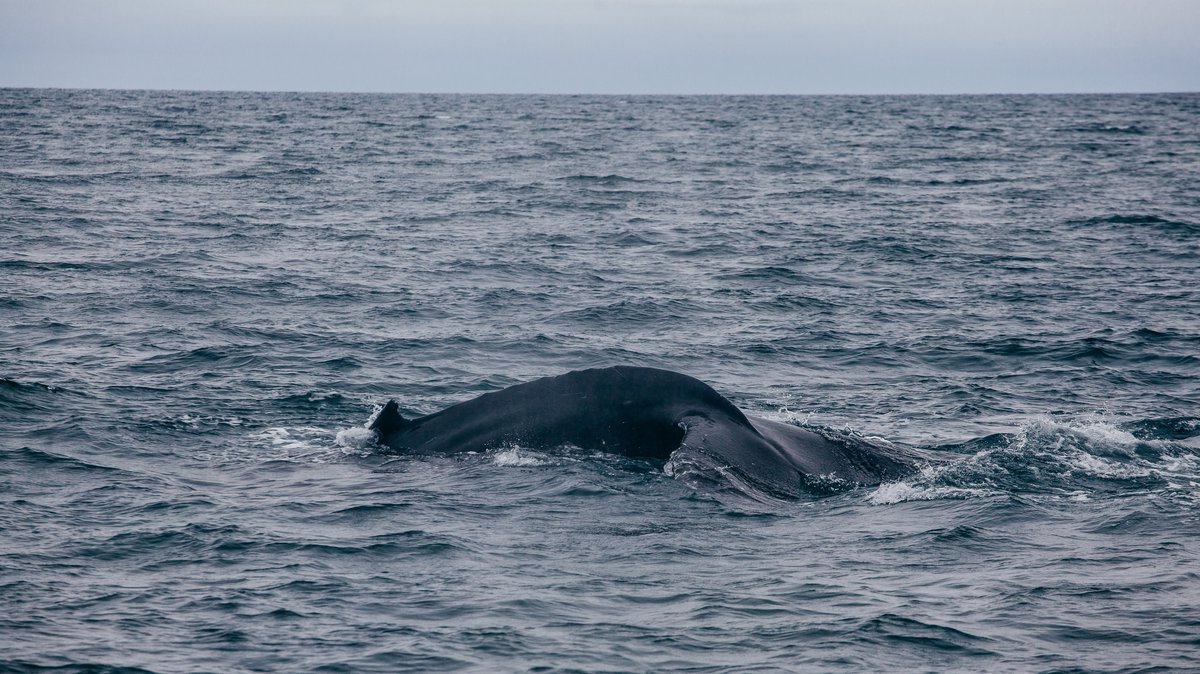
Humpback whales can weigh up to 40 U.S. tons, which is approximately 36 metric tonnes. That maximum secures the final place in this list above the largest sharks and seals. Long pectoral fins and a knobbly head make the species easy to recognize. Females are generally larger than males.
Humpbacks use several feeding strategies. Bubble-net feeding occurs when whales release bubbles around schooling fish, concentrating the prey before rising with open mouths. Other individuals lunge through krill or small fish on their own. Many populations migrate between productive high-latitude feeding grounds and warmer breeding waters. Recovery since commercial whaling has been substantial in several regions, although entanglement and vessel disturbance still cause harm.