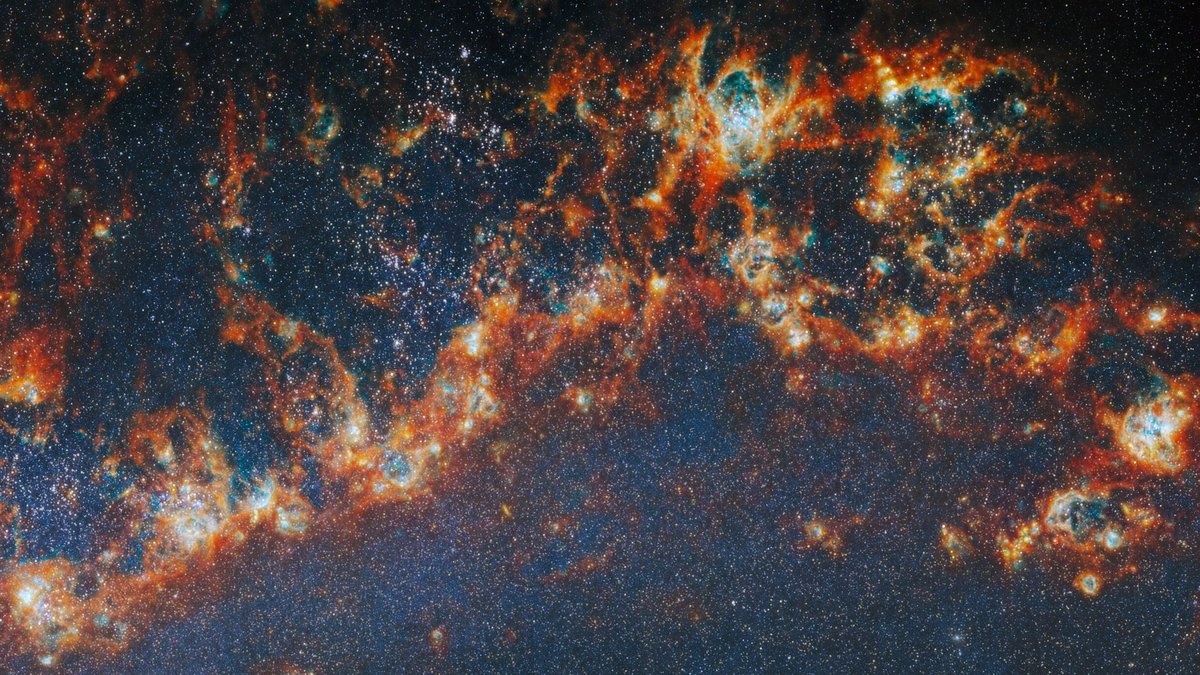
Researchers using the NASA/ESA/CSA James Webb Space Telescope and the NASA/ESA Hubble Space Telescope have found that the most massive young star clusters clear away their birth clouds faster than lighter clusters, according to an ESA/Webb announcement on results published in Nature Astronomy. The study looked at thousands of stellar nurseries in nearby galaxies and found a clear pattern in how quickly newborn clusters begin shining freely into space.
The work centers on a key moment in star birth. Stars form inside thick clouds of gas and dust. As young stars grow, their light, winds and later explosions push back against the material around them. Once that gas is cleared, the cluster can pour ultraviolet radiation into its galaxy.
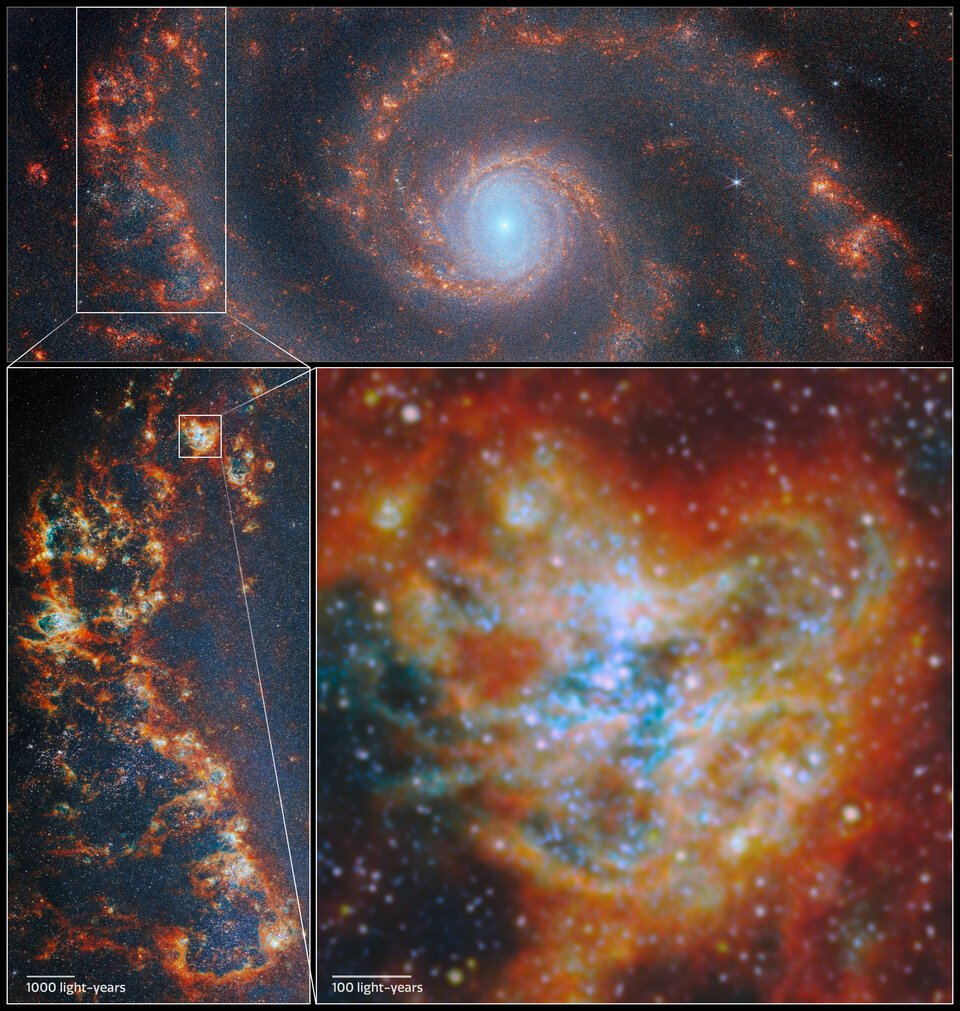
That timing matters far beyond the cluster itself. It affects how galaxies recycle gas, how future stars form and how young planet-forming disks are exposed to harsh radiation. By combining Webb’s infrared vision with Hubble’s optical view, astronomers could follow clusters from their hidden beginnings to their exposed later stages.
Webb Sees Into Stellar Nurseries
Webb’s infrared vision gave astronomers access to star clusters still wrapped in dusty birth clouds. These clouds block much of the visible light that older telescopes use. Infrared light can pass through more of that material, so Webb can reveal young clusters while they are still emerging.
In this study, Webb helped identify clusters that had only partly pushed away their natal gas. Some were just beginning to appear from inside their clouds. Others had already carved openings in the surrounding material. Those stages are difficult to separate from visible-light observations alone.
The research used Webb data from the FEAST observing program, short for Feedback in Emerging extrAgalactic Star clusTers. The program was designed to examine how newborn star clusters affect the gas around them. That interaction is called feedback and it controls how long star formation continues in a given region.
Because Webb can collect light across infrared wavelengths, the team could estimate cluster properties from their spectra. A spectrum acts like a chemical and physical fingerprint. It helps researchers infer age, mass and the presence of hot young stars inside dusty regions.
Hubble Tracks the Exposed Clusters
Hubble Space Telescope observations supplied the other half of the story. Hubble excels at optical and ultraviolet views of clusters that have already shed most of their surrounding gas. These exposed clusters shine clearly in visible light.
By pairing Hubble with Webb, the team could build a timeline. Webb traced the earliest and most obscured phases. Hubble traced clusters that had emerged into view. Together, the telescopes offered a broad-spectrum view of star cluster evolution.
This pairing is powerful because nearby galaxies contain many more star-forming regions than astronomers can easily study in our own Milky Way. Earth sits inside the Milky Way’s disk, where dust and our viewing angle limit the number of regions available for detailed comparison. Nearby galaxies give researchers a wider survey field.
That broader view allowed the team to compare populations of clusters at many stages. Instead of relying on a few local nurseries, they could look across whole galactic environments. The result is a clearer picture of how cluster mass affects the pace of emergence.
Nearly 9,000 Star Clusters Across Four Galaxies
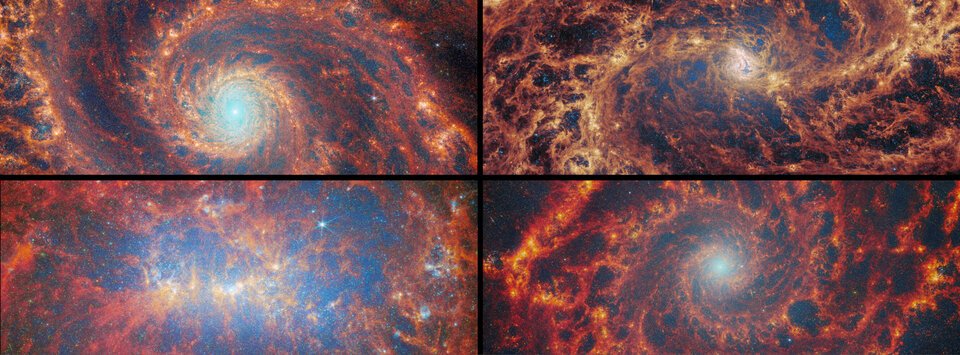
The team identified nearly 9,000 young star clusters in four nearby galaxies: Messier 51, Messier 83, NGC 4449 and NGC 628. Each galaxy offered a different laboratory for studying how young clusters interact with their surroundings.
Messier 51, also known as the Whirlpool Galaxy, contains striking spiral arms filled with star-forming regions. Messier 83 is another nearby spiral galaxy with active stellar nurseries. NGC 4449 is a more irregular system, while NGC 628 has been a major target for Webb studies of star formation.
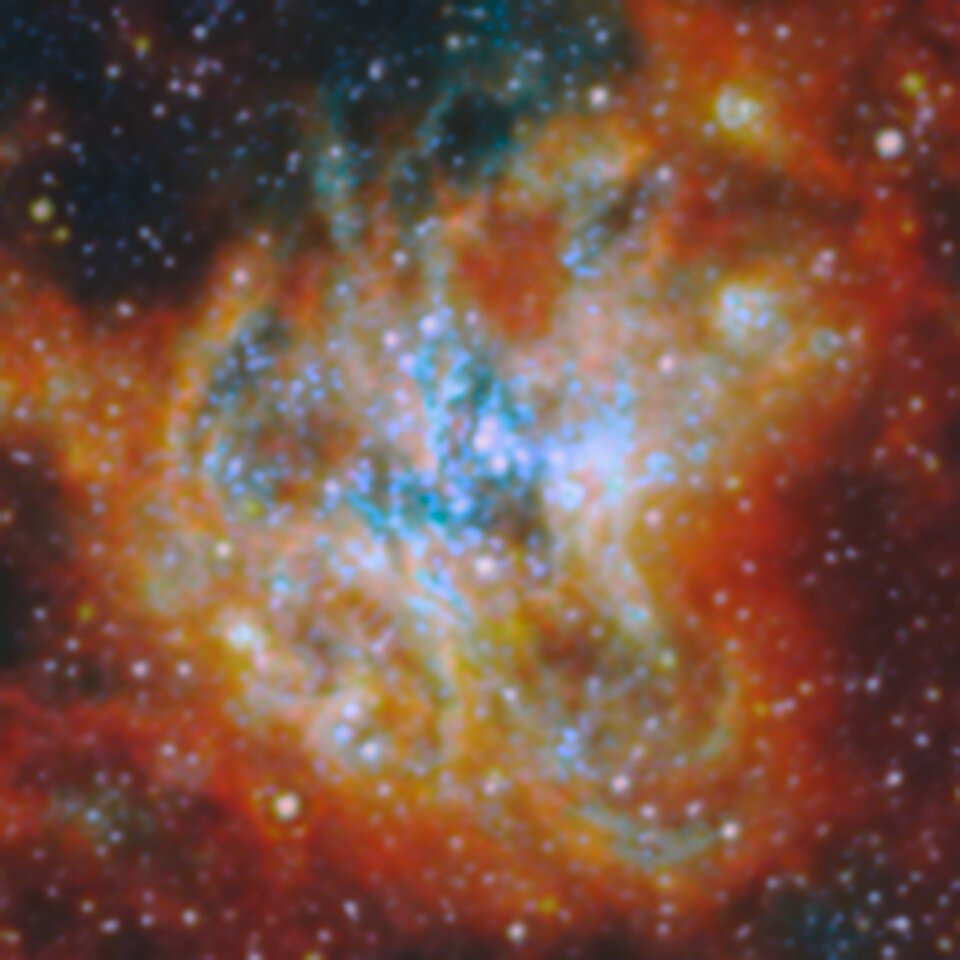
Across these galaxies, the researchers sorted clusters into evolutionary stages. Some clusters were deeply embedded. Some had partially cleared their gas. Others were fully unobstructed and visible in optical light. This sequence let the team compare mass and age at different points in the clearing process.
The sample size is one of the study’s strengths. A few clusters can be unusual because of local conditions. Thousands of clusters make it easier to see the larger trend. In this case, the trend pointed toward cluster mass as a major factor in how quickly a cluster emerges.
Massive Clusters Clear Gas in About 5 Million Years
The most massive clusters in the study had fully emerged and dispersed their natal gas after around five million years. Less massive clusters took longer, emerging when they were roughly seven to eight million years old.
That difference may sound small on cosmic timescales. For a young cluster, it is a major shift. Massive stars live fast, shine intensely and shape their surroundings early. A few million years can change how much gas remains available for further star formation.
Angela Adamo of Stockholm University and the Oskar Klein Centre, a lead author on the study and principal investigator of the FEAST program, said the result helps ground models of star formation. “Simulations of star formation and stellar feedback have struggled to reproduce how star clusters form and emerge from their natal clouds.”
The new observations give modelers a stronger target. “These results give us important new constraints on that process,” Adamo explained. Those constraints matter because simulations need real measurements of when gas clears and how cluster mass changes that timing.
Why Stellar Feedback Shapes Galaxies
Stellar feedback is the pushback from young stars against the gas that made them. It includes ultraviolet radiation, powerful winds and eventually supernova explosions from massive stars. This feedback heats, stirs and disperses star-forming gas.
Galaxies depend on cold gas to make new stars. When feedback clears or heats that gas, it can slow star formation in one region. It can also compress gas elsewhere and help trigger a new round of star birth. The same process can both limit and redirect the growth of stellar populations.
Massive clusters have many hot stars, so they produce much of a galaxy’s ultraviolet light. The new work shows that these clusters also gain an early timing advantage. They begin affecting their surroundings sooner than lower-mass clusters.
That early start can influence a galaxy’s larger evolution. If the most massive clusters clear their clouds quickly, their radiation and winds can spread through nearby gas sooner. Astronomers can use that information to improve predictions of where gas will gather, where it will disperse and where new clusters may form next.
The finding also helps connect small scales with galactic scales. A single cluster forms inside a cloud, yet its feedback can affect a much wider region. Thousands of such events help shape the appearance and star-forming history of an entire galaxy.
What It Means for Young Planets
The study also touches planet formation. Around many newborn stars, gas and dust gather into rotating disks. These protoplanetary disks are the raw material for planets, moons, asteroids and comets.
When a cluster clears its birth cloud quickly, those disks can become exposed to ultraviolet radiation earlier. That radiation can heat and erode disk material. It may reduce the time available for disks to keep collecting gas and dust from their surroundings.
This is especially important in crowded clusters with many massive stars. Hot stars can flood nearby space with intense radiation. Young planetary systems forming close to them may experience harsher conditions sooner than systems in quieter regions.
Alex Pedrini, lead author and a researcher at Stockholm University and the Oskar Klein Centre, highlighted that connection. “Using Webb, we can look into the cradles of star clusters and connect planet formation to the cycle of star formation and stellar feedback.”
The result doesn’t give a simple rule for whether planets form in a given cluster. Planet formation depends on many factors, including disk mass, distance from massive stars and local gas conditions. The study does show that the timing of cloud clearing belongs in that picture.
The FEAST Program’s Next Questions
The Nature Astronomy study advances a long-standing question in astronomy: what controls the moment when a young cluster breaks free from its natal cloud? The answer from these observations points strongly to stellar mass. More massive clusters appear to clear the way sooner.
FEAST is designed to probe that early phase in galaxies beyond the Milky Way. By looking outward, astronomers can examine many stellar nurseries at once. That makes it possible to compare clusters across different environments and stages of development.
The program also shows the value of combining space telescopes. Webb reveals embedded clusters in infrared light. Hubble follows exposed clusters in optical light. Each telescope sees a different chapter of the same story.
Future work can build on this framework by testing how the pattern changes in other galaxies and under different conditions. Astronomers can also refine models of feedback, cluster formation and planet-forming environments with the new timescales.
For now, the message from Webb and Hubble is striking. The biggest young clusters don’t just shine brighter. They also step into view sooner, setting the pace for how light, gas, stars and potential planets evolve around them.