Researchers at McGill University and Strategic Threat Analysis and Research Laboratories have raised a startling question for the next era of space exploration. If future missions bring samples home from Mars, icy moons, or other worlds, should those materials stop on the Moon before reaching Earth?
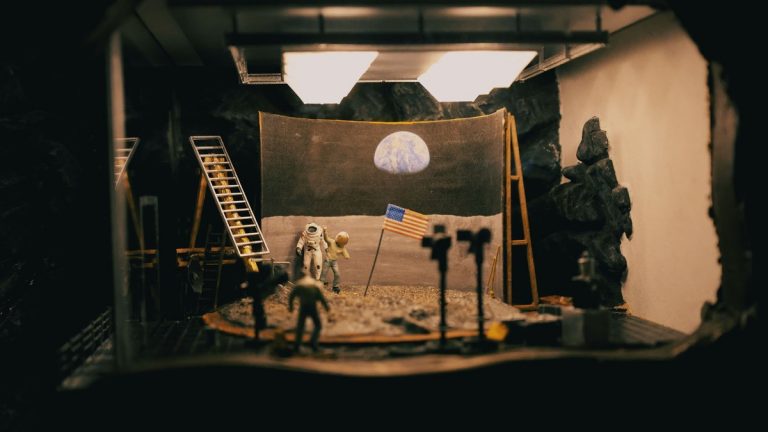
The proposal appears in a policy paper published in Ambio. Frederick I. Moxley and Anthony Ricciardi argue that a future NASA Moon base should include a secure lunar biocontainment facility. Its job would be to receive, isolate and study extraterrestrial samples before they are transferred to Earth’s biosphere.
The idea sounds dramatic because the stakes are dramatic. Scientists have confirmed no alien organisms and the risk remains hypothetical. Still, the authors say the growing pace of space exploration makes careful planning essential. “Humanity is entering a new era of space exploration, but our planetary protection strategies have not kept pace,” said Moxley, Director of Strategic Threat Analysis and Research Laboratories.
A quarantine stop before Earth
The central recommendation is simple. Samples collected beyond Earth should first be sent to a controlled facility on the Moon. That would create a quarantine step between a spacecraft returning from deep space and laboratories on Earth.
In the paper, Frederick I. Moxley and Anthony Ricciardi focus on what planetary protection experts call backward contamination. This means the possible introduction of extraterrestrial biological material into Earth’s environment. The authors argue that a Moon-based facility would give scientists a safer place to screen material from Mars, the Moon, or farther destinations.
The proposal is tied to future exploration rather than a specific confirmed hazard. Sample return missions already require careful engineering, clean handling and strict protocols. Moxley and Ricciardi want that system extended with a physical buffer located away from Earth.
That buffer matters because the Moon is close enough for practical operations, yet physically separate from Earth’s ecosystems. A lunar facility could examine samples, test for biological activity and hold material under high containment while mission teams decide what should happen next.
Moxley described the concept in unusually vivid terms. “The proposed facility would essentially act as a firewall between Earth and any potentially hazardous live organisms,” he said.
Why invasive species raise the alarm
Earth’s own biology provides the warning behind the proposal. Ricciardi is a James McGill Professor of Biology and Director of the Bieler School of Environment at McGill University. His research background includes biological invasions, where organisms spread into new environments and disrupt ecosystems.
The policy paper uses that history as an analogy for planetary protection. On Earth, microbes, plants, animals and fungi can move into new habitats through human activity. Some become harmless passengers. Others reshape food webs, damage native species and create long-lasting ecological problems.
Extraterrestrial life remains unconfirmed. Even so, the authors argue that an unfamiliar organism entering Earth’s biosphere could behave in unpredictable ways. Its biology might have evolved under conditions very different from those on Earth. Its interactions with terrestrial microbes, animals, plants, or immune systems would be difficult to forecast in advance.
Ricciardi framed the concern through decades of ecology. “Decades of research on invasive species have demonstrated how an organism introduced to the wrong place at the wrong time can spread uncontrollably,” he said.
That comparison helps explain why the paper calls for a precautionary approach. Invasive species show how small introductions can produce large consequences when organisms enter a favorable environment. The authors apply that lesson to the far more uncertain case of extraterrestrial contamination.
Robots inside the lunar lab
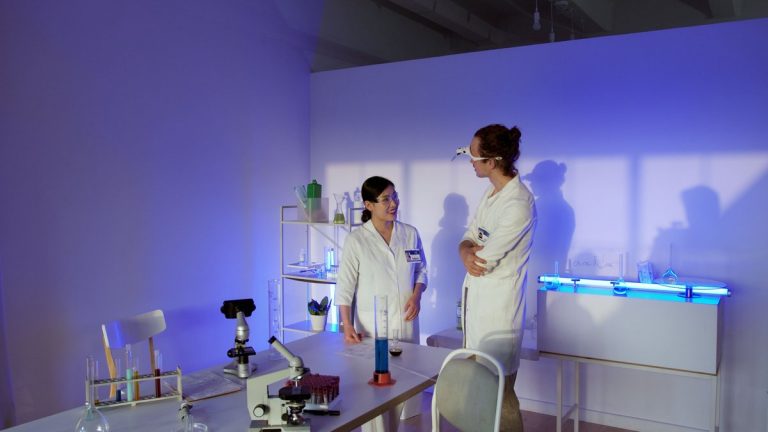
The proposed facility would rely heavily on automation. Moxley and Ricciardi recommend that incoming extraterrestrial samples be handled exclusively through advanced robotic systems within the lunar facility. That would reduce the chance of direct human exposure.
Robots would also make sense in a high-containment setting. Machines can operate behind barriers, inside sealed chambers and through remote-control systems. They can move samples, open containers, divide material for testing and run instruments while keeping people outside the most sensitive areas.
For a lunar quarantine lab, this separation would be central. The authors’ goal is to minimize accidental release. A robotic workflow could limit the number of interfaces where a sample leaves containment or comes into contact with astronauts, technicians, or return vehicles.
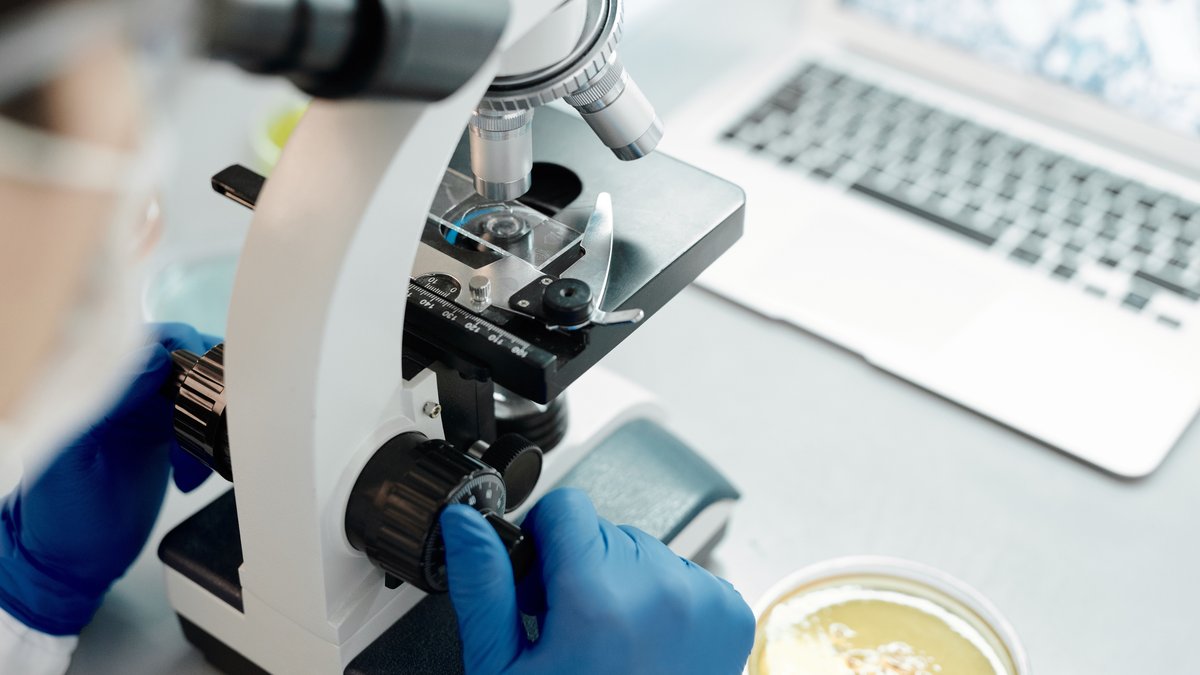
The paper also points toward a research role. A secure lunar lab could screen samples for signs of biological activity before any material is cleared for Earth-based study. That might include tests designed to detect growth, chemical signatures, or unexpected reactions under controlled conditions.
Such a facility would demand a level of engineering that goes beyond ordinary laboratories. It would need to work in lunar gravity, survive dust, handle power and communications limits and maintain strict containment. The paper presents the Moon as the best location for this kind of planetary protection infrastructure because of its isolation and proximity.
Space missions raise the stakes
Space exploration is moving into a busier phase. Government agencies and private aerospace companies are planning more ambitious activity beyond low Earth orbit. The authors say that increased activity creates more chances for complex sample handling and more reasons to strengthen biosafety planning.
Sample return missions are especially important. A spacecraft may collect material from a planetary surface, seal it, launch it and bring it back across millions of miles. Each step must work properly. The policy paper highlights scenarios such as a malfunction, crash, or unexpected exposure involving contaminated material.
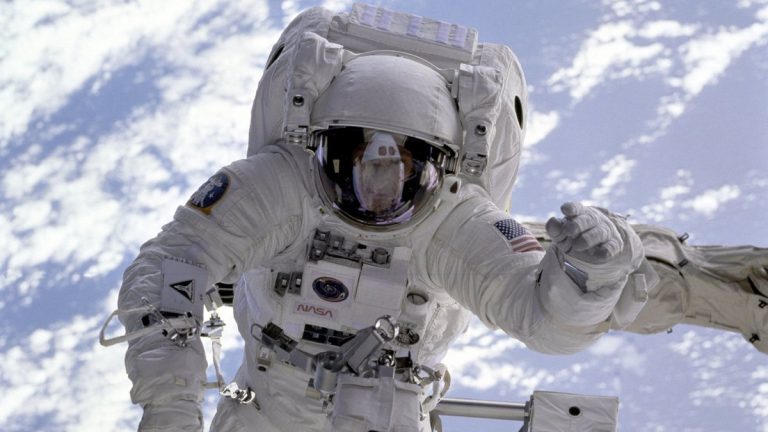
The concern extends to astronauts as well. Human missions to other worlds would create new pathways for contact with unfamiliar environments. Suits, tools, habitats, rovers and life-support systems could all become part of the planetary protection picture.
Moxley and Ricciardi argue that Earth-based facilities face a basic limitation. A terrestrial laboratory sits within the very biosphere that planetary protection aims to safeguard. If a containment failure involved an unknown organism, response plans would face extreme uncertainty.
That point drives the case for a lunar stop. A facility on the Moon could add distance, time and control before any questionable material arrives on Earth. The authors present this as astrobiological risk mitigation, a way to reduce danger while allowing the search for life to continue.
The Moon as a biological firewall
The Moon has several traits that make it attractive for quarantine. It is close compared with Mars or the outer solar system. It lacks Earth’s global biosphere. It may also host future infrastructure through lunar base programs, which could make a specialized facility more feasible over time.
The proposal fits into a larger shift in space science. Missions increasingly aim to collect pristine samples that can answer deep questions about planetary history, chemistry and the possibility of life. Those samples are scientifically precious because they have been isolated from Earth. That same isolation creates the need for careful handling.
A lunar biocontainment facility would give scientists a way to study such material under strict control. It could serve as a receiving station, testing site and decision point. Samples that pass safety review might later be sent to specialized laboratories on Earth. Samples that raise concerns could remain isolated on the Moon for further study.
The authors also make a broader argument about timing. Building protection systems before a crisis is easier than improvising after one. Future missions may move faster as more countries and companies enter deep-space exploration. A shared containment strategy could become part of the foundation for responsible sample return.
The paper ends with a memorable phrase that captures the idea’s purpose. “The moon may become humanity’s first line of biological defense.” For Moxley and Ricciardi, that line of defense would let science keep reaching outward while giving Earth one more layer of protection.