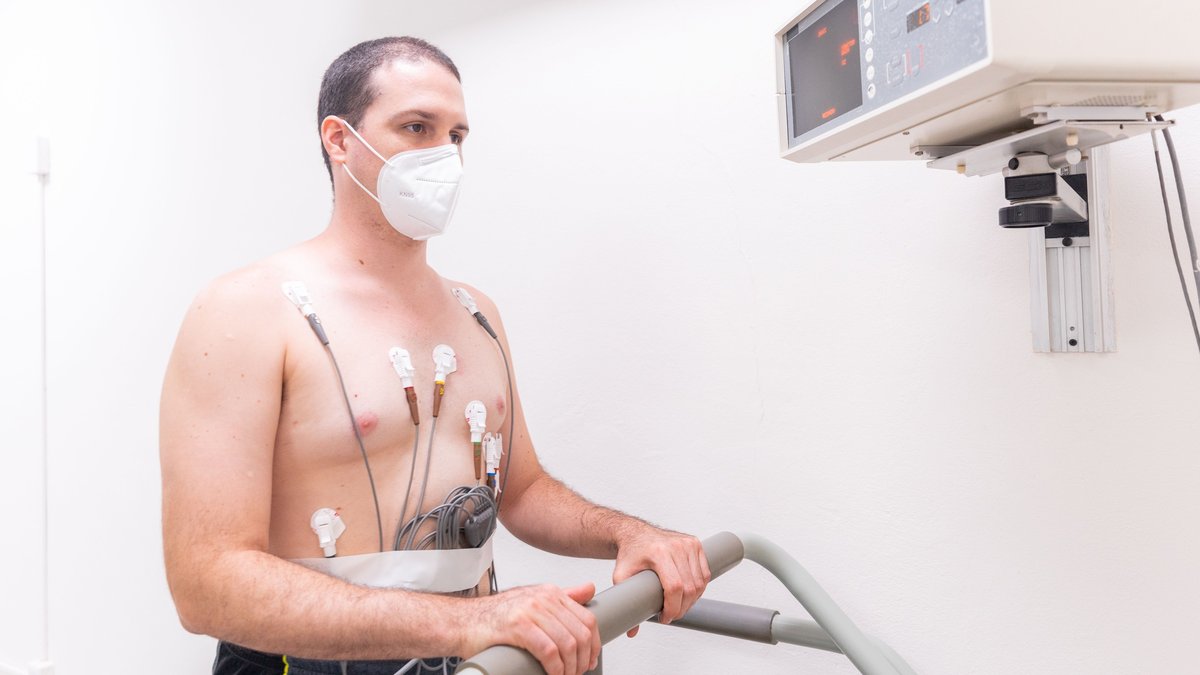
A central puzzle in injury recovery is how much weight a runner can remove from the legs before the stride begins to change. A 2026 study found that a microgravity treadmill can sharply reduce impact-related motion in the shin, although stronger unloading also changes cadence, ground contact time and the timing of each impact.
The findings come from a study published May 9 in the Journal of Clinical Medicine. Researchers tested 26 healthy, physically active adults while sensors measured acceleration in both shins. Each person ran with several levels of body weight support, ranging from full weight down to 40 percent.
Impact indicators fell as more weight was removed. The largest reductions appeared at 60 and 40 percent of body weight, while a setting near 80 percent appeared to lower shin loading with smaller changes to the running pattern. The authors describe that middle setting as a possible compromise for future research into training and rehabilitation.
How a microgravity treadmill unloads the legs
A microgravity treadmill uses lower-body positive pressure to lift part of a runner’s weight. The runner wears fitted neoprene shorts that seal around the opening of an air chamber. The chamber surrounds the lower body and fills with pressurized air, which pushes upward while the person continues walking or running on a moving belt.
The machine can be adjusted so that the legs carry only a chosen share of the person’s body weight. A setting of 80 percent means the runner experiences an effective load equal to about four-fifths of normal body weight. At 40 percent, the machine supports much more of the body, leaving the legs to carry less than half of their usual load.
Reduced weight changes what happens when the foot meets the belt. With less downward load, the lower leg experiences smaller and often slower impact motions. Muscles and joints also adjust their behavior, so the relationship between body weight support and bone loading can become complex at stronger settings.
The technology allows a person to keep practicing the basic motion of running while controlling how much mechanical stress reaches the legs. Researchers study such machines because repetitive impacts can contribute to overuse injuries when training loads rise faster than the body can adapt.
26 runners tested at four body weight levels
The research team, led by Łukasz Oleksy and Anna Mika, recruited 26 active adults between 18 and 40 years old. Each participant attended one laboratory session and completed a standard 10-minute warm-up before testing began.
On the microgravity treadmill, participants ran for one minute at 8 kilometers per hour under four conditions: 100, 80, 60 and 40 percent of body weight. Between stages, they walked for one minute at 4 kilometers per hour while the researchers adjusted the support level. The conditions were completed in that fixed order.
After the microgravity trials, each runner rested for five minutes and then completed a one-minute run at the same speed on a conventional motorized treadmill. The full publication details and abstract are available through the study’s PubMed record.
Small wireless sensors were secured over the bony area near the top of each shin. Known as inertial measurement units, the devices recorded movement along three directions 148 times per second. Participants wore their own running shoes and received no instructions to change foot strike or cadence, allowing them to use their usual running style.
Shin acceleration falls as support increases
The sensors measured tibial acceleration, which describes how quickly the shin changes speed during each step. A sudden acceleration after the foot lands can serve as an indirect sign of impact-related loading. Smaller acceleration values generally indicate that the lower leg is undergoing a gentler mechanical event.
Acceleration magnitude declined steadily as the treadmill carried more of the runners’ weight. Both positive and negative acceleration peaks also fell, with the clearest reductions at 60 and 40 percent body weight. According to the paper, the variables describing acceleration amplitude showed the strongest changes.
Timing changed as well. The peak positive axial acceleration arrived later when runners received greater support. On the left side, the average time to this peak rose from 340 milliseconds at full weight on the microgravity treadmill to 358 milliseconds at 40 percent body weight. A later peak suggests that the loading event was spread across a longer period.
Cadence decreased as unloading increased, which means runners took fewer steps each minute. Their feet also remained in contact with the treadmill for longer. The open-access paper reports that some acceleration timing measures followed a more complicated path, rising at moderate support levels and then falling at the strongest setting. The body was adjusting its movement strategy as effective weight changed.
Why 80 percent body weight may offer a useful balance
At 80 percent body weight, key shin acceleration measures were already lower, while cadence and the broader running pattern remained closer to full-weight running. Stronger support produced larger reductions in impact indicators, along with greater changes in how the runners moved.
The study abstract states, “Moderate unloading (~80% BW) may provide an optimal balance between load reduction and preservation of natural running mechanics.” Here, optimal describes the balance seen in this small laboratory experiment. Future studies will need to test different speeds, longer running periods and people recovering from specific injuries.
A setting near 80 percent of body weight may therefore be useful when the goal is to reduce mechanical exposure while keeping the runner familiar with a near-normal stride. The best level for an individual could depend on pain, healing stage, fitness, running speed and medical guidance.
Lower settings may have a different purpose. Carrying 60 or 40 percent of body weight produced the largest reduction in shin acceleration, which could help researchers examine early stages of carefully controlled reloading. Greater support also brought larger movement changes, so progression toward normal weight would require close attention to stride and comfort.
Treadmill belt surfaces produce subtle differences
The study also compared full-weight running on the microgravity machine with running on a conventional treadmill. Overall, the two systems produced similar biomechanics at 100 percent body weight. Cadence did not differ significantly between the full-weight conditions.
Several measures differed on only one side of the body, however. The researchers suggest that belt structure, surface cushioning and other features of the treadmill systems may influence local acceleration readings. A pressurized treadmill also surrounds the lower body with a chamber, which may affect how a runner positions or moves the legs.
Side-specific results require caution because natural differences can exist between a person’s left and right legs. Sensor placement, soft tissue movement and an individual runner’s habits can also influence acceleration measurements. A larger study could determine whether the observed differences appear consistently across machines and groups of runners.
The comparison helps separate two influences that occur during supported running. One comes from removing effective body weight, while another comes from the surface and structure of the machine itself. The strong reductions at 60 and 40 percent were closely linked to unloading, while the smaller full-weight differences point to a subtle machine effect.
What the results could mean for rehabilitation
Repetitive running loads can produce tiny areas of damage within bone. Healthy bone usually repairs this damage, but recovery can fall behind when training grows too intense or rest is too short. Over time, the process may contribute to tibial stress fractures and other lower-leg overuse injuries.
Rehabilitation often involves gradually restoring mechanical load after pain and tissue healing have improved. A pressure-supported treadmill gives clinicians and researchers a way to adjust effective body weight in measured steps while a person continues moving at a controlled speed.
The new findings suggest that shin acceleration sensors could help track how the lower leg responds during this progression. A person could begin with stronger support and move toward higher body weight as healing advances. Measurements of cadence, contact time and acceleration could reveal whether the running pattern remains stable during each change.
The study measured healthy adults during short trials, so its results do not establish a treatment plan. The authors present rehabilitation ranges as biomechanical ideas that need further validation. Decisions for an injured runner still depend on clinical examination, symptoms, imaging when appropriate and the guidance of a qualified health professional.
Limits of the laboratory study
The experiment used a cross-sectional study design, with every participant tested during a single session. One-minute trials can show immediate changes in running mechanics, but they cannot reveal how fatigue, repeated training, or several weeks of rehabilitation might affect the results.
All microgravity conditions followed the same order, moving from 100 percent body weight to progressively stronger support. The researchers chose this sequence to reduce adjustment problems between stages. A fixed order can also introduce effects from practice, growing comfort with the machine, or mild fatigue.
Tibial acceleration provides an indirect indicator of impact-related loading. It does not measure the forces inside the shin bone directly and the sensors can pick up movement from skin and other soft tissue. The study also recorded data at one running speed, so faster runners may produce a different response.
The participants were healthy and physically active. People with fractures, knee injuries, pain, reduced fitness, or altered walking patterns could respond differently to pressure support. The study’s journal record therefore supports cautious interpretation of the possible clinical uses.
Longer trials involving injured runners could test whether reduced shin impact loading supports recovery while preserving strength and coordination. Researchers could also compare several treadmill brands, randomize the order of support settings and combine acceleration sensors with direct measurements of forces beneath the foot. Such work could help define safer and more individual loading plans.