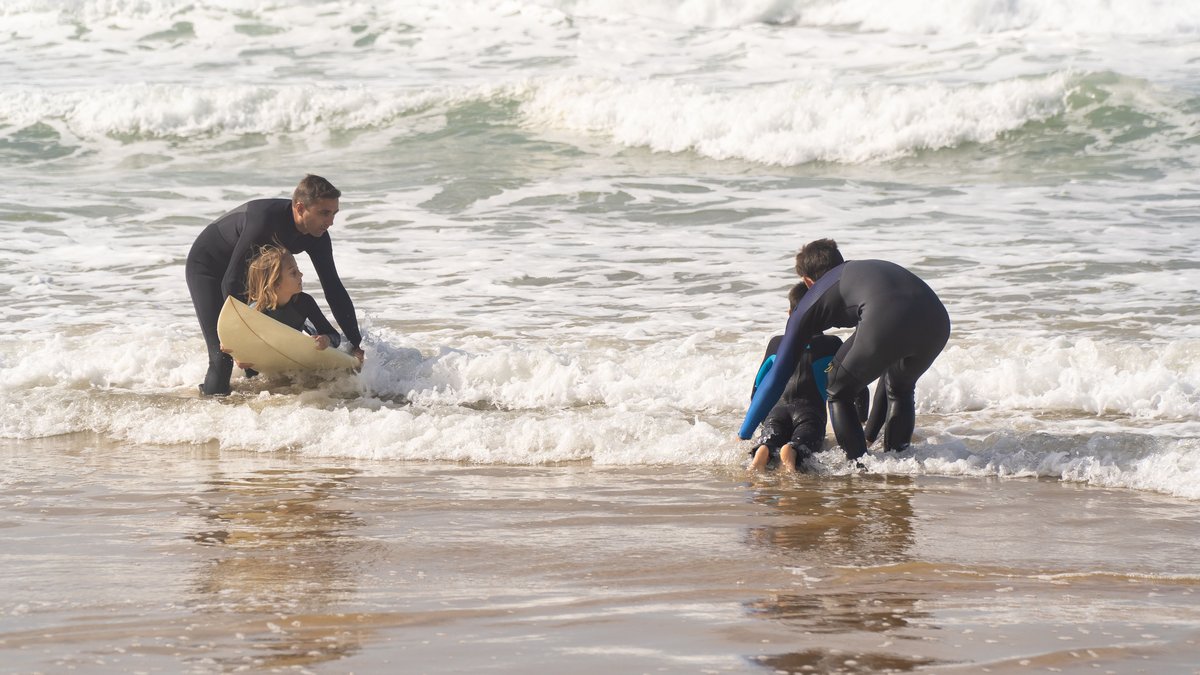
Six weeks of supported surfing gave a South African teenager with four limb amputations a chance to test his balance in moving water, learn new physical skills and imagine a future in competitive sport. A year later, he reported that the experience continued to influence how he walked with prosthetic legs and managed stress.
The peer-reviewed case study, published in Frontiers in Sports and Active Living, follows a participant given the pseudonym Rowan. Researchers from the University of Cape Town recorded his experiences before the programme, shortly after it ended and one year later.
Rowan’s progress offers a detailed view of how surf therapy may support a child across daily life, school, friendships and sport. The research describes one person’s experience, so larger studies will be needed to learn how often similar changes occur among children with different disabilities.
How the surf therapy programme worked
Surf therapy combines surfing lessons with structured support intended to promote physical health and emotional well-being. Sessions may also encourage social connection, especially when children work closely with coaches and volunteers. The approach has attracted interest because exercise in coastal settings can provide challenge, enjoyment and time away from daily pressures.
Rowan joined a six-week programme at Muizenberg Beach in Cape Town’s False Bay area. The beach has waves suitable for beginners, relatively warm local water and facilities that support access for people with disabilities. His programme formed part of a broader doctoral research project involving five participating children and several stakeholder groups.
The research team used a longitudinal case study, meaning that Rowan’s experience was followed over time. Open-ended narrative interviews allowed him to describe events in his own words. Interviews took place in May 2021, July 2021 and July 2022, giving the researchers a record that extended beyond the final lesson.
Rowan was 14 when he entered the programme. Meningococcal disease in early childhood had resulted in the amputation of all four limbs. He wore prosthetic lower legs and used crutches for mobility. He already enjoyed sport, particularly table tennis and had ambitions to represent South Africa.
Rowan’s first six weeks on the waves
Excitement marked Rowan’s arrival at the first lesson. When his coach asked whether he was ready, Rowan replied, “I’m born ready.” His surf buddy helped him put on an adjusted wetsuit and his support team accompanied him from the changing area to the water.
Each lesson introduced practical tasks in small steps. Rowan learned how to position himself on the board, catch a wave, fall safely and climb back on. Coaches also taught him how changes in shoulder position and body weight could guide the board. Repeated practice allowed him to connect a movement with the board’s response.
The programme used adapted surfboards with extra flotation, grip pads and handles. Life jackets provided further support. Lessons remained in shallow water, generally no deeper than about 1.25 metres and a second coach could sit on the board when a participant needed seated assistance.
Rowan began with a wide board, which made paddling difficult because his right arm was shorter than his left. He found other movements easier. He learned to raise his body, adjust his hips and steer by shifting his weight. During the final session, he caught a wave on his own and applied skills developed over the previous weeks.
Support from familiar people remained central throughout the programme. Rowan described the coaches and volunteers as “my team,” and said their presence helped him trust that someone would assist if he fell. By the end, he summed up the change in his ambitions: “I have learnt how to surf, I have learnt I can dream.”
Balance gains reached beyond the beach
Balance on a surfboard involves constant adjustment. A rider senses the board moving beneath the body, shifts weight and prepares for changes in the wave. The muscles around the middle of the body help control posture while the arms assist with positioning and recovery.
Rowan reported becoming more aware of his core balance and the way his upper body could control movement. He learned when to lean forward, when to move back and how to shift from side to side. Falling also became part of the learning process because each attempt gave him another chance to adjust.
According to his account, the balance skills carried into walking with prosthetic legs. “Balancing in surfing has helped out of the water too with my prosthetics,” he said. Rowan recalled thinking that if he could balance on a board riding a wave, he could apply a similar focus while standing and walking.
During the programme, Rowan accidentally left his crutches at a shop near the beach. He initially felt panicked. Encouragement from his friend and mother helped him relax and he later went to school without the crutches. The study reports that he stopped using them after that period.
A single personal account cannot establish how much of the mobility change came directly from surfing. Growth, continued practice, prosthetic experience, family encouragement and Rowan’s existing interest in sport may also have contributed. His story provides a possible mechanism for future research: practising balance in an enjoyable setting may help some children approach movement with greater confidence.
Surfing eased stress and built confidence
School placed Rowan under pressure. He told researchers that homework and academic demands could leave him anxious enough to shake while writing. The beach offered a setting where his attention moved toward the sand, water, board and next wave.
Surfing requires close focus on immediate events. A participant watches the water, prepares the body and responds as the board begins to move. Such concentration can give the mind a temporary break from worries about earlier events or upcoming tasks.
Rowan described the ocean sessions as relaxing. Over time, falling became less frightening because he had practised recovering and knew his team was nearby. Confidence grew through repeated experiences of attempting a skill, making an adjustment and trying again.
The emotional benefits reported in the case are consistent with wider interest in ocean-based health programmes. The Waves for Change research programme in South Africa has examined how structured surfing can support young people facing stress and limited access to mental health services.
Researchers describe surf therapy as a community activity as well as a physical intervention. Coaches provide instruction, while peers and volunteers offer encouragement. Rowan’s experience suggests that trusting relationships can help a child remain engaged when the water, equipment, or new movement initially feels difficult.
From beginner to national champion
Progress continued after the research programme ended. Rowan kept surfing and entered organised para surfing, where athletes compete in divisions designed around different support and movement needs. Competition gave him a new reason to practise reading waves, timing his movements and controlling the board.
In June 2022, he won his prone assist division at the Western Province Provincial Championships. Two months later, he finished second at the South African Championships and was selected for the 2022 national team.
On his 16th birthday in December 2022, Rowan competed at the World Para Surfing Championship in Pismo Beach, California. He placed 17th in the world. Further national titles followed in his division at the 2023 and 2024 South African championships.
“My goal is to become a national surfing champion,” Rowan had told the researchers before reaching those later milestones. His early ambition developed into a sporting pathway supported by lessons, community contacts and access to equipment. A local manufacturer supplied a customised wetsuit, while a surf school contributed further training.
The University of Cape Town has highlighted the wider research programme as part of its work on disability inclusion. Rowan’s route from beginner lessons to international competition illustrates how an accessible recreational programme can open connections to organised sport.
What one child’s story can reveal
Case studies examine a person or small group in depth. They can preserve details that may disappear when researchers reduce experiences to scores and averages. Rowan’s interviews recorded how he interpreted physical change, relationships, anxiety and sporting goals across more than a year.
The researchers used participatory research, which gave the children a direct role in describing their experiences. Questions were open-ended and the team combined Rowan’s three interviews into one chronological narrative. Researchers then identified themes linked to his changing view of himself and his environment.
One major theme described Rowan as an ambassador for disability inclusion. As his confidence increased, he began encouraging other people to try surfing. His account moved from learning basic skills toward imagining how his experience could influence other children.
The study drew on a model that views child development as the product of interacting environments. Family relationships affect daily choices, while schools influence opportunities and stress. Community services can provide equipment and trained staff and public policy can determine whether inclusive sport receives funding.
Evidence from one participant remains limited. Rowan was athletic before joining the programme and entered with a strong interest in competition. His experience may differ from that of a child who has different mobility needs, little interest in sport, or greater communication difficulties. Future studies could compare more participants, track physical measurements and follow children for several years.
Making surf therapy safer and more accessible
Ocean programmes require careful planning because waves, currents, cold water and changing weather can affect participants quickly. Children with disabilities may need equipment adjustments, extra assistance during transfers, or communication methods suited to their needs.
Rowan’s programme used detailed safety protocols. The support team could include a head coach, a physiotherapist, a surf therapy volunteer leader and trained water-safety volunteers. Some participants had as many as 12 people supporting their lesson, although the level of assistance decreased as skills improved.
Staff received first-aid training and recognised surfing qualifications. They also learned how to use adapted equipment and assist with movement between the beach, water and board. Keeping the same team together where possible helped participants become familiar with the people supporting them.
Earlier South African research involving children with autism found that existing programmes often need careful adaptation for neurodiverse participants. Predictable routines, suitable communication, trained mentors and changes to the session format can improve inclusion. The Roxy Davis Foundation also describes research and practical work aimed at expanding ocean access for children with disabilities.
Broader access will depend on trained staff, transport, suitable beaches and equipment that matches each child’s body and abilities. Partnerships among families, schools, health professionals, surf organisations and sponsors can spread those demands across a community. Rowan’s case suggests that inclusive coastal programmes can support recreation while also creating paths toward greater independence and competitive sport.