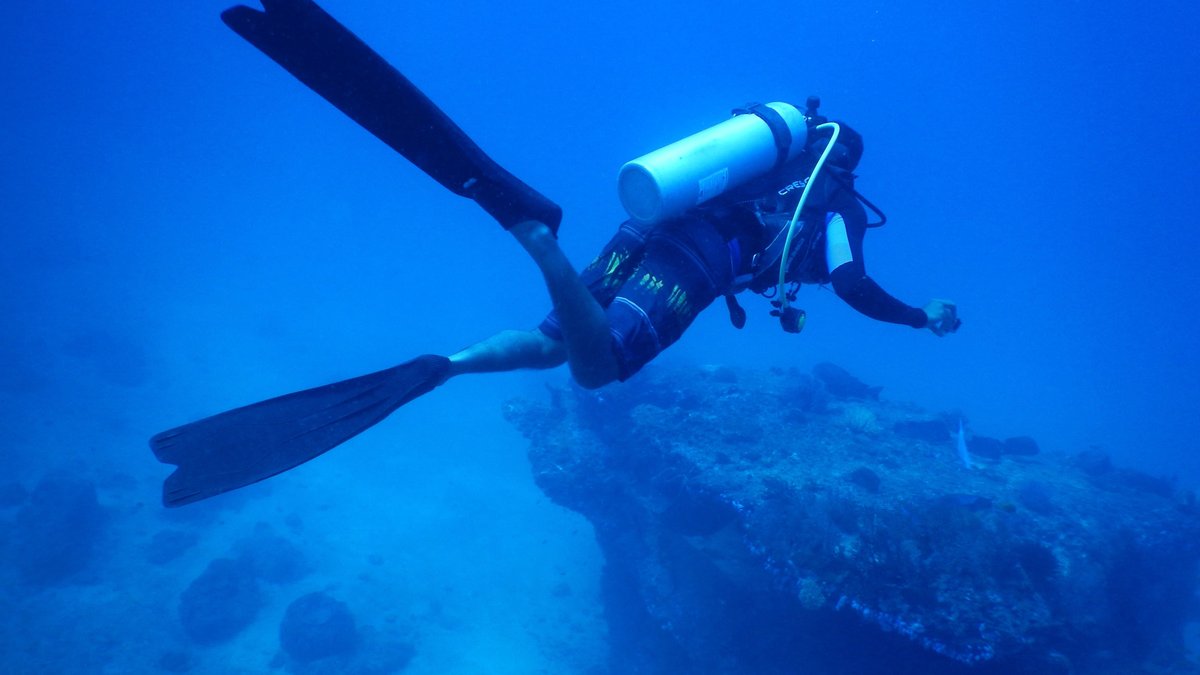
Twelve professional scuba divers completed a short dive to 10 meters, then showed slower responses, weaker sustained attention, more mental fatigue and higher cortisol soon after they came back up. The study points to a brief window after surfacing when mental sharpness may dip, even in people who work underwater on a regular basis.
Researchers reported the work in the Asian Journal of Sports Medicine, in a paper on scuba diving and cognition. The group was small, only 12 divers, so the findings are best read as an early look at short-term changes after one controlled dive, rather than a rule that applies to every diver in every setting.
Diving places several demands on the body at once. Pressure rises with depth, breathing changes because air is delivered through equipment and the diver has to keep track of position, timing and safety procedures. A short shift in mental speed after surfacing would fit that kind of combined strain, even though this study could not isolate one single cause.
What changed after the dive
The clearest result was a decline in sustained attention and response speed after the 20-minute dive. In plain terms, the divers were less able to keep their focus locked in and took longer to answer correctly on the cognitive test that the researchers used before and after the underwater session.
The paper also reports a rise in mental fatigue after the dive. That finding fits the attention result, because a tired brain often shows up first as slower processing and shorter stretches of steady concentration. The abstract says the divers’ general mental health stayed in the normal range and did not show a remarkable change across the test period.
Alongside the cognitive shift, salivary cortisol increased after diving. Cortisol is a hormone that often rises when the body is dealing with strain, uncertainty, or heavy demand. The study does not prove that cortisol directly caused the slower performance, yet the two changes moved in the same direction after the dive.
How the researchers checked attention and stress
The divers had a mean age of 23 years, according to the paper and all were described as professionals living in Mashhad. The team measured cognitive function 60 minutes before the dive and again 20 minutes after it ended, which means the study focused on short-term effects rather than long recovery patterns over several hours or days.
For attention and processing, the researchers used the PASAT, short for the Paced Auditory Serial Addition Test. It is a demanding task in which people hear a stream of numbers and must keep up mentally as each new number arrives. The test can reveal whether attention holds steady, whether response speed slows down and whether the task starts to feel mentally draining.
The stress side of the study came from saliva samples collected before and after the dive. Saliva testing is a practical way to track cortisol without a blood draw and it can capture short-term hormone shifts around a stressful event. Because the same divers were tested on both sides of the dive, each person served as his own comparison point.
Why cortisol and cognition may move together
Higher cortisol can occur without poorer thinking. Many studies have linked acute stress with weaker performance on tasks that depend on attention and fast mental control. The brain systems used for steady concentration and quick updating are sensitive to strain. Error monitoring can also suffer when a person has to keep working under pressure.
A dive can create that kind of pressure in more than one sense. Water depth changes the physical environment, equipment alters normal breathing and the diver still has to keep a clear sense of timing and body position. The study was not designed to separate physical exertion from psychological stress, so the most careful reading is that the whole dive exposure acted as an acute stress event for this small group.
The paper’s interpretation follows the same line. The authors suggest that diving increased cortisol and reduced cognitive performance after the session. That explanation is plausible, yet it remains a hypothesis within this experiment, because the study did not manipulate cortisol directly or compare diving with a dry-land stress task that might have revealed which part of the experience carried the most weight.
What the study can and cannot tell us
The work offers a useful signal, but it also comes with clear limits. The sample was a small group of 12 people, all were young professional divers and the dive was brief and fairly shallow by professional standards. Those details limit how far the results can be extended to older divers, beginners, longer dives, or very different underwater jobs.
Another limit is timing. The researchers measured cognition 20 minutes after the dive, so the study does not show whether the slowdown was already fading by then, whether it had been stronger right after surfacing, or whether it lasted much longer. A longer testing schedule would be needed to map the full rise and fall of cortisol, focus and mental fatigue across recovery.
The experiment also did not include a non-diving control session on the same day. Without that comparison, ordinary fatigue, anticipation before the dive, repeated exposure to the same test, or the effort of handling equipment could have contributed to part of the change that appeared after surfacing.
Testing every participant before and after the same dive helped the researchers see change within each diver, which is useful when people begin with different response speeds. Even so, the design could not separate the underwater exposure from the preparation and recovery surrounding it. A larger crossover study with a matched dry session would provide a clearer estimate of the dive’s specific contribution. Cortisol also changes naturally across the day and can respond to anticipation before an event. Repeated samples during a matched control day would show whether the post-dive rise exceeded each diver’s ordinary pattern. Such measurements could also reveal whether hormone levels and attention recovered on the same schedule or followed separate timelines.
Even with those limits, the study adds a concrete point to the wider discussion about post-dive performance. A short underwater session was followed by weaker attention and slower responses in this group, which suggests that tasks requiring quick judgment immediately after a dive deserve care. The paper supports caution around short-term cognitive demands after surfacing and provides no evidence of lasting brain harm.