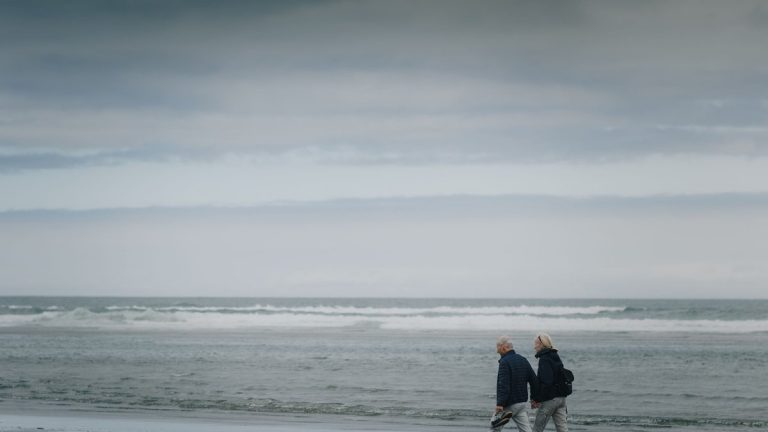
Eighty-six active-duty U.S. service members with depression took part in surf or hike therapy and both activities brought short-term improvements during weekly sessions. A closer look found that the level of effort linked with the strongest improvement appeared to differ between the ocean and the trail.
The 2026 study, published in Frontiers in Sports and Active Living, examined how hard each session felt to the person doing it. Researchers from the Naval Health Research Center, Naval Medical Center San Diego and Leidos analyzed data collected during six weeks of outdoor therapy.
The findings add detail to growing research on nature-based exercise therapies. Surfing appeared to offer its strongest short-term mood benefit when participants worked near their usual effort level. Hiking showed a weaker and more uncertain pattern in which unusually easy or unusually hard sessions were linked with larger drops in depression and anxiety symptoms.
How the six-week therapies worked
Participants came from an earlier parent randomized trial involving service members diagnosed with major depressive disorder. The original trial enrolled 96 people and assigned them to either surf therapy or hike therapy. The new analysis included the 86 participants who attended at least one session.
Each program met once a week for six weeks. Sessions lasted about three to four hours and took place on public beaches or trails in San Diego County. Groups included roughly 20 service members. Surf participants received one-to-one help from instructors, while hikers had more freedom to manage their own pace during much of the activity.
The activities themselves served as the treatment during each session. Formal talk therapy techniques were not delivered on the beach or trail. Many participants also continued other care, including medication for depression and 59 of the 86 service members reported receiving drug treatment when the program began.
Measuring effort and mood
Researchers asked participants to rate their effort immediately after every session with the modified Borg Rating of Perceived Exertion scale. Scores ran from zero, meaning no effort, to 10, meaning very hard effort. Participants considered their breathing, heart rate, fatigue and general sense of physical work.
The analysis focused on relative perceived exertion. Each person’s rating for a session was compared with that person’s own average across the program. A score above the average meant the session felt harder than usual for that individual. A lower score meant it felt easier. Such comparisons account for the wide differences in fitness, skill and experience among participants.
Before and after each session, the service members completed the PHQ-4, a four-question measure of current depression and anxiety symptoms. They also completed a 10-item schedule that asked about feelings such as interest, alertness and enthusiasm. Higher scores on this second measure indicated greater positive affect, a scientific term for pleasant and active emotional states.
Across the full group, depression and anxiety scores fell by about three points during a typical session, while positive affect rose by nearly eight points. Changes in effort did not significantly alter those results when the surf and hike groups were analyzed together. The activity-specific analysis produced the more detailed patterns.
Surfing showed a middle-effort sweet spot
During surf therapy, participants tended to report their largest reduction in depression and anxiety when a session felt close to their own average effort. Sessions that felt much easier were linked with smaller improvements. Sessions that felt much harder were associated with an even smaller reduction, although the plotted values still suggested some benefit.
The depression and anxiety result met the study’s standard for statistical significance, with a p-value of 0.028. The positive mood result followed a similar curve, with the largest rise near a participant’s average effort. Its p-value of 0.074 placed it within the study’s exploratory range rather than the usual threshold for a firm statistical result.
Surfing can change greatly from one week to another. A low-effort session may involve fewer waves and more time floating on the board. A difficult session may bring waves or conditions that feel beyond a participant’s current skill. Fear, frustration, or physical strain could then limit the emotional lift from the activity, although the study did not directly test those possible causes.
A moderate personal challenge may support a flow state, a period of deep focus in which skill and difficulty feel well matched. Surf therapy research has often discussed flow as a possible reason for mood improvement. The researchers did not measure flow in this study, so the idea remains a possible explanation for future testing.
Hiking followed a different pattern
Hike therapy produced a less certain curve. Depression and anxiety symptoms appeared to fall more when a hike felt either easier or harder than a participant’s usual effort. Sessions near the person’s average effort were linked with a smaller reduction, while still bringing improvement overall.
The hiking result had a p-value of 0.084, which means the evidence was too weak for a firm conclusion under the standard threshold used in many studies. Positive affect improved after hiking, yet its increase showed no meaningful relationship with how hard the session felt.
An easy hike may leave more room for calm attention, quiet thought and awareness of the natural setting. A hard route can offer a sense of achievement after a demanding climb. Either experience could help mood through a different route, though the study did not directly measure mindfulness, mastery, or changes in confidence.
Participants also had more control over their pace during hiking. Greater choice can influence how effort feels and how people respond emotionally. Depression can sometimes lower self-efficacy, the belief that a person can complete a task, so future studies could examine whether guidance and trail choice change the results.
Why each activity may affect mood differently
Surfing combines changing waves with balance and rapid decisions. Beginners must learn how to position the board, stand up and respond to moving water. During the first two sessions, surf participants gave average effort ratings of 5.7 and 6.0 on the 10-point scale. Hikers reported lower averages of 3.0 and 4.0 during the same weeks.
The gap narrowed later in the program. Hikers began with introductory trails, while surfers faced a steeper learning curve from the start. Early skill demands may have raised the effort ratings for surfing, even when the total amount of physical movement was similar.
The ocean and trail settings also offer different emotional experiences. Surfing may place more attention on vigorous action and immediate challenge. Hiking can allow a calmer pace, especially on an easy route, while a steep trail can provide a strong feeling of accomplishment. Social contact may also differ because surf instruction was delivered one-to-one and hiking was more independent.
The study abstract states, “The optimal level of perceived exertion required for maximizing benefit to depression/anxiety and positive affect may depend on the specific activity.” The researchers called for further work on the social setting and natural environment surrounding each exercise session.
What the small study can show
The analysis used data from a randomized clinical trial and every participant met diagnostic criteria for major depressive disorder. Measures were collected before and after repeated sessions, allowing researchers to track changes within the same person rather than relying only on differences between individuals.
Several limits call for care. The full sample included 86 participants, with 44 in surf therapy and 42 in hike therapy. Dividing the group reduced the power of the activity-specific calculations. Only the surf depression and anxiety curve crossed the usual statistical threshold. The surf positive mood curve and hiking symptom curve remained suggestive.
Most participants were already physically active. About 91 percent met or exceeded U.S. physical activity guidelines during the study period. Results may differ among sedentary adults, civilians, older people, or patients whose health limits outdoor exercise. The sample also came from one military medical program in the San Diego area.
Effort and mood were reported by the participants themselves. Such ratings offer direct access to how a session felt, although memory and the desire to give favorable answers can influence them. The study also examined immediate changes within sessions, so it cannot establish how a certain effort level would affect depression over months or years.
The authors described the activity-specific results as exploratory findings that require testing in larger groups. Earlier research from the same trial reported broader changes in an outcomes report, while the new analysis asked the narrower question of whether session effort could help explain those improvements.
Tailoring outdoor therapy to the activity
Surf instructors may be able to help participants find a challenge that feels demanding without becoming overwhelming. Wave conditions, board choice, skill level and rest time can all influence perceived effort. Regular conversations about effort could help instructors adjust a session around the participant’s experience.
Hike programs could provide trails with different difficulty levels. Some participants may benefit from a gentle walk that supports calm attention. Others may prefer a demanding route that builds a sense of mastery. The hiking result remains uncertain, so program changes would need careful testing before becoming clinical recommendations.
Perceived exertion is also simple to measure. A therapist or recreation specialist can ask a participant to rate the session on a short scale without laboratory equipment. Repeated ratings could reveal whether a person regularly feels underchallenged or overwhelmed during a particular activity.
Military interest in surf therapy has developed over several years. An official military medical background report described earlier efforts to compare surfing with hiking for service members experiencing depression and other mental health symptoms.
Larger trials could measure heart rate alongside personal effort ratings and examine skill growth over time. Researchers could also track social connection and feelings of mastery while comparing different natural settings. Such work may show how activity-specific effort can support outdoor exercise as one part of wider depression care.