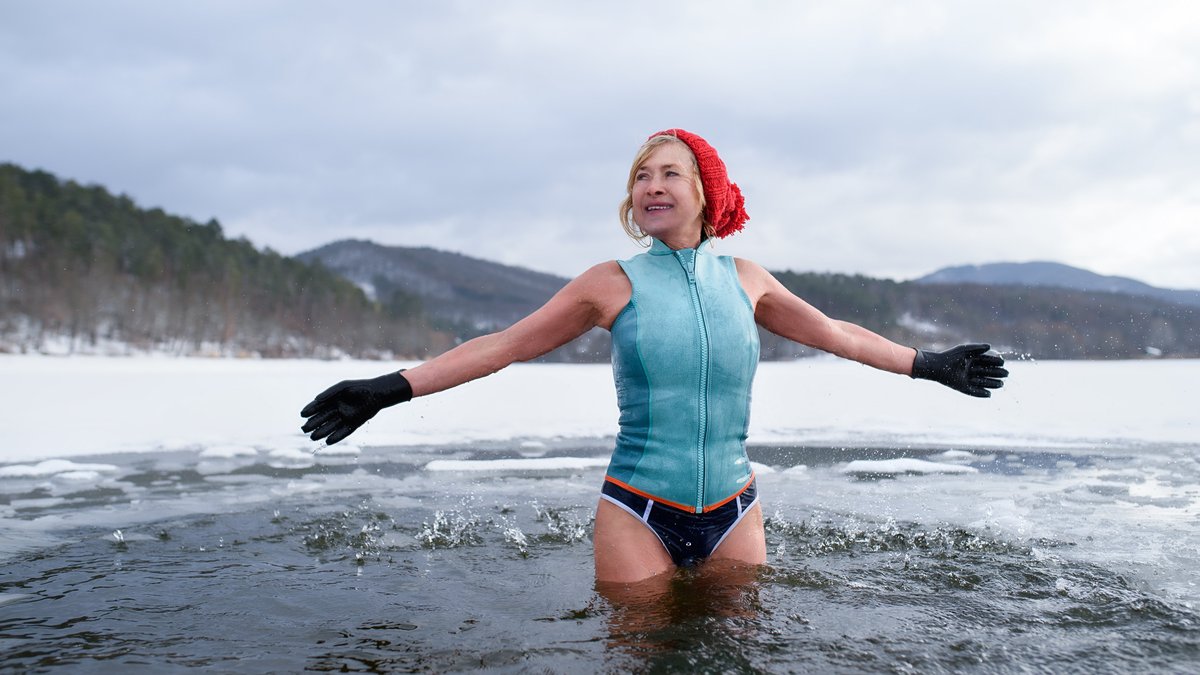
A small human study found that a brief spell of cold facial immersion did not measurably blunt later breathing sensitivity to a carbon dioxide challenge, yet it still eased how distressed some participants felt afterward. For people with panic disorder, that split result is important because panic often rises when the body suddenly feels short of breath, flushed, or out of control.
The idea comes from the diving response, an old survival reflex that can slow the body when cold water hits the face. Researchers wanted to know whether that response might do more than lower pulse for a moment. They tested whether it could also soften the body and mind after a panic-provoking gas challenge. Public health data from NIMH show how common panic disorder is, which helps explain why simple low-cost tools attract interest.
In a Frontiers study published on June 2, 2025, Peter Kyriakoulis and Catherine Lissette Caballero followed 30 adults, 15 with panic disorder and 15 comparison participants without mental illness. The team, based at Swinburne University of Technology and Deakin University, used a carbon dioxide challenge on one day and a cold-water face immersion task before the same challenge on another day.
Why carbon dioxide can trigger panic
Many people with panic disorder are unusually sensitive to shifts in breathing and body sensation. A sudden rise in carbon dioxide can create air hunger, chest discomfort, faster breathing and a rush of fear. Researchers have studied that link for decades and a respiratory review in Respiratory Physiology & Neurobiology describes how panic disorder often overlaps with altered control of breathing.
The cold-water idea comes from the other side of the problem. When cold water touches the face, the body can move toward slower heart activity and tighter blood vessel control, a package often called the human diving response. A Frontiers in Physiology review explains how immersion sports and repeated breath holding can change chemoreflex control, the system that helps the body react to oxygen and carbon dioxide.
Kyriakoulis had already explored this direction in an earlier paper. In a 2021 Frontiers in Psychiatry study, cold facial immersion was linked with lower self-reported panic and anxiety symptoms. The new study asked a tougher question: could the same reflex also change carbon dioxide sensitivity itself, rather than simply helping people feel calmer after the fact?
How the cold water test worked
The study enrolled 30 participants, split evenly between a clinical group and a comparison group. The panic disorder participants had a primary diagnosis of panic disorder, with or without agoraphobia. Average age was 36.3 years in the clinical group and 33.1 years in the comparison group. Everyone went through medical screening and the study excluded people with respiratory, cardiovascular, neurological, or substance-related issues that could complicate the challenge.
Each participant completed two main lab conditions. In the first, they took one maximum inhalation of a 35% carbon dioxide challenge gas mixture, held that breath for four seconds and then exhaled. In the second, performed on a different day, they first took a deep breath and immersed the face in water kept between 7 C and 12 C, then completed the same gas challenge. The lab held room temperature steady at 22 C.
The team tracked heart rate and breathing with a Zephyr Bioharness and PowerLab recording system. They also collected several psychological measures, including the Acute Panic Inventory, the Anxiety Sensitivity Index, the Beck Anxiety Inventory, the Panic Cognitions Questionnaire, the State Anxiety Inventory and visual anxiety ratings from both participants and researchers. Because only one carbon dioxide challenge was allowed per day, the second condition had to wait for another visit.
Design details matter here. The experimental order was fixed rather than randomized, five clinical participants came from a preliminary study and the authors say sample size calculations were not possible because this exact combination of carbon dioxide challenge and cold facial immersion had not been tested before in panic disorder. Each of those limits keeps the findings preliminary.
What changed and what did not
The clearest negative result involved physiology after the gas challenge. The paper reports that cold facial immersion did not produce a significant reduction in the later heart-rate or respiration-rate markers used to track carbon dioxide sensitivity. In other words, the cold-water step did not clearly retrain the body’s response to the challenge during this small experiment.
The picture looked better on the symptom side, especially for the clinical group. In the study abstract, the authors wrote that there were “significant reductions in both physiological and cognitive symptoms of panic” after the cold-water condition. The median scores listed in the paper move in the same direction: the clinical group’s Acute Panic Inventory median fell from 7.5 after the carbon dioxide challenge alone to 2.5 after cold facial immersion plus the challenge and the Beck Anxiety Inventory median dropped from 19.5 to 6.
Other measures also shifted downward in the clinical group after the cold-water condition. Median Anxiety Sensitivity Index scores moved from 34 to 27, Panic Cognitions Questionnaire scores moved from 4 to 2 and State Anxiety Inventory scores moved from 39.5 to 30. The short-term score changes suggest that participants felt less overwhelmed and reported fewer panic-related thoughts after the face immersion step, while longer studies are still needed to test lasting changes in panic biology.
The authors also describe a strong bradycardic effect during the cold-water task itself, which fits the basic diving-response idea. Even so, they caution that the study may have been underpowered to detect smaller physiological effects after the later challenge. The abstract directly points to the small sample size as one likely reason why the carbon-dioxide-sensitivity result remained inconclusive.
What the findings could mean for treatment
The most careful reading is that cold facial immersion may help some people with panic disorder calm the surge of panic symptoms without clearly changing the deeper breathing sensitivity that helps trigger those symptoms. A fast-acting symptom tool still deserves attention. Panic episodes can escalate quickly when a fast heartbeat or a breathing jolt convinces a person that danger is rising, so any method that interrupts that loop deserves attention.
Even so, this was a supervised lab study, not proof of a finished treatment. The researchers did not test long-term outcomes, they did not compare cold-water face immersion with standard therapy and they did not show that people became less sensitive to carbon dioxide over time. The study also used highly specific procedures, including screened participants, monitoring equipment and a controlled gas challenge, so the results should not be stretched into broad claims about self-treatment at home.
Future work could answer more practical questions. Larger randomized trials could test whether repeated use of cold facial immersion changes symptom severity across weeks, whether it works best before panic peaks or after symptoms begin and whether it adds value when paired with established treatments. Researchers could also compare face immersion with simpler cold exposure methods, such as a chilled pack on the face, while measuring how long any relief lasts.
For now, the study leaves a nuanced message. The body’s cold-water reflex did not clearly rewrite breathing sensitivity in this sample, yet it may still offer a fast way to dial down distress in some people with panic disorder. That combination of promise and uncertainty is exactly why this line of research belongs in larger clinical tests.