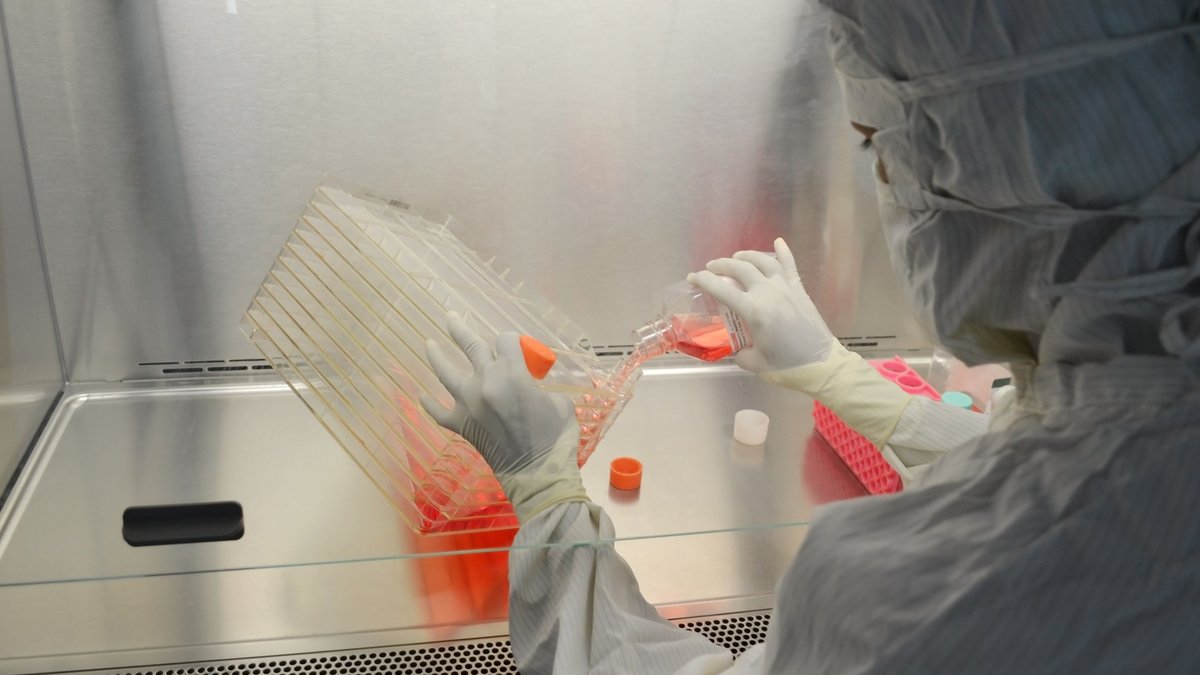
The National Institutes of Health has launched a new office designed to accelerate human-based biomedical research across the agency. The Office of Research Innovation, Validation and Application, known as ORIVA, will coordinate efforts to develop, validate and scale technologies that can better reflect human biology.
The announcement places human-based research technologies near the center of NIH planning. These tools include 3D human tissue models, computational systems and other animal-free methods that scientists can use to study disease, test ideas and improve translation from the lab to human health.
For biomedical researchers, the shift could shape what gets funded, how new methods are judged and how emerging tools move toward wider use. NIH says ORIVA will also help with interagency coordination and regulatory translation, two areas that matter when a promising lab technique needs acceptance beyond a single research group.
A New NIH Hub for Human-Based Science
ORIVA stands for the Office of Research Innovation, Validation and Application. NIH created it to speed the use of methods that study human biology more directly. The office will sit within the Division of Program Coordination, Planning and Strategic Initiatives in the NIH Office of the Director.
That placement matters because NIH is a large organization with many institutes, centers, funding programs and research priorities. A central office can help align efforts that otherwise develop separately across different scientific areas. ORIVA is meant to act as a hub for both new tool development and practical adoption.
NIH says the office will focus on New Approach Methodologies, often shortened to NAMs. The term covers a broad group of methods, including laboratory models built from human cells and computational approaches that simulate biological processes. Some NAMs may reduce animal use. Others may replace animal use in specific research settings where they are validated and appropriate.
The agency’s announcement frames the move as part of a broader push to make biomedical research more replicable, translatable and efficient. That language is important. A model that works in one lab still has to be reliable in other hands. A method that captures one part of disease biology still has to prove where it fits in the research pipeline.
How ORIVA Will Advance New Research Methods
NIH describes ORIVA as a coordinator, funder and translator of new research tools. One of its central roles will be to help develop and scale methods that can better capture human biology. That includes support for the research community through new funding opportunities, infrastructure and training resources.
Training may be especially important for methods that require specialized knowledge. A 3D tissue model can demand different skills than a standard cell culture experiment. A computational model may require close collaboration among biologists, statisticians, data scientists and clinicians. ORIVA’s work could help more labs use these systems with consistent standards.
The office will also address validation. In biomedical research, validation means showing that a method performs reliably for a defined purpose. That purpose has to be specific. A model may predict one kind of toxicity well, while offering limited insight into another biological question. Careful validation helps researchers understand where a new tool is useful.
NIH Director Jay Bhattacharya emphasized the momentum behind these technologies. “NIH aims to steer biomedical research in this direction,” he said, referring to the agency’s effort to capitalize on complex computational models, 3D human tissue models and other emerging tools.
That steering role could affect many stages of biomedical science. Basic researchers may gain access to better human-based systems for studying disease. Translational teams may use validated models to decide which drug candidates deserve further testing. Regulators may receive more consistent evidence when new methods move toward acceptance.
3D Tissues, Computer Models and Animal-Free Tools
3D human tissue models are among the clearest examples of the tools NIH highlighted. These systems use human cells arranged in structures that resemble aspects of real tissue. Some are designed to mimic organs or parts of organs. Others recreate specific disease features so researchers can watch how cells behave over time.
Compared with flat cell cultures, 3D models can provide a more realistic environment for cells. Cells interact with neighboring cells, respond to physical structure and experience chemical signals in ways that may more closely resemble human tissue. That can help scientists study processes such as inflammation, toxicity, infection, or tissue repair.
Computational tools form another major part of the ORIVA agenda. These systems can model biological networks, disease pathways, or drug interactions. Some approaches use large data sets to predict how a treatment might behave. Others simulate biological processes so researchers can test ideas before moving into more expensive or complex experiments.
The category also includes other animal-free methods that can reflect human biology. NIH did not present ORIVA as a single-technology program. The office is expected to work across a range of tools, each suited to different scientific problems. That flexibility is likely to matter because biomedical questions vary widely.
A cancer researcher, a toxicologist and a neuroscientist may all need different kinds of models. A method designed for liver toxicity may offer little help for studying brain circuitry. ORIVA’s challenge will be to support innovation while making clear which tools have been tested for which uses.
Why Human Biology Needs Better Models
Animal models have played a long-standing role in biomedical discovery. They have helped researchers study disease mechanisms, test interventions and build the scientific foundation for many treatments. NIH’s announcement acknowledges that history while pointing to a persistent problem in translational science.
Biological differences between animals and humans can limit how well animal data translate to human biology. A result in a mouse, rat, or other animal may provide valuable insight. The same result may need additional evidence before scientists can predict what will happen in people. Human-based models can give researchers another way to test those questions.
The value of human biology in research is especially clear when studying diseases that depend on human-specific genes, immune responses, metabolism, or tissue structure. In those cases, researchers may need systems that use human cells or human data from the beginning. NAMs can help fill that space when they are carefully designed.
Replicability is another reason NIH is investing in these approaches. A useful research model has to produce dependable results. If a method varies too much from lab to lab, scientists will struggle to compare findings. ORIVA’s focus on validation and scale suggests that NIH wants emerging tools to move beyond isolated demonstrations.
Efficiency also matters. Drug development and biomedical testing can be slow and expensive. Better early-stage models may help researchers identify weak candidates sooner, focus resources more effectively and ask more precise questions. Those improvements remain dependent on evidence. NIH’s role will include assessing where specific methods are ready for broader use.
Two Divisions, One NIH-Wide Strategy
NIH says ORIVA will take a two-pronged approach. One division will support innovation in the research community. That work will include funding opportunities, research infrastructure and training resources. The goal is to help scientists create and use new methods that can study human health and disease more directly.
The second division will coordinate a multi-agency effort to evaluate and encourage acceptance of new research methods. That part of the mission is critical because a method can show promise in a research lab and still face a long path before it is accepted for broader use. Agencies need shared expectations for evidence, performance and appropriate use.
This structure brings together scientific development and practical implementation. Funding new tools without a path to validation can leave promising ideas stranded. Validation without active innovation can slow progress. ORIVA is designed to connect both sides of the process.
The office’s location in the NIH Office of the Director also gives it a broad view across agency programs. That could help NIH identify gaps, reduce duplication and align priorities across fields. Biomedical research is spread across many disease areas, so coordination can be as important as invention.
Nicole Kleinstreuer, NIH Deputy Director for Program Coordination, Planning and Strategic Initiatives, said the office is intended to create systemic change. In the NIH announcement, she described a “foundational shift across the scientific landscape” aimed at better human health.
What This Could Mean for Biomedical Research
For scientists, ORIVA may change how emerging human-based models move from specialized labs into wider research use. Funding opportunities could encourage teams to build tools with validation in mind from the start. Training resources could help researchers apply those tools properly. Shared infrastructure could make high-quality systems more accessible.
For patients, the potential benefit is more indirect. Better models of human biology may improve the evidence used to study disease and evaluate treatments. The effect will depend on how well specific NAMs perform for specific questions. Some tools may become useful quickly. Others may need years of refinement.
For regulators and agencies, ORIVA could help create a clearer pathway for method evaluation. Regulatory translation requires more than a promising result. It often requires defined standards, repeatable performance and agreement about how evidence should be interpreted. NIH’s announcement identifies that coordination role as a central part of the office’s mission.
The office also arrives at a moment when biomedical science is increasingly shaped by data, engineering and human cell-based systems. Tissue chips, organ-like models and computational biology are becoming more sophisticated. ORIVA gives NIH a formal structure for deciding how those advances should be supported and assessed.
The larger promise is a research enterprise with more tools for studying human health. Animal studies will remain part of some areas where they are scientifically necessary and appropriate. Human-based methods can expand the choices available to scientists. NIH’s new office is built around making those choices more rigorous, more coordinated and more useful for medical progress.