NASA’s Swift Boost mission is targeting a strange kind of space emergency, a working observatory that is slowly losing its grip on orbit. The agency has contracted Katalyst Space Technologies to send a robotic spacecraft after the Neil Gehrels Swift Observatory and push it higher above Earth.
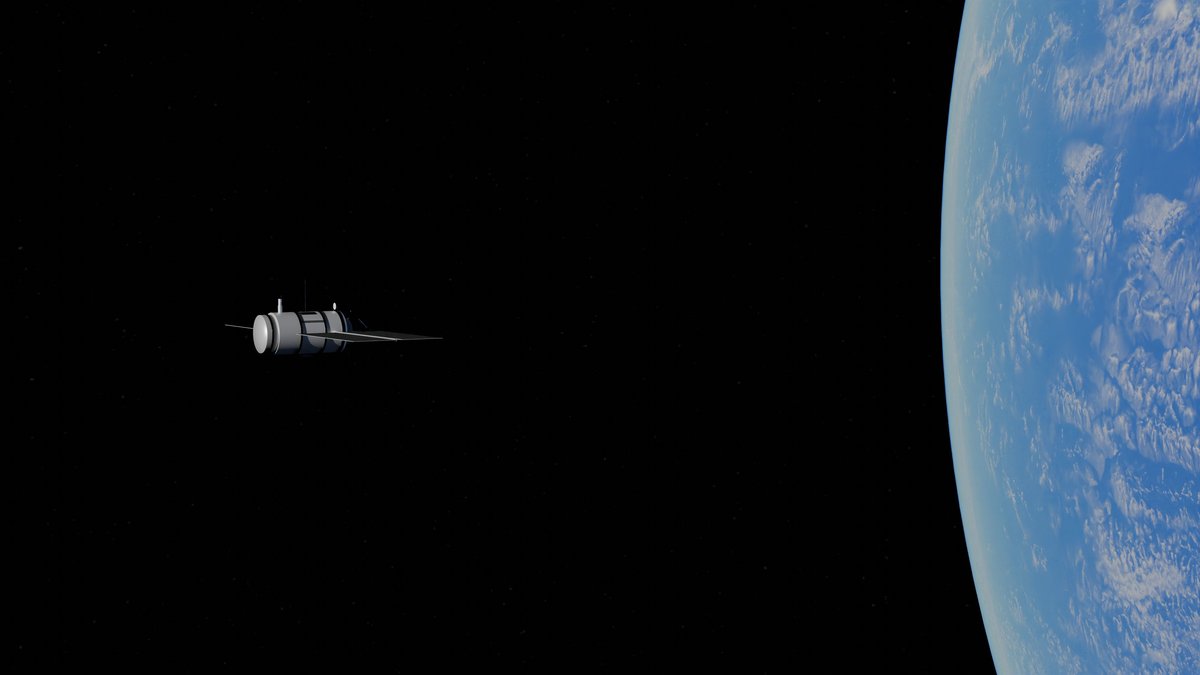
The plan reads like orbital surgery. A small spacecraft called LINK must launch, find Swift, approach it safely, grip a telescope that has spent more than two decades in space and raise its altitude. If the attempt succeeds, NASA could extend the life of a telescope that still plays a key role in catching some of the universe’s most violent explosions.
Swift has been scanning the sky since 2004. It was built to react quickly when the cosmos flashes with sudden energy, especially gamma-ray bursts. Now, after years in low Earth orbit, the observatory has become the patient in a rescue operation that could also test a new tool for future spacecraft.
Why Swift is sinking
The Neil Gehrels Swift Observatory launched to study fast, powerful events in deep space. Its specialty is speed. When a burst of high-energy radiation appears, Swift can turn quickly and help astronomers study the aftermath before the signal fades.
That fast response has made Swift valuable far beyond its original planned lifetime. NASA describes the observatory as a major part of its high-energy astronomy fleet. It helps monitor explosions, stellar deaths and other changing objects that can brighten or disappear on short timescales.
Its current problem comes from orbit. Even far above Earth, a spacecraft still encounters faint traces of atmosphere. Over time, that thin drag slows a satellite and lowers its altitude. Recent solar activity has heated and expanded Earth’s upper atmosphere, increasing the drag felt by spacecraft in low orbit.
Swift has no built-in propulsion system for a major orbit raise. As its altitude falls, the descent can speed up. NASA has already paused science observations and turned off scientific instruments to reduce risks while the boost mission is prepared.
The rescue window is tight because Swift must remain high enough for the servicing spacecraft to reach and maneuver around it. NASA’s goal is to raise Swift into a more stable orbit so the telescope can return to science work and avoid an early reentry.
The robot built to grab a telescope
Katalyst Space Technologies is building the spacecraft that will try to catch Swift. The vehicle is named LINK and its job is unusually delicate. It has to approach a government science satellite that was launched long before this rescue plan existed.
The LINK robotic servicing spacecraft uses multiple arms with small gripping mechanisms. Those arms are meant to hold Swift securely while LINK performs the boost. The challenge is greater because Swift was launched as an observatory, rather than as a spacecraft with built-in capture fixtures for a later robotic visitor.
Ghonhee Lee, CEO of Katalyst Space Technologies, described the mission’s importance in unusually direct terms. “This is the first American space robot to go up and do anything like this,” Lee told The Associated Press.
That makes the attempt a technology demonstration as well as a rescue. If LINK can rendezvous with Swift and raise its orbit, the mission could show how small commercial spacecraft might service older satellites. NASA has many spacecraft that continue to produce valuable science after their original mission timelines.
NASA awarded Katalyst a $30 million contract for the attempt. Nicky Fox, associate administrator of NASA’s Science Mission Directorate, framed it as both practical and strategic. “This industry collaboration to boost Swift’s orbit is just one of many ways NASA works for the nation every day,” Fox said in NASA’s award announcement.
A fast chase above Earth
The mission is expected to launch on a Northrop Grumman Pegasus XL rocket from the Marshall Islands region. Pegasus is carried under an aircraft before being released and igniting in flight, a launch style suited to reaching particular orbital paths.
Once in space, LINK must chase Swift across orbit. The spacecraft is expected to spend weeks lining up with the observatory. Rendezvous in orbit requires careful matching of speed, direction and altitude. A small error can grow quickly when two objects are moving around Earth at thousands of miles per hour.
After it reaches Swift, LINK must move close enough to grip the telescope. That phase carries special risk because contact with the observatory has to be controlled. NASA and Katalyst must protect Swift’s structure, its orientation and its remaining science capability.
Shawn Domagal-Goldman, NASA’s astrophysics director, captured the compressed ambition of the effort. “No one thought it was going to be possible,” he told The Associated Press.
If capture goes as planned, LINK will gradually raise Swift’s orbit. The operation is expected to take months from launch through the final boost. The measured pace matters because the spacecraft has to keep the telescope stable while changing its path around Earth.
What Swift could still discover
Swift’s scientific value comes from its speed and its view of the high-energy universe. It was built to spot gamma-ray bursts, which are among the brightest explosions known. These events can mark the collapse of massive stars or the merger of compact objects.
When Swift detects a burst, it can quickly help locate the source. That position can guide other telescopes on Earth and in space. The first moments after a cosmic explosion often hold clues that fade quickly, so rapid follow-up is essential.
The observatory also studies other changing sources. Exploding stars, active galaxies and sudden X-ray events can all benefit from Swift’s ability to react. NASA has described Swift as a kind of first responder for time-sensitive astronomy.
That role may become even more important as newer observatories add discoveries. The James Webb Space Telescope is already studying the universe in infrared light. NASA’s Nancy Grace Roman Space Telescope is expected to survey large areas of the sky after launch. Swift can help by rapidly responding to energetic events that need immediate attention.
Fox explained the stakes in simple terms. “If we let Swift reenter, we would lose that telescope,” she told The Associated Press. NASA has also noted that replacing Swift would require funding and time that are far beyond a quick operational fix.
Why Hubble may be watching
The Swift rescue also points toward a larger question for space science. Many important spacecraft age in orbit while their instruments remain useful. Their limiting factor can become altitude, fuel, pointing systems, or another spacecraft resource rather than scientific relevance.
That is why robotic spacecraft servicing attracts attention across NASA and the space industry. During the Space Shuttle era, astronauts repaired and upgraded the Hubble Space Telescope through dramatic servicing missions. Today, NASA is exploring ways for robotic systems to do some forms of life extension without astronauts visiting the spacecraft.
Hubble is much larger than Swift and any future servicing attempt would bring its own engineering demands. Still, the logic is similar. A telescope that continues to produce valuable data can be worth preserving when a safe technical path exists.
Swift offers a near-term test case. It is smaller than Hubble, scientifically productive and low enough that orbital decay has become urgent. A successful boost would give NASA a working example of commercial robotic servicing for a science observatory.
The mission also carries a broader lesson for future spacecraft design. Engineers can build satellites with servicing in mind, including better attachment points and refueling options. Swift was launched in a different era. Its rescue could help shape the next one.