A 2021 paper in Scientific Reports tracked how 16,000 adults across 18 countries and regions related to nearby nature, time spent in it and several mental-health measures. The main result was careful rather than dramatic: people who visited green space, inland water and the coast more often usually reported better well-being and less distress, while the amount of nature within walking distance of home had a weaker link once visit frequency entered the analysis.
Coasts and other natural settings are the hook, but the study’s strongest point is methodological restraint. The researchers compared residential exposure, recent recreational visits and nature connectedness in the same models, then looked across four seasons and many national settings. That approach made it harder to confuse a pleasant view from home with the act of going outside and spending time in a place that people find calming, engaging, or restorative.
Earlier summaries have often treated green and blue space as a broad public-health asset. A WHO Europe report and a later NIHR-backed evidence review both describe a generally positive relationship between contact with natural spaces and mental health, while also noting how hard it is to prove direct cause and effect. The 18-country paper adds detail to that larger discussion by showing where the cleaner signal appeared: in recent visits, more than in simple proximity.
What the 18-country survey found
Researchers tested four related ideas. They asked whether greener neighborhoods and the presence of inland or coastal blue space near home were associated with better mental health, whether more recent visits to those places showed similar associations, whether visit effects flattened at higher levels and whether psychological connection to nature carried its own relationship to mental health. Positive outcomes were measured with the WHO-5 well-being index, while the study also tracked mental distress and whether respondents used prescribed medication for depression or anxiety.
The clearest pattern came from recreational visits. More frequent trips to green space in the previous four weeks were associated with higher positive well-being, lower mental distress and lower odds of using depression medication. More frequent visits to inland water and coastal settings were also associated with better well-being and lower distress, even after the models accounted for green-space visits. Those associations were statistically significant, but the paper repeatedly describes them as small in absolute size.
Residential exposure told a quieter story. The team estimated nature around each home within a 1000 m buffer, roughly a 10 to 15 minute walk. People living in greener areas and coastal neighborhoods sometimes reported higher well-being in simpler models, yet most of those associations faded when visit frequency was added. One remaining signal, living in the third rather than first quartile of neighborhood greenness, appeared mainly in spring, which kept the residential result from looking broad or stable.
Why visits stood out over residence
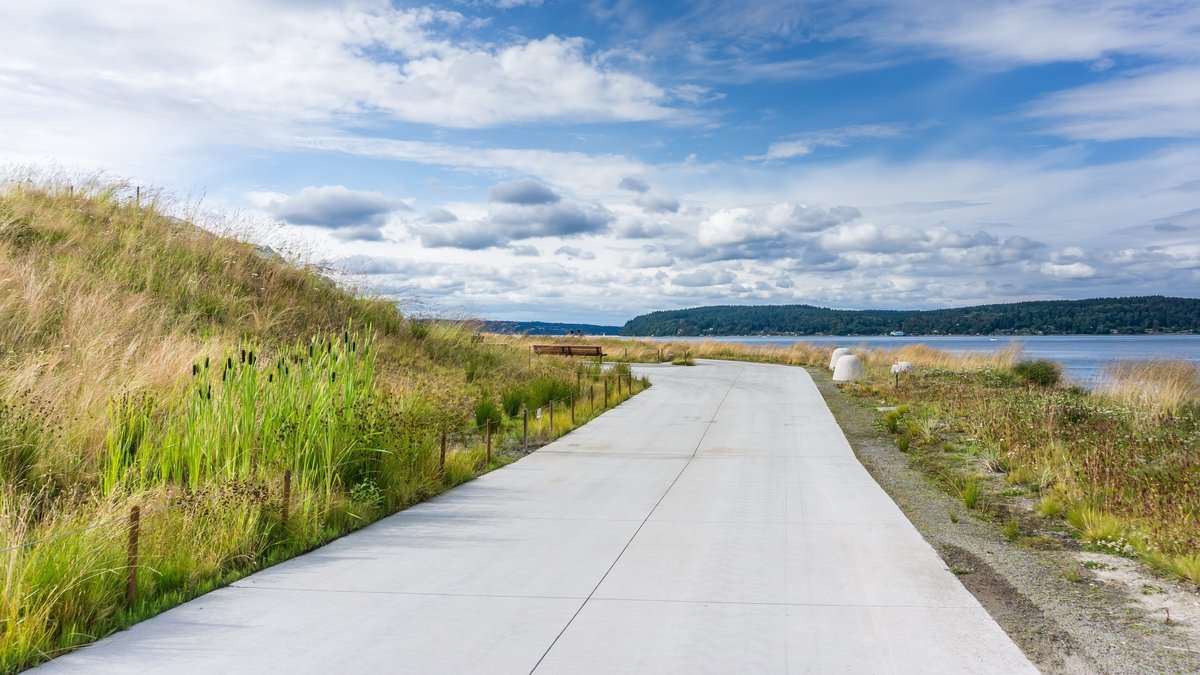
One reason visits outperformed home surroundings is straightforward: nearby nature may help most when it actually gets used. The discussion argues that greener or more coastal neighborhoods can encourage people to go out more often and that extra contact may explain much of the earlier residential advantage. In plain terms, a shoreline path, a riverside walk, or a park near home may influence mental health less through passive scenery than through repeated chances to spend time there.
Size helps keep the finding in proportion. The paper notes that four extra green-space visits in a month, about one additional visit each week, were associated with only a 1.04 percent rise on the 100-point WHO-5 scale. The PubMed record for the same paper preserves that summary as part of the abstract. Small gains can still matter at population level, especially when the behavior is low cost and widely available, but the result does not support claims of a large psychological shift from occasional contact with nature.
Blue space added nuance rather than a simple coastal halo. Inland-water and coastal visits both tracked better well-being, yet the association with inland-water visits also ran alongside higher reported use of anxiety medication. The authors suggest that reverse direction is plausible here, with people who already feel anxious seeking out rivers or lakes for self-management. Observational data cannot settle that question, so the study treats those patterns as associations between behavior and mental-health status, not proof that one directly produced the other.
Where seasons and countries diverged
Season changed the texture of the results without erasing them. Visit frequency dropped in autumn and winter compared with spring and summer, though the decline was modest for all three settings. Green-space visits remained positively associated with well-being across all seasons, while coastal visits still showed positive associations in summer, autumn and winter. Inland-water visits were linked with higher well-being in spring and winter, which undercuts the idea that blue-space value only appears in warm weather.
Country-level patterns were even less uniform. At least one kind of visit was positively associated with well-being in 16 of the 18 countries or regions, while Canada and the United Kingdom were the two exceptions without a significant visit association in those models. Spain, Hong Kong and Germany showed a positive relationship with inland-water visits. Spain, Portugal, France and Sweden showed one with coastal visits. Green-space visits were the most consistent signal overall, appearing across 11 national settings.
Residential measures varied in narrower and sometimes puzzling ways. Ireland and Italy still showed better well-being in greener or more coastal neighborhoods after visit frequency and connectedness were considered, Finland showed lower well-being in the greenest areas but higher well-being near rivers and lakes and Portugal showed lower WHO-5 scores near inland waters. The paper resists broad explanations for those differences because the effects were small, the within-country samples were more limited than the pooled sample and local mechanisms were not tested directly.
How far the findings should reach
Several limits keep the article’s headline grounded. The design was cross-sectional, which means the exposure and outcome measures were collected at the same broad point in time rather than followed over years. Much of the information was self-reported, the visit categories were converted from rough frequency labels into approximate counts and the home-exposure metrics depended on one buffer choice and on common mapping methods applied across many places. California, Queensland and Hong Kong also entered as regions rather than sovereign states, so the sample mixed countries with subnational units.
Policy relevance still comes through, especially for access and use. The authors argue that public goals for nature and health may need to care about whether people spend time in these places, not only whether such places exist nearby. That fits the spirit of SDG 11.7, which focuses on safe, inclusive, accessible green and public spaces. The paper extends the idea by suggesting that mental-health benefits may depend on regular recreational contact, social norms and personal connection to nature as much as on a map of nearby land cover.
The most defensible takeaway is modest and useful. Living near water or greenery may help when it makes visits easier, while repeated contact and a stronger sense of connection to nature tracked mental health more consistently than residence alone. The study does not offer a treatment, it does not prove that moving closer to a coast will lift mood and it does not erase the role of income, safety, culture, or local design. Even so, it gives planners and health researchers a clearer place to look: how often people use natural spaces, across seasons and across everyday life.