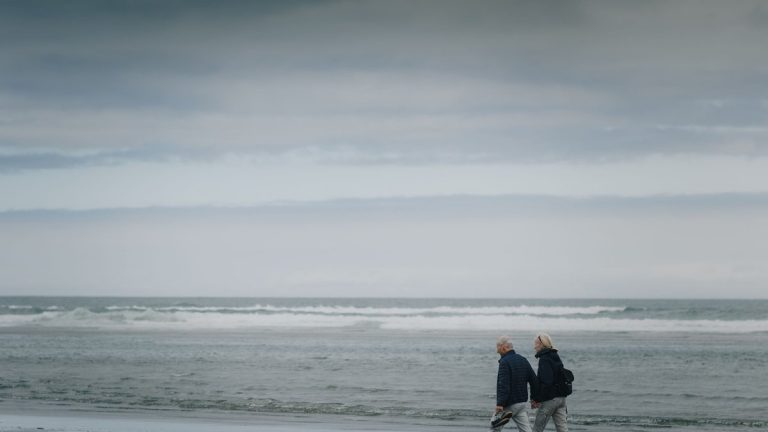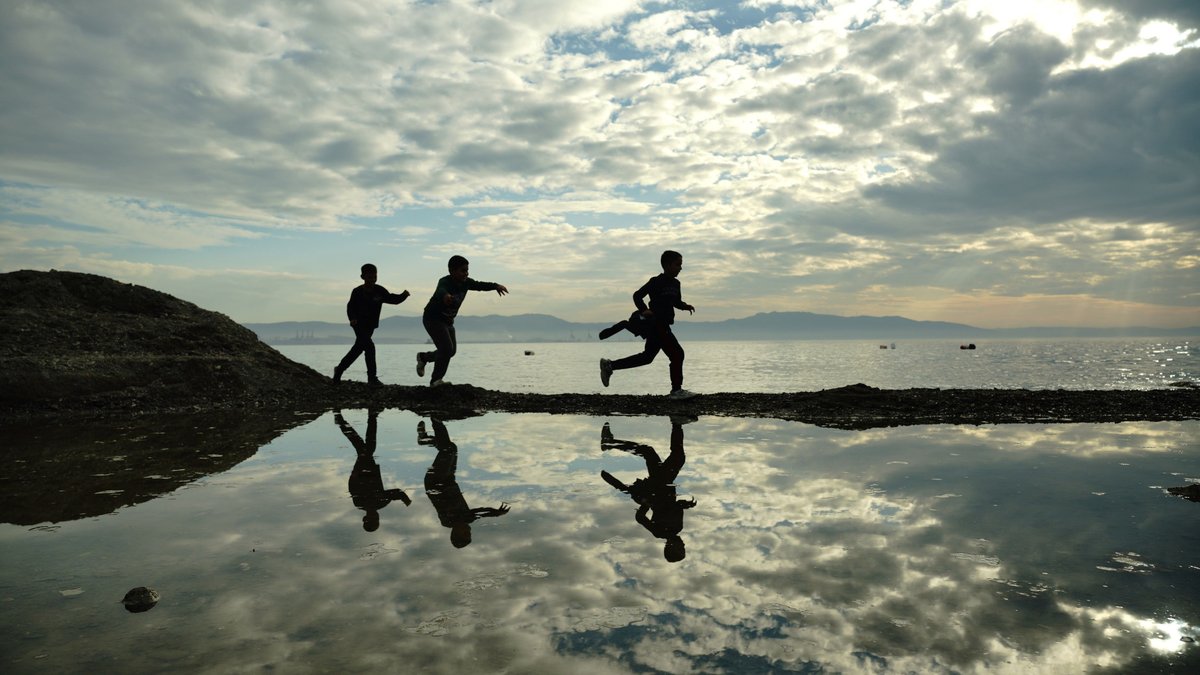
More than 15,000 adults across 18 countries were asked to look back on childhood and remember how often they spent time in and around blue spaces such as coasts, rivers and lakes. The central result was hopeful but measured: people who remembered more contact with those places tended to report better adult wellbeing and a large share of that link appeared to run through stronger inner motivation to spend time in nature later in life.
The Journal of Environmental Psychology study did not stop at a simple comparison between people with wetter childhoods and drier ones. The researchers tested whether later habits helped explain the pattern. Their model suggested that intrinsic motivation to visit natural settings, together with more recent visits to blue and green spaces, accounted for roughly 44 percent of the association. The paper therefore points to a possible life-course chain linking early familiarity, later motivation and present wellbeing.
Even so, the evidence has limits that matter for any practical takeaway. The survey was retrospective and cross-sectional, which means adults were reporting childhood memories and current wellbeing at one point in time. The findings support an association, not proof that childhood blue-space exposure caused better adult mental health. Still, the study offers one of the clearest large-sample looks yet at how early water-rich environments may connect to adult motivation and wellbeing.
What the 18-country survey actually measured
The dataset came from the BlueHealth International Survey, a large project built to compare how people use natural environments across countries. For this analysis, the team worked with 15,743 adults from 14 European countries plus Hong Kong, Canada, Australia and California in the United States. Respondents were asked to remember their experiences with blue spaces between ages 0 and 16, including how often they visited, how close those places were and how comfortable parents or guardians were with them playing there.
Adult wellbeing was measured with the WHO-5 Well-being Index, which focuses on positive feelings during the previous two weeks. The survey also asked about recent visits to blue and green spaces during the previous four weeks. These measures were essential because the researchers were not only asking whether childhood exposure lined up with adult wellbeing. They were also testing whether adult nature-seeking habits could help explain the route between the two.
The statistical models adjusted for a long list of social and demographic factors, including age, gender, education, employment status, income, household composition, season and several home-area nature measures. The adjustments reduce some obvious alternative explanations, but they do not remove all uncertainty. The team was trying to isolate whether remembered childhood blue space exposure held its own after those other differences were taken into account.
Why motivation explained so much of the link
The strongest mediator in the study was intrinsic motivation, the inner pull to spend time in natural settings because the experience feels rewarding in itself. Adults who recalled richer blue-space contact during childhood tended to score higher on that motivation and adults with higher motivation tended to report better wellbeing. In plain language, early time near water may leave some people more likely to seek out nature later because they genuinely want to be there.
This mechanism is important for lifespan psychology because it points to a durable preference rather than a one-time mood lift. A child who learns to feel comfortable near shorelines, stream banks, or lakesides may carry forward a sense that these places are welcoming and worth revisiting. If that is true, later wellbeing benefits may depend less on a single childhood memory and more on a repeated pattern of self-directed contact with restorative settings. The paper treats that idea as a plausible pathway, not a settled causal chain.
The model also included recent blue-space visits and recent green-space visits, both of which were linked to better adult wellbeing. Yet the motivational pathway was the most consistent piece across all 18 countries and regions. That cross-country stability is one reason the paper stands out. It suggests that what people feel drawn toward may be as important as the amount of nature around them, especially when the outcome is adult subjective wellbeing rather than a simple count of visits.
Continued nature visits still played a meaningful role
Motivation did not work alone. The study found that adults who reported higher childhood blue-space exposure also tended to make more recent visits to both blue and green settings. Those visits were then associated with better wellbeing. The pattern supports a layered explanation: early experiences may help build comfort and interest, which can encourage later recreational contact, which may in turn coincide with better mental states in the present.
The broader frame fits the aims of the wider BlueHealth project, which has examined how aquatic environments relate to public health and daily life. A lakeside walk, a swim from a beach, or quiet time by a river can involve physical activity, sensory relief, routine and a break from indoor demands. The current study could not measure each of those ingredients directly, but it places continued contact with nature inside the same picture as remembered childhood experience.
At the same time, the country-by-country findings were not equally strong for every pathway. The influence of recent visits varied more across regions than the motivation pathway did. Regional variation suggests that access, local culture, transport, safety, climate and daily routines may affect whether motivation becomes actual behavior. Someone may value nature deeply and still struggle to visit water or green areas often if those places are distant, crowded, costly, or feel unsafe.
Why the findings stop short of proving cause and effect
The paper deserves credit for stating its limits, because the easiest mistake would be to turn an association into a certainty about development. Adults were asked to remember childhood conditions years later, sometimes decades later. Memory can blur frequency, distance and parental comfort. People who feel well today may also remember childhood differently from people who are struggling now. Recall bias cannot be removed from a retrospective design.
The study was also cross-sectional. Researchers measured recalled childhood exposure, current motivation, recent visits and recent wellbeing in the same survey window rather than following the same people from childhood into adulthood. Because of that design, the analysis cannot confirm temporal order in the strong way a longitudinal study could. It is possible that adults with higher wellbeing are more likely to seek nature now and to view earlier experiences through a warmer lens.
Other hidden influences may still sit underneath the results. Families who enabled more childhood water play may also have differed in neighborhood resources, holiday patterns, parenting style, risk tolerance, or general interest in outdoor life. The models adjusted for many confounders, but not every relevant feature can be captured in survey data. The safest reading is the one the authors themselves encourage: recalled childhood blue space looks like a robust predictor of adult wellbeing in this sample, yet the study does not establish direct causation.
What the study could mean for families and cities
If later research supports the same pathway, the practical implication is broader than telling adults to visit water more often. The study raises the possibility that childhood access to safe, ordinary contact with blue spaces may help build lasting motivation to seek nature. That could make early-life design choices important, from walkable waterfronts and river paths to supervised swimming opportunities and local rules that help families feel children can explore these places with confidence.
The official BlueHealth summary of the findings makes the same point carefully. Water settings can be risky, so the paper supports safe, accessible, familiar contact rather than unrestricted exposure. For policymakers, that shifts attention toward maintenance, inclusion, transport and child-friendly design. For parents, teachers and youth groups, it suggests that ordinary repeated experiences near water may have more developmental value than a single dramatic outdoor adventure.
For now, the strongest contribution of the study lies in how it connects childhood experience, nature motivation and wellbeing across a large international sample. It keeps lifespan development at the center while staying cautious about causation. The next step is clear: follow people over time, measure exposure as it happens and test whether the same motivational pathway holds. Until then, this 18-country analysis offers a credible reason to take everyday blue-space access seriously as part of the environments in which children grow up.