A study in Nature Medicine warns that Oropouche virus has likely spread far more widely than reported across Latin America and the Caribbean. By combining mathematical modeling, historical outbreak data and blood bank analysis, researchers estimated that major outbreaks from 1960 to 2025 caused about 9.4 million infections.
The finding sharply raises the public health stakes for a virus that was long associated mainly with the Amazon region. Oropouche fever can resemble dengue, with fever and other flu-like symptoms that make cases easy to miss. Severe outcomes are rarer, yet the researchers point to complications that can include neurological disease, miscarriage and fetal abnormalities when infection occurs during pregnancy.
The new work also helps explain why the 2023 outbreak in Brazil became an international concern so quickly. In Manaus, a major Amazonian city, the study found signs of widespread transmission that official case counts captured only in part. A companion study in Nature Health examined the ecological and demographic conditions that helped the virus expand into new areas.
A virus that spread beyond the Amazon
Oropouche virus has been known in the Americas for decades, but the recent resurgence revealed a broader footprint. The Nature Medicine team reconstructed transmission across Latin America and the Caribbean and concluded that the virus has repeatedly infected large numbers of people during major outbreaks.
The estimate reaches far beyond confirmed diagnoses. The paper reports “over 9.4 million OROV infections during major outbreaks from 1960 to 2025,” a figure that includes infections missed by routine surveillance. Brazil accounts for a major share of the total, with roughly 5.5 million estimated infections according to the research summary.
Several factors help cases disappear from public health records. Many infections are mild or resemble dengue, which is far better known in the region. Testing can also be limited, especially in remote areas where health care access requires long travel and specialized laboratory capacity is scarce.
That invisibility matters. When a virus spreads quietly, health systems can underestimate its reach until an outbreak becomes large enough to show up in hospitals, blood samples, or regional surveillance networks. The new findings suggest that Oropouche has followed that pattern for decades.
Manaus revealed a much larger outbreak
Manaus offered the clearest window into the hidden scale of the outbreak. The city is the largest urban center in the Amazon region and a major hub for movement between rainforest communities and the rest of Brazil. That position made it a powerful test case for tracking how Oropouche moved from low-level circulation into a large epidemic.
The study found that antibodies against the virus rose sharply in the city over one year. In November 2023, 11.4% of sampled people showed IgG evidence of past infection. By November 2024, that share had climbed to 25.7%.
Those IgG antibodies act like biological receipts from prior infection. They showed that far more people had encountered the virus than confirmed case numbers suggested. In the research summary, scientists estimated that about 300,000 people in Manaus were infected between 2023 and 2024, nearly 260 times the confirmed case count.
The historical reconstruction also revealed a repeating pattern. Oropouche appears to have circulated at low levels between larger flare-ups, with major outbreaks in the early 1980s and again in 2023 to 2024. Each one infected more than 12% of the population in the Amazonian capital, according to the researchers.
One important clue came from immune protection. Blood samples from people infected decades earlier could still neutralize the newer viral strain. That suggests long-lasting cross-protection, a finding that could help shape future vaccine research if Oropouche vaccines move forward.
The tiny midge behind the surge
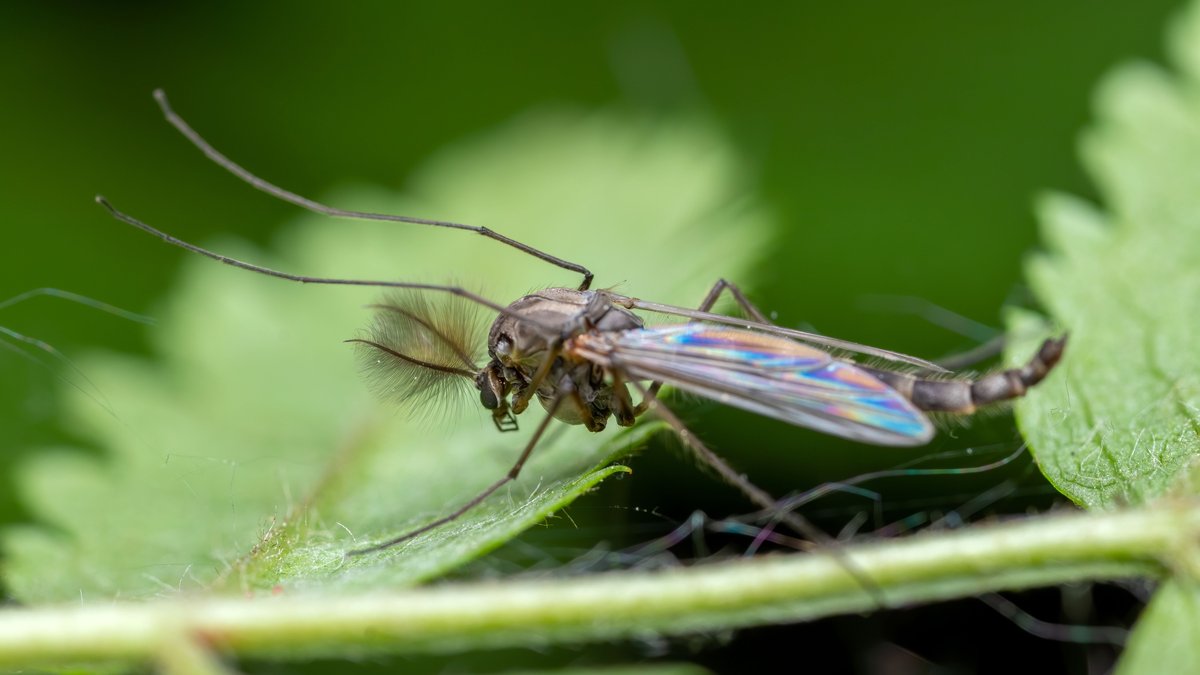
The ecology of Oropouche makes this outbreak different from better-known urban arboviruses. The virus is spread mainly by the gunpowder midge, a tiny biting insect known scientifically as Culicoides paraensis. It thrives in humid environments with moist soil and organic matter.
That habitat helps explain the disease’s rural pattern. The research summary reports that Oropouche disease was 11 times more common in rural areas than in cities. Areas with conditions such as high rainfall, heat, vegetation and organic-rich soil can support the midge and create opportunities for transmission.
The insect’s size adds another complication. The gunpowder midge is much smaller than an ordinary mosquito. It can pass through many conventional mosquito nets, which means some familiar protective measures may offer limited coverage unless they are adapted for smaller biting insects.
The recent resurgence may also reflect viral change. Researchers identified a new viral lineage produced through reassortment, a process that occurs when two related viruses infect the same cell and exchange genome segments. For segmented viruses, that genetic reshuffling can create new combinations that affect spread or immune recognition.
In practical terms, a reassorted lineage can give public health officials a moving target. Past exposure may still provide protection, as the Manaus antibody results suggest, but genetic change can influence how efficiently the virus spreads and how easily surveillance systems recognize its expansion.
Why rural transmission changes the response
Rural transmission changes the playbook for outbreak control. Oropouche does best in places where the midge’s breeding conditions exist, especially humid landscapes with organic material in the soil. That differs from approaches designed around urban dengue control, which often focus on water containers and densely populated neighborhoods.
Public health teams may need surveillance that reaches farms, forest edges, small settlements and communities outside major city centers. Those areas can be difficult to monitor consistently. A patient in a remote Amazonian community may face a long trip before reaching a clinic that can collect samples or confirm an arboviral infection.
Diagnosis adds another challenge. Oropouche fever can look like dengue, Zika, chikungunya, or other infections that cause fever and body aches. Without laboratory testing, a case can be recorded under a broader fever category or missed entirely.
The researchers argue that this undercounting can distort risk. If surveillance is concentrated in cities and hospitals, a virus that circulates in rural areas may already be established before public health systems detect a surge. By the time cases appear near urban centers, transmission may have been underway for weeks or months.
The Nature Health findings strengthen that point by linking transmission to ecological and demographic drivers. Climate, land use, human movement and local vector habitat can all shape where the virus spreads. That makes Oropouche a disease that requires environmental awareness as well as clinical testing.
A new warning system for silent outbreaks
The studies point toward a broader surveillance strategy for Oropouche. Instead of relying only on confirmed symptomatic cases, researchers call for routine serological studies that measure antibodies in the population. That approach can reveal infections that occurred quietly, including mild or undiagnosed cases.
Blood banks could also serve as early warning systems. Donated blood samples offer a way to monitor changes in antibody levels across large populations. If antibodies begin rising in a region, public health teams may be able to detect transmission before hospitals report a surge.
Genetic monitoring is another key tool. Genomic tools can track how the virus changes as it moves through regions and populations. They can also identify reassortment events, which may help explain sudden changes in transmission or geography.
The researchers also emphasize decentralizing laboratory testing. Faster local diagnosis would help clinicians separate Oropouche from other fever-causing infections. It would also give health agencies a clearer picture of where the virus is moving.
Together, the findings show how a small biting insect and a poorly tracked virus can produce a large hidden outbreak. Oropouche has likely been spreading below the surface for decades. The new data give scientists a sharper map of that spread and a stronger case for surveillance that can catch the next silent wave earlier.