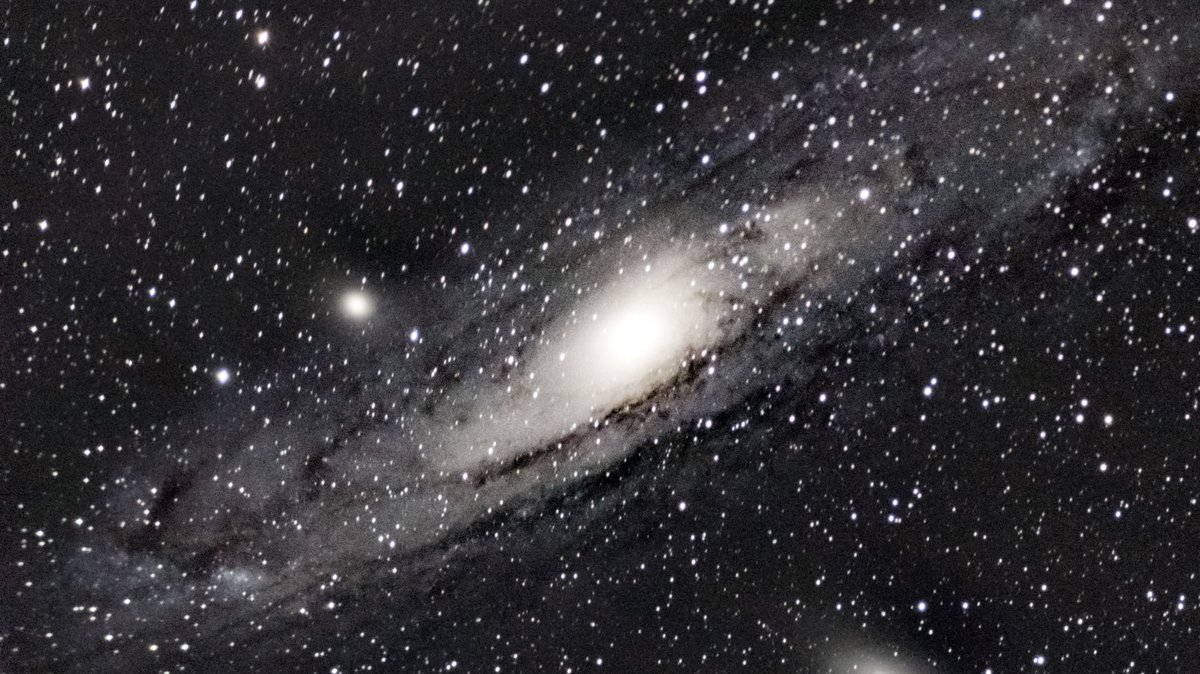
ESA’s official adoption of the Arrakihs mission has moved a new galactic archaeology spacecraft into development, with launch planned by the end of 2030. The mission will search for the dim outskirts of nearby galaxies, where faint stellar debris can preserve the story of ancient mergers.
The European Space Agency’s Science Programme Committee approved the mission after its study phase showed that the concept was feasible. That decision commits ESA to implementing the spacecraft, building its scientific instrument and putting the mission through the testing needed before flight.
Arrakihs is designed to capture light that ordinary galaxy portraits tend to miss. Around bright spiral discs and glowing clouds of gas lie vast halos of matter, including scattered stars and dark matter. These halos can hold clues about how galaxies grew over billions of years.
Professor Carole Mundell, ESA’s Director of Science, described the project as “a ground-breaking and unique galactic archaeology mission.” The phrase fits the work ahead. Arrakihs will look for the cosmic remains of smaller galaxies that were pulled apart when they merged with larger ones.
ESA Adopts Arrakihs for Launch by 2030
The adoption of the Arrakihs mission marks a key step in ESA’s mission pipeline. In ESA planning, adoption means the study phase has ended and the agency has accepted the mission for implementation. The next stage centers on hardware, integration and qualification testing.
For Arrakihs, that means the spacecraft and its scientific instrument will now move toward construction. Engineers will have to make the observatory sensitive enough to study extremely faint structures, while still keeping the mission compact and fast to develop.
The decision was made during a meeting of ESA’s Science Programme Committee at the Instituto Astrofísico de Canarias in Tenerife on June 10 and 11, 2026. The location is fitting because Spain is leading the instrument consortium behind the mission.
Launch is planned by the end of 2030. That schedule places Arrakihs among ESA’s fast missions, which are meant to move from selection to flight in less than a decade. Arrakihs was selected in November 2022 as the second fast, or F-class mission, in ESA’s Cosmic Vision program.
The Faint Halos Around Galaxies
Galaxy halos are enormous regions that surround the familiar bright parts of galaxies. When people imagine a galaxy, they often picture a shining spiral of stars, gas and dust. Arrakihs is built to study the much dimmer realm outside that bright center.
These outer regions are scientifically rich because they contain material linked to a galaxy’s long history. The halo includes invisible dark matter, which supplies much of the gravitational structure around a galaxy. It also includes ordinary matter, such as stars and hot charged gas.
The stellar part of a halo can be faint because its stars are spread across a huge volume of space. Their combined light has very low surface brightness, which makes the glow hard to measure against the darkness of space and the glare from brighter galactic regions.
Arrakihs is aimed at these galaxy halos because they can act like historical records. When galaxies merge, gravity can fling stars into streams and diffuse clouds. Some of those traces remain long after the merger itself has faded from view.
Mundell highlighted that scientific promise when she said, “By uncovering hard-to-see galaxy haloes, it will reveal new details of how galaxies form.” For astronomers, those halos are places where theory can meet direct observation.
Stellar Streams as Cosmic Clues
Stellar streams are long, faint trails of stars that can form when gravity tears apart a smaller galaxy. As that smaller system is pulled into a larger one, its stars may stretch into thin arcs and loops across the halo.
These stellar streams matter because they preserve the paths of disrupted galaxies. Their shapes can reveal how a merger unfolded, how much mass was involved and how gravity behaved across the host galaxy’s halo.
Arrakihs will map these streams in nearby galaxies with masses similar to the Milky Way. That nearby focus is important because the mission needs enough detail to identify diffuse structures. The goal is to study at least 80 galaxies, giving scientists a broader sample than a single galactic case can provide.
The mission will also estimate the number of lonely stars that were stripped away during mergers. These stars no longer sit neatly inside their original galaxies. Their positions can help researchers reconstruct past encounters between galaxies.
This is why ESA calls the mission a form of galactic archaeology. Instead of digging through rock layers, astronomers will sift faint light. The debris patterns around galaxies may reveal the order and scale of ancient cosmic events.
Why the Milky Way Needs Comparison
The Milky Way gives astronomers a close-up view of one galaxy, but a single example can only go so far. Scientists want to know how typical our home galaxy is among galaxies of similar mass.
Arrakihs will approach that question by studying at least 80 nearby galaxies comparable in mass to the Milky Way. A sample that large can begin to show which features are common and which features are unusual.
That comparison has consequences for models of galaxy formation. Astronomers believe galaxies grow through mergers and accretion, a process in which smaller systems become part of larger ones. Halo structures provide evidence of those events because they can linger after the bright central galaxy has settled into a familiar shape.
The work also touches the role of dark matter. Since halos are dominated by dark matter, the shape and distribution of stellar debris can help test ideas about how dark matter guides galaxy growth. Arrakihs will provide observations that can be compared with models of how galaxies assemble over cosmic time.
By looking beyond the Milky Way, the mission can place our galaxy in context. If other similar galaxies show richer streams, quieter halos, or different merger histories, those differences can sharpen the story of how the Milky Way became what it is today.
Four Cameras Built for Faint Light
Arrakihs needs to detect objects with low surface brightness, which means their light is spread thinly across the sky. That is a demanding task because faint halo features can be overwhelmed by stronger light from stars, the central galaxy and other sources.
To meet that challenge, the spacecraft will carry one scientific instrument made of two binocular telescopes. Together, they will provide four cameras. Each camera will be sensitive to a different wavelength band.
The mission will cover light from the near-ultraviolet through the visible range and into the near-infrared. This wavelength spread can help scientists separate different stellar populations and trace faint structures more clearly.
The instrument is being designed and developed by a consortium of ESA Member States led by Spain. Core partners include Switzerland, Austria, Belgium, Norway, Portugal and Sweden. Many instrument contributions are supported through ESA’s Prodex program, which helps national teams develop scientific hardware for space missions.
The telescope design reflects the mission’s central constraint. Arrakihs has to collect subtle signals from dim galactic outskirts while remaining suitable for a fast-class ESA mission. Its science comes from careful sensitivity, broad wavelength coverage and a survey strategy focused on nearby galaxies.
A Fast ESA Mission Led by Europe
Arrakihs will join ESA’s fleet of Cosmic Observers, a group of missions tied to major questions in space science. The mission is connected to ESA’s Cosmic Vision themes, including the physical laws of the universe and the origin and makeup of the cosmos.
As the second fast mission in ESA’s Cosmic Vision program, Arrakihs is being developed on an accelerated timeline. ESA expects fast missions to move quickly from selection to launch, which encourages focused goals and compact mission designs.
Mundell pointed to that pace in her assessment of the project, saying, “Its rapid development showcases the flexibility and breadth of ESA’s Science Programme.” For Arrakihs, speed goes hand in hand with a targeted science case.
The mission’s full name is Analysis of Resolved Remnants of Accreted galaxies as a Key Instrument for Halo Surveys. The acronym describes the core scientific idea. Arrakihs will analyze the remnants of galaxies that have been accreted into larger systems, using those remains to survey galactic halos.
The Spain-led consortium gives the mission a broad European base. ESA’s adoption now turns that collaboration toward the practical work of building, integrating and testing the spacecraft. If the mission reaches orbit as planned by the end of 2030, it could open a new window onto the faint fossil record around galaxies much like our own.