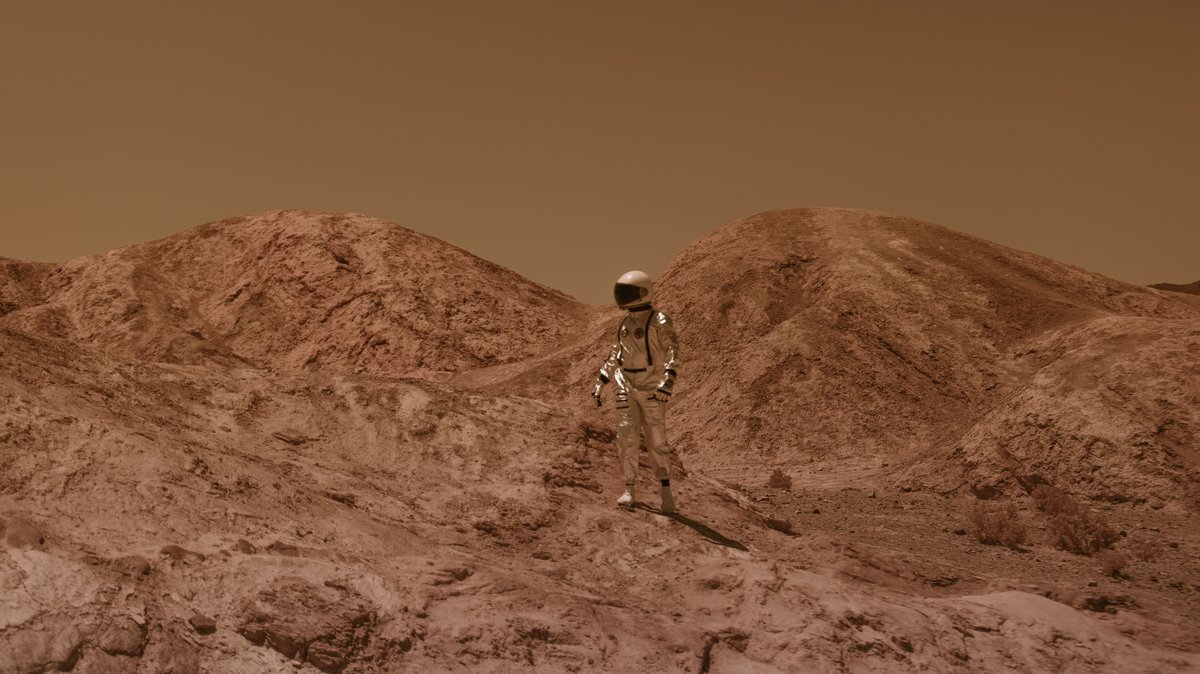
A Nature Astronomy study by Tianwen-3 mission scientists outlines China’s plan to launch a Mars sample-return mission around 2028, collect at least 500 grams of Martian material and bring it back to Earth around 2031. If the mission succeeds on that schedule, it could deliver the first physical samples ever returned from the surface of another planet.
The goal is bold because Mars has resisted this kind of round trip for decades. Space agencies have returned lunar rocks, asteroid grains, comet dust and solar-wind particles. A sealed cache of Mars rock and soil would give laboratories on Earth their first direct look at carefully protected material from the Red Planet’s surface.
The paper states, “The aim of China’s Mars sample return mission, known as Tianwen-3, is to collect at least 500 g of samples from Mars and return them to Earth around 2031.” That simple sentence carries a large scientific promise. A half kilogram of material could be studied for decades with instruments far more powerful than anything that can be flown to Mars.
China’s Mars Sample Return Plan
Tianwen-3 is being designed as China’s first Mars sample-return mission. Its central job is to land on Mars, collect rock and soil, launch those samples back into orbit and return them safely to Earth. Each step has been done in some form elsewhere in spaceflight. Combining all of them at Mars raises the difficulty sharply.
The mission follows China’s growing record in deep-space exploration. The country has already returned samples from the Moon through the Chang’e program. It has also operated Tianwen-1, which placed an orbiter around Mars and delivered the Zhurong rover to the surface in 2021.
The new Mars plan aims for scientific reach as well as engineering speed. The mission would collect surface material, subsurface material and nearby samples from a wider area around the lander. That mix could help scientists compare fresh surface dust with rock that has been shielded underground.
At least 500 grams may sound small beside Apollo’s lunar collection. For Mars, that amount is substantial. Returned samples can be divided into tiny portions and sent to specialized laboratories around the world after safety checks and curation.
A Two-Launch Route to Mars and Back
Two Long March 5 launches are expected to divide the mission into major pieces. One rocket would carry the lander and ascent vehicle. The other would carry the orbiter and Earth-return module. This split reduces the burden on a single spacecraft stack.
On Mars, the lander would handle the surface campaign. It would collect material through a scoop, a drill and a small flying sampler. After the samples are sealed, the ascent vehicle would blast off from Mars and place the container into orbit around the planet.
Meanwhile, the orbiter would wait in Mars orbit for the rendezvous. It would capture the sample container, secure it inside the return system and begin the trip home. Near Earth, the return capsule would separate and carry the sealed samples through atmospheric entry.
This architecture depends on several precise events. The lander has to survive entry and touchdown. The ascent vehicle has to launch from another planet. The orbiter has to find and capture a small target in Mars orbit. A failure at any stage could end the return attempt.
Why the Two-Meter Drill Matters
Two-meter drilling is one of the mission’s most scientifically important features. Mars has a harsh surface environment. Thin air, intense radiation, oxidizing chemistry and large temperature swings all make preservation difficult.
Organic molecules and possible biosignatures can break down over long periods at the surface. Material buried beneath layers of regolith has a better chance of being protected from radiation. Even a meter or two of cover can make a major difference across geological time.
The drill is designed to reach material that has spent far less time exposed to the open Martian environment. That depth could help scientists search for chemical traces linked to ancient habitability. It could also reveal how water, salts and minerals changed below the surface.
NASA’s Perseverance rover has collected carefully chosen rock cores from Jezero Crater. Tianwen-3’s planned drill adds a different kind of sample. The Chinese mission would focus on a landing zone where rapid collection and deep access can be combined.
Landing Sites With Ancient Water Clues
Ancient water activity is central to the landing-site search. Mars once had environments where liquid water shaped the surface. Deltas, basins, sedimentary layers and possible lake deposits can preserve clues about past conditions.
Mission planners have considered regions such as Amazonis Planitia, Utopia Planitia and Chryse Planitia. These broad plains offer possible engineering advantages. They also include terrains that may record interactions between water, sediment and rock.
The final site will need to balance safety with science. A landing area must be low enough for the atmosphere to help slow the spacecraft. It also needs manageable slopes, limited rock hazards and enough sunlight for surface operations.
Biosignature preservation adds another filter. Scientists will look for places where ancient habitable conditions may have existed and where later burial could protect delicate chemical evidence. That combination is rare, which makes site selection one of the mission’s defining choices.
A Drone for Nearby Sample Hunting
Drone-assisted sampling could expand the mission’s reach beyond the lander’s immediate work zone. A small aerial vehicle would travel to nearby targets and grab material from locations within several hundred meters of the landing site.
That approach gives the lander access to more than one patch of ground. A nearby outcrop, layered deposit, or unusual rock could be sampled even if the lander touches down at a safer location. The drone can help bridge the gap between landing safety and geological variety.
Mars flying is difficult because the air is so thin. NASA’s Ingenuity helicopter showed that powered flight can work there. Tianwen-3 would use the idea for a different purpose, with sample collection tied directly to the return campaign.
The drone also keeps the mission simpler than a full rover campaign. A rover can study many targets over time, yet it adds mass, power needs and operational complexity. A flying sampler gives the mission a compact way to gather extra context around the landing site.
The Race With NASA and ESA
Mars Sample Return has been a long-standing priority for planetary science. NASA and ESA have spent years developing a campaign to bring back the tubes collected by Perseverance. Those samples were chosen after close-up study in Jezero Crater.
The American-European effort has faced major cost and schedule pressure. Reviews have pushed NASA toward redesign options. As a result, the timeline for returning Perseverance’s cache has become uncertain compared with the stated Tianwen-3 target.
Tianwen-3 has a more direct mission profile. It aims to land, collect, launch, rendezvous and return within a shorter campaign. That route may return less context-rich material than Perseverance’s carefully documented cache. It could still provide the first laboratory samples from Mars.
The distinction matters for science and history. A successful Tianwen-3 return would give researchers real Martian material to test with electron microscopes, mass spectrometers, isotope labs and biological screening tools. It would also mark a major milestone in planetary exploration.
How the Mars Samples Would Be Studied
Returned Martian samples would be handled with extraordinary caution. The sample capsule would need to be opened in a controlled facility. Researchers would protect Earth from unknown biological risk while also protecting the samples from terrestrial contamination.
Early work would likely include imaging, weighing, cataloging and non-destructive analysis. Scientists would examine grains, textures, minerals and trapped gases before cutting or dissolving small portions. Every action would be documented because the returned material would be limited and irreplaceable.
Laboratories could test for organic compounds, isotope ratios, salts, clays, volcanic minerals and signs of water-rock reactions. These measurements can reveal whether a sample formed in a lake, a volcanic flow, a groundwater system, or a dry surface environment.
High-security sample curation will be essential for public trust and scientific value. Clean handling keeps modern Earth microbes away from the Mars material. Careful containment also allows scientists to assess biological safety before wider distribution.
If Tianwen-3 succeeds, the samples may become reference material for a generation of Mars research. They could help calibrate rover observations, sharpen models of Martian climate history and guide future landing-site choices. They may also bring the search for past life on Mars into laboratories where the smallest chemical traces can be tested directly.