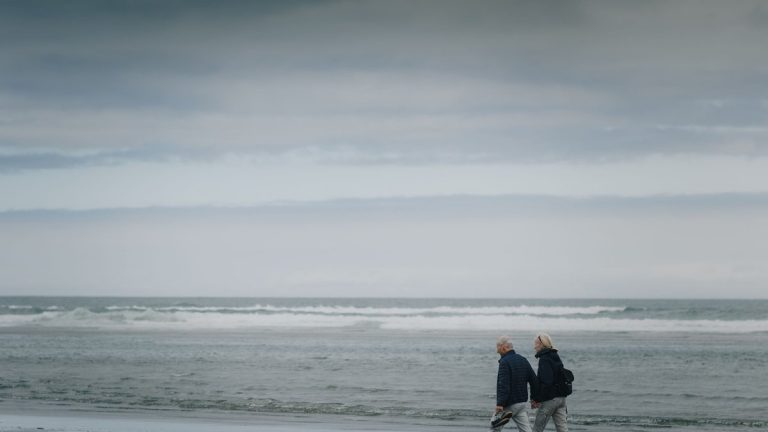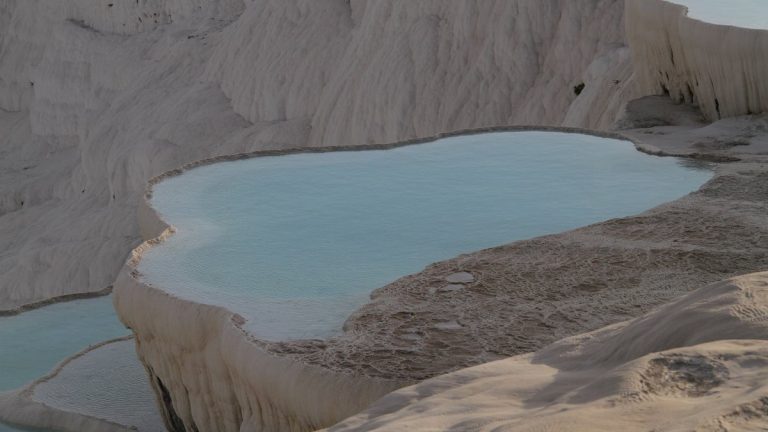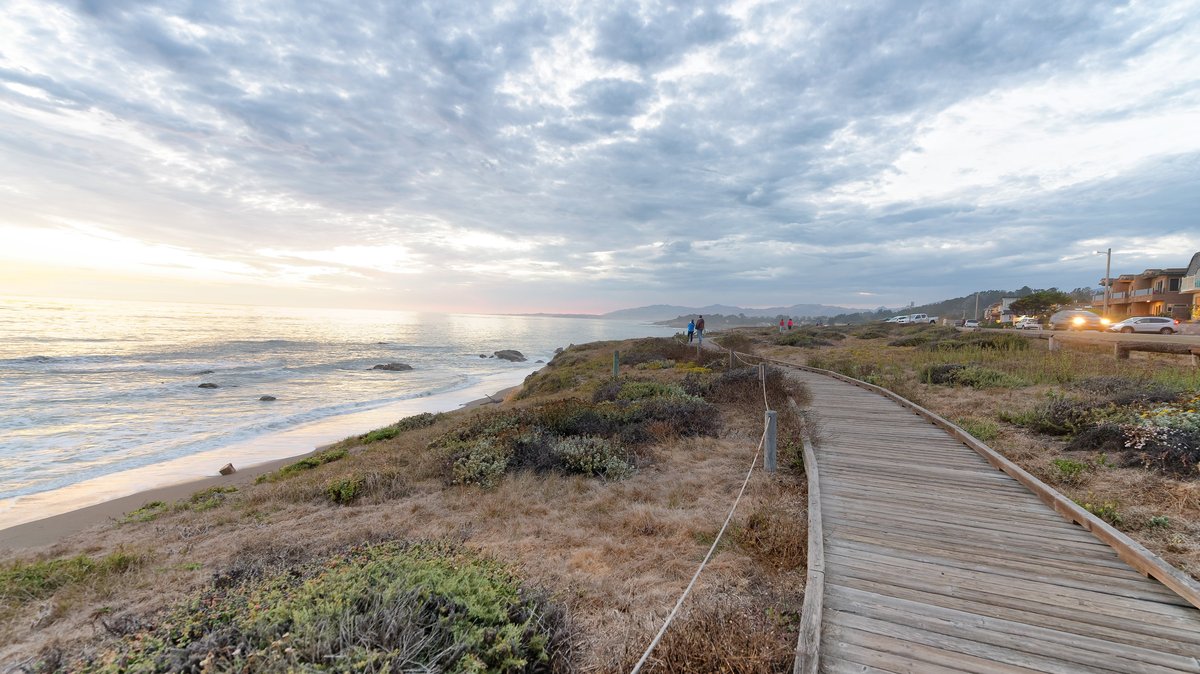
Stress recovery sits at the center of this study, because the researchers were testing whether a brief look at a coast inside virtual reality could help the mind and body settle after strain. In a paper published on May 19, 2025, in Scientific Reports, a team led by Jing Shi and Nan Zhang reported that all four virtual coastal scenes helped participants move away from a stress response. The clearest pattern came from the walkway scene, which gave the strongest mix of better mood, stronger restorative ratings, healthier heart rhythm signals and calmer brain activity.
Coasts are the hook here, but the headline result is psychological and physiological recovery in people. The experiment followed 44 university students after a stress-inducing task, then tracked what happened when they viewed a coastal walkway, a mountain park above the shore, a hard-paved plaza, or a beach. Subjective scores improved across the board, yet the plaza lagged, while the walkway kept finishing first on the most important measures.
The wider reason this matters reaches beyond one laboratory session. Cities keep looking for ways to build spaces that lower daily stress and blue-space research has been moving in that direction for years. A review in International Journal of Environmental Research and Public Health describes how healthy marine environments can support wellbeing, while another review in Cities & Health argues that planning choices around urban blue space may influence public health. The new study adds a tighter comparison by asking which kind of coast looks most restorative when every participant sees a controlled virtual scene.
Why the walkway stood out
The strongest difference appeared in how people felt. The paper says all four scenes received positive visual satisfaction scores, yet the coastal walkway reached the highest average value at 2.45. It also produced the lowest total mood disturbance score, 96.59, while the mountain park and plaza both stayed above 102. The authors read that as a sign that a path beside the sea eased mood disturbance more effectively than the more static or paved settings.
Perceived restoration told a similar story. On the study’s restorative components scale, the walkway scored 30.68, which the paper says was 1.10 to 1.83 times the level seen in the other scenes. It led the group on the “being away” and “fascination” dimensions, while the mountain park did best on compatibility and stayed close on extent. By contrast, the plaza stayed weakest across all four subscales, which suggests that open coast alone was not enough when the setting lacked softer visual structure.
The discussion section offers a practical explanation. The authors argue that the walkway scene combined water, greenery and a coherent path in a way that felt visually unified and easy to process. Their reasoning fits older restoration research as well. A study in PLOS ONE found that time in a natural setting was linked with autonomic patterns associated with reduced stress. The virtual walkway may have worked best because it gave participants a clear route, a broad sea view and enough planting to make the shoreline feel ordered rather than exposed.
How the virtual coast experiment worked
Researchers built four representative coastal scenes and presented them through immersive VR. The scenes were a walkway with open water on one side and greenery on the other, a mountain park on a gentle slope with a sea-view platform, a wide coastal plaza with hard paving and low vegetation and a broad beach with little built structure. To keep the comparison fair, the team standardized the share of sea and sky across the models.
Each participant moved through three stages: baseline, stress induction and recovery. During the recovery stage, one of the virtual scenes appeared while the team recorded subjective responses, heart rate variability and EEG data. The heart measures included LF/HF, RMSSD and SDNN, which are commonly used to estimate how the autonomic nervous system shifts under stress or relaxation. The EEG analysis tracked total power, relative alpha activity and a newer set of neural avalanche measures that the authors used to estimate how efficiently the brain was operating.
The methods matter because this was a controlled laboratory test, not a field study on an actual shoreline. The participants were young adults from a university setting, the scenes were brief visual exposures and the paper focused on short-term recovery after a stressor rather than on lasting mental health change. Even so, the design let the researchers compare the same people under tightly matched visual conditions, which is hard to do on a real coast where wind, sound, crowding, weather and smell change from hour to hour.
What changed in the heart and brain
Number by number, the body data moved in a recovery direction after the virtual scenes appeared. From baseline to the stress stage, LF/HF rose by 1.49 to 1.60, signaling higher strain. During recovery it dropped by 1.73 to 1.81 and the walkway reached the lowest value at 1.27. Compared with baseline, LF/HF after visual recovery was down by 8.47% to 20.20% across the scenes. RMSSD rose by 8.41% to 27.83%, SDNN rose by 13.05% to 25.07% and the paper interprets that package as stronger parasympathetic activity linked with relaxation.
The brain measures pointed the same way. Relative to baseline, total EEG power fell by 0.83% to 9.10% during recovery, while relative alpha power rose by 2.76% to 28.51%. The largest alpha result appeared in the walkway scene, where R alpha reached 0.23 and rose 28.51% above baseline. The authors describe the darker stress-stage plots as a sign of heavier oscillatory activity, especially in parietal regions, then report lighter plots during recovery, which they read as lower brain energy demand after the coastal views.
One of the more unusual parts of the paper is its use of neural avalanche analysis. The team tracked an avalanche criticality index, or ACI and also followed two recovery-stage parameters called lambda 1 and lambda 2. In this framework, smaller, shorter neural avalanches suggest less unnecessary energy use. ACI dropped by 0.62% to 18.80% relative to baseline, with the walkway showing the largest decrease. The walkway also placed 63.64% of participants in the upper-right recovery region, ahead of the mountain park at 56.82%, the beach at 54.55% and the plaza at 50.00%. The paper indexed on PubMed also reports that psychological and physiological indicators were correlated, which supports the idea that calmer feelings and calmer body signals were moving together.
How far the result should reach
The planning lesson is fairly direct. If a city wants a coastal space that is more likely to help people settle after stress, a walkway with a clear route, visible water and nearby planting may offer a stronger restorative mix than a large paved plaza by the same shore. The authors end by saying that health-oriented coastal design should prioritize walkway spaces and combine blue and green elements while avoiding wide hard surfaces that weaken the restorative feel.
Several limits keep the result in proportion. The sample was small, the participants were all students and the exposure happened in VR rather than in the full sensory setting of an actual shore. The study also tracked short recovery windows after a stress task, so it does not show how often people would need these spaces, whether the effect lasts, or how older adults and clinical groups would respond. A beach that feels deeply restorative in person could also perform differently once sound, salt air, temperature and movement enter the picture.
Still, the study gives a concrete answer to a practical design question. Among four carefully matched virtual coastal scenes, the walkway kept delivering the strongest restorative pattern and it did so across mood scores, self-reported restoration, heart rhythm measures and brain markers. That does not make every shoreline path a treatment, but it does suggest that the way a coast is arranged may influence how quickly people recover from acute stress after they stop and look.