107 participants at a Texas university watched a real three-minute video of a severe house fire, then took different short follow-up experiences. One group sat quietly, one read a short paragraph about the Red Sea and one watched a 360-degree VR video of a Red Sea dive. When researchers checked what changed next, the clearest shift appeared in mood, not in memory accuracy.
The paper, published in JMIR Formative Research, asked whether a calm, semantically distant scene could interrupt the emotional pull of a disturbing memory. The idea was simple: if a fire scene leaves behind heat, danger and stress, perhaps a cool underwater world full of blue water, fish and coral might steer the mind in another direction for a moment.
The result deserves a careful reading. The VR intervention raised positive emotion scores after the fire video, while negative emotion scores fell across all three groups. At the same time, the study found no statistically significant difference in how accurately people recognized details from the fire footage later. That makes this a short-term student experiment about immediate emotional response, not proof that VR can erase or weaken traumatic memories.
What the researchers actually tested
The study enrolled adults from a large public university in Texas and randomly assigned them to three groups: control, comparison and intervention. All participants first watched the same house fire video, recorded by a local fire department, to create an adverse-event memory under controlled lab conditions.
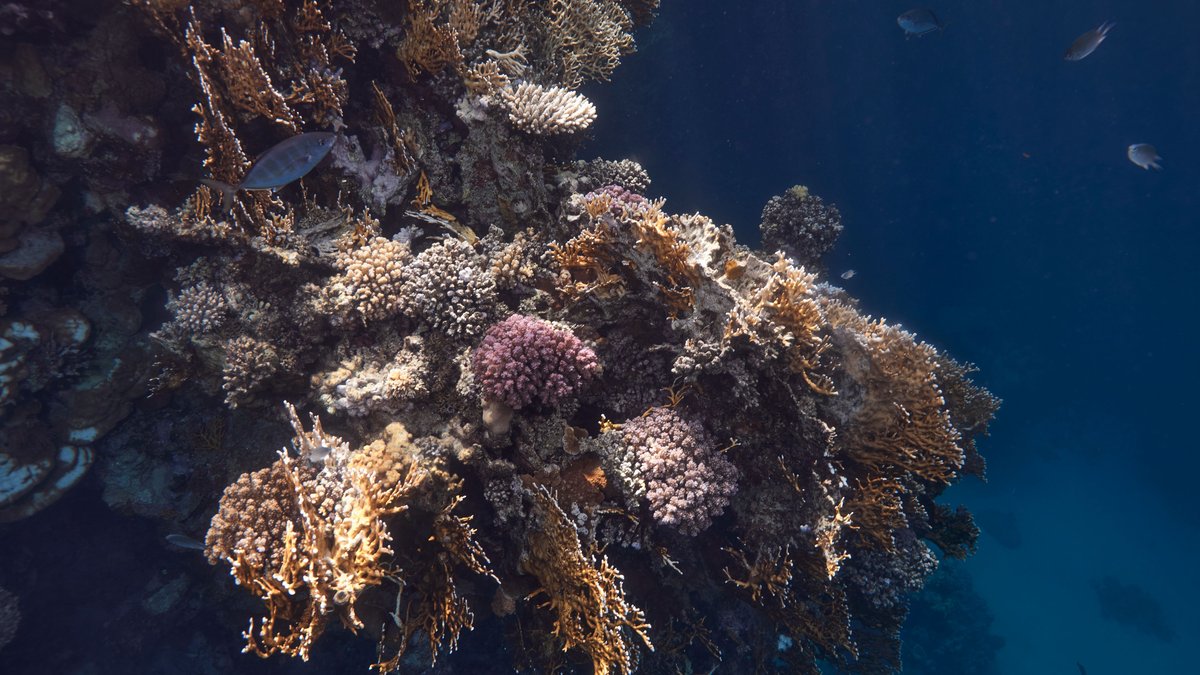
After that first stage, the control group remained seated and watched a wall. The comparison group read a paragraph about the Red Sea. The intervention group used a headset to watch a three-minute underwater Red Sea scene designed to feel semantically far from the fire. The paper calls that approach semantically irrelevant VR, meaning the content is intentionally unrelated to the upsetting event even though it follows right after it.
Researchers tracked emotion with the Positive and Negative Affect Schedule, often called PANAS. That survey measures upbeat feelings such as attentiveness and excitement, along with negative feelings such as fear and distress. For memory, the team used a forced recognition test built from 15 pairs of images, each pair containing one true fire scene and one altered image generated with Adobe Firefly.
The study was also prospectively registered at ClinicalTrials.gov, which adds useful transparency about the experiment. Readers should still keep the sample in mind: these were mostly young adults in a university setting and they were watching a distressing video on a screen rather than living through an actual emergency.
The Red Sea dive changed mood, not recall
The memory result was the simplest part of the paper. Accuracy scores on the recognition test were 0.714 in the control group, 0.732 in the reading group and 0.694 in the VR group. Those differences did not reach statistical significance, with the paper reporting P=.48. In plain language, the short VR dive did not make participants remember the fire more accurately or less accurately than the other two conditions.
Mood moved in a different direction. Positive emotion scores rose only in the intervention group, from 26.757 after the fire video to 29.892 after the Red Sea dive. The group-by-stage interaction for positive affect was statistically significant, reported as P=.005 and the second positive-affect score in the VR group was higher than the reading group at P=.04.
Negative feelings dropped after the second stage as well, but that pattern was broader. Control participants moved from 18.242 to 15.121, the reading group from 18.892 to 12.027 and the VR group from 18.108 to 12.730. The paper says the underwater experience “boosted positive emotion and lessened negative mood”, yet the negative side did not belong to VR alone because all groups improved to some degree once the fire clip ended and the next activity began.
A PubMed abstract for the same study presents the same balance in compressed form: positive emotion improved with the VR dive, negative feelings fell overall and memory accuracy did not separate the groups. That summary helps because it keeps the findings together instead of letting the mood result stand alone as if it solved the memory question too.
Why a calm ocean scene might help
The logic behind the experiment comes from trauma research that treats reminders as triggers. A previous upsetting event can bring back bodily stress and vivid emotional reactions when a person meets a related cue later. The authors wanted to know whether giving the mind something emotionally different, cool water instead of flames, blue sea instead of red fire, might redirect part of that response.
That idea fits a broad intuition many people already recognize. An immersive underwater scene can absorb attention, slow the pace of incoming information and offer a visual environment far removed from a burning home. A headset can intensify that shift by filling more of the viewer’s field of view than a plain wall or a short paragraph on paper.
The intervention also worked as a quick, bounded experience. Participants did not train for days, receive therapy sessions, or use a custom clinical program. They watched a brief ocean video. For that reason, the study is useful as a test of whether a virtual getaway can change how people feel right after exposure to upsetting material.
The paper’s DOI record points to the same article and underlines how early this line of work still is. The authors frame the Red Sea scene as a possible low-cost support tool after distressing exposure, while also saying future studies need better designs if the goal is to produce a true memory-suppression effect.
Why the memory result stayed flat
The authors spend real time on the null memory result and that caution is important. Their first concern is measurement. A recognition test based on 15 pairs of images may miss what people actually noticed in a busy fire video full of flames, trees, firefighters, houses and spreading damage. If a participant never encoded the altered detail in the first place, the final choice can drift toward guesswork.
The second concern is intensity. Watching a fire on a screen can be upsetting, but it is a milder experience than surviving a fire or witnessing one in person. The paper says that weaker emotional impact may have reduced any chance of seeing memory suppression. In other words, the experiment may have changed feelings without ever creating a memory burden strong enough for the follow-up VR scene to disrupt.
Another limitation sits inside the design itself. The intervention was passive. Participants simply watched the underwater footage. The authors suggest that a more active VR task, one that uses more attention, movement, or decision-making, might consume more cognitive resources and perhaps interfere more strongly with retrieval of the earlier event.
The study also did not measure each participant’s emotional state before the fire video began. Without that baseline, the team could see changes between stage 1 and stage 2, but not how far participants had moved from their personal starting point. The paper recommends future work that combines surveys with physiological measures such as heart rate, skin conductance, or eye tracking and a systematic review of physiological measurements in VR shows how often those signals are used when researchers try to track arousal, stress and emotional state inside immersive environments.
What the study can and cannot mean for trauma care
The researchers place the work in the context of first responders, especially firefighters, because repeated exposure to disturbing scenes can wear on mental health. That is a real problem, but this experiment did not test firefighters in the field. It tested university participants, most of them young adults, after one controlled exposure to a video. Any jump from this sample to emergency workers has to stay tentative.
The timing matters too. The benefit was immediate and short term. Participants completed the emotion survey right after the second stage, then moved to the memory task. The paper does not show whether the extra positive emotion lasted for hours, days, or weeks. It also does not show whether the same approach would help after repeated exposure, severe trauma, or existing posttraumatic stress symptoms.
Even with those limits, the findings are still useful. A short Red Sea VR scene appears capable of nudging mood upward after an upsetting clip and a plain reading passage also helped lower negative emotion. That suggests the period immediately after exposure may be more flexible than it looks, even when memory performance itself remains unchanged.
The safest takeaway is modest and concrete. This study supports the idea that immersive VR can act as a brief mood-regulation tool after indirect exposure to disturbing material. It does not show that VR rewrites memory, prevents trauma, or replaces therapy. What it offers instead is a small, well-measured sign that a calm virtual environment may help people feel better in the moment while leaving recall of the event largely intact.