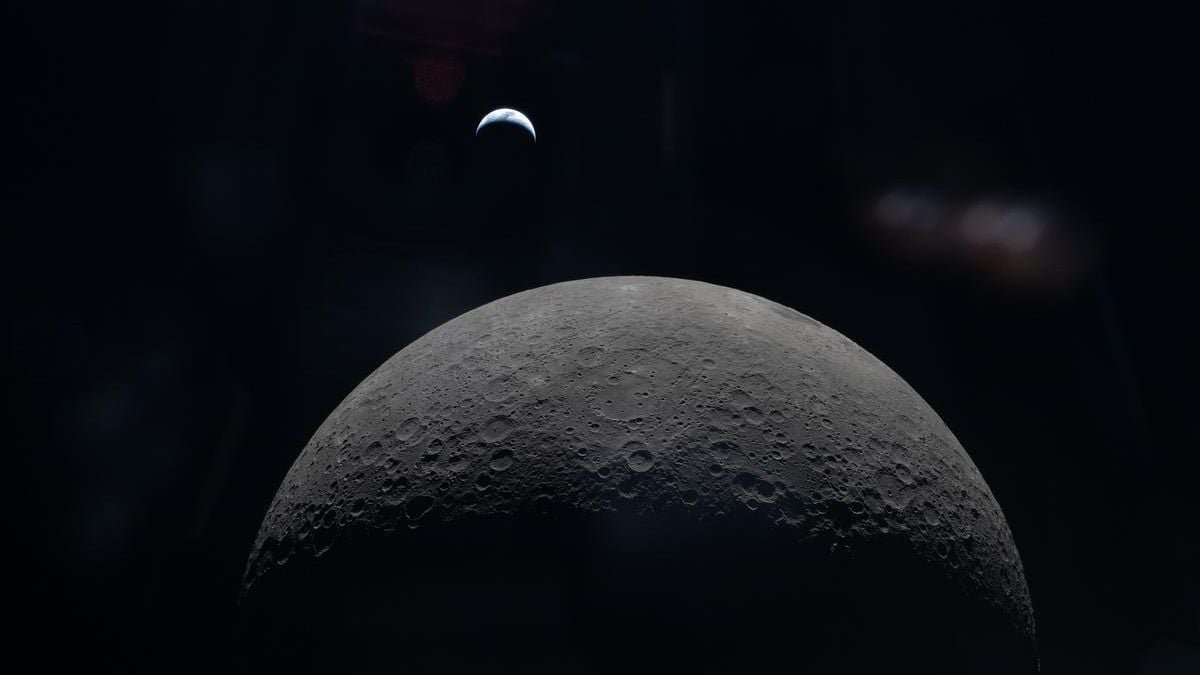
A study in Geology has traced a hidden lunar impact to tiny crystal grains inside a meteorite from the Moon. The grains point to a major asteroid collision about 3.5 billion years ago, adding a rare new marker to the violent history of the inner Solar System.
The clue came from mineral particles so small that they require close laboratory work to read. Led by planetary scientist Carolyn Crow of the University of Colorado Boulder, the team studied a lunar meteorite known as lunar meteorite NWA 12593. Inside it, they found baddeleyite grains that preserve evidence of a heating event intense enough to melt lunar material.
The result matters because the Moon can hold records that Earth tends to erase. Our planet’s ancient surface has been reshaped by plate tectonics, erosion, volcanism and water. The Moon has a quieter surface history, so rocks blasted from it can carry old impact stories into modern laboratories.
The 3.5 billion-year date also lines up with impact evidence from Earth and the asteroid Vesta. Together, those records suggest that large collisions continued after the best-known early bombardment era. That possibility gives researchers another way to think about the environments that surrounded young planets when life was emerging on Earth.
A lunar meteorite with three impact stories
lunar meteorite NWA 12593 was recovered in Mali and later became a scientific time capsule. It is a fragment of the Moon, launched into space by an impact and eventually delivered to Earth. In the laboratory, that single stone carried traces of more than one violent event.
The most recent event was the impact that knocked the rock off the Moon and sent it toward Earth. Before that, another impact helped form the rock’s breccia texture. Breccia is a jumble of broken fragments fused into a new rock by pressure, heat and impact-generated material.
Crow compared the texture to something much more familiar. “Breccias are similar to what you would see if you went and chipped out a chunk of concrete,” she said. The comparison works because concrete holds pebbles and fragments inside a hardened binder. Impact breccia forms under far more extreme conditions, yet the visual idea is similar.
The team focused on an even older event recorded inside the breccia. That event produced the tiny grains that became the study’s strongest clue. Their chemistry and crystal structure showed that the Moon experienced a separate high-temperature impact about 3.486 billion years ago.
The crystal clue that needed extreme heat
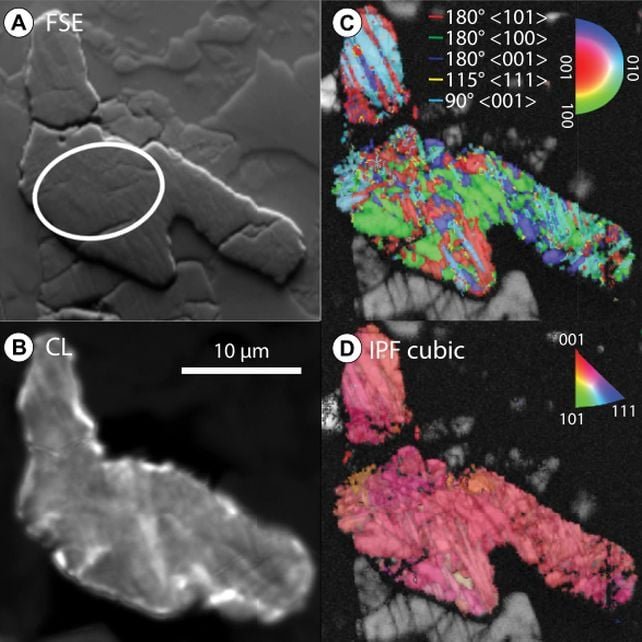
The key mineral was baddeleyite, a zirconium-rich mineral that can preserve signs of extreme heating. The researchers isolated 21 grains from the meteorite. Seven showed evidence linked to cubic zirconia, a high-temperature form of zirconia.
cubic zirconia is familiar on Earth as a diamond-like material. In this lunar meteorite, its importance comes from the temperature needed to form it. The study reports that the relevant crystal phases point to heat above about 2,370 degrees Celsius, or roughly 4,300 degrees Fahrenheit.
That kind of heat fits a powerful impact. The researchers argue that the baddeleyite grains likely formed during an event distinct from the later breccia-forming episode. The breccia-making impact fused rock fragments together, yet the baddeleyite record points to a more intense heating history.
Crow used another everyday image for the fused rock. “These all get mixed up and then it gets fused together like your concrete sidewalk,” she said. The Moon’s version was assembled by shock, heat and flying rock rather than cement and gravel.
To read the mineral’s structure, the team used electron backscatter diffraction. This method helps scientists map how atoms are arranged inside a crystal. In a meteorite where different fragments have been mixed together, that structural information can separate one ancient event from another.
How uranium and lead dated the ancient collision
The date came from a natural clock inside the baddeleyite. When the mineral formed, it incorporated tiny amounts of uranium. Over time, uranium atoms decayed into lead at a predictable rate.
By measuring the lead that accumulated in the grains, the researchers could estimate when the mineral crystallized. This approach is known as uranium-lead dating. It is widely used because uranium decay proceeds at known rates across immense stretches of geologic time.
The grains produced an age of about 3.486 billion years, with an uncertainty of roughly 10 million years. For human history, that range is almost impossible to imagine. For Solar System history, it is precise enough to compare events recorded on different worlds.
The dating also helps untangle the meteorite’s layered history. A single stone can record several impacts, especially when it comes from the Moon’s battered surface. The challenge is to identify which minerals formed during which collision.
Here, the baddeleyite grains provided both a thermometer and a clock. Their crystal structure showed extreme heat. Their uranium-lead chemistry gave the timing. Together, those clues revealed a major impact event hidden inside a small piece of lunar rock.
Why the Moon preserves clues Earth loses
The Moon is one of the best places to study ancient impacts because its surface changes slowly. It lacks active plate tectonics like Earth’s. It also has very little atmosphere and no flowing water to grind away old scars.
That quiet geology gives lunar rocks unusual value. Craters can remain visible for vast spans of time. Buried fragments can also stay near enough to the surface for later impacts to excavate them and blast them into space.
Earth’s record is far more active. Old crust is recycled into the planet’s interior. Mountains rise and erode. Oceans, rivers, wind and life all alter rock surfaces. These processes make Earth a dynamic planet, while they also remove much of its earliest impact archive.
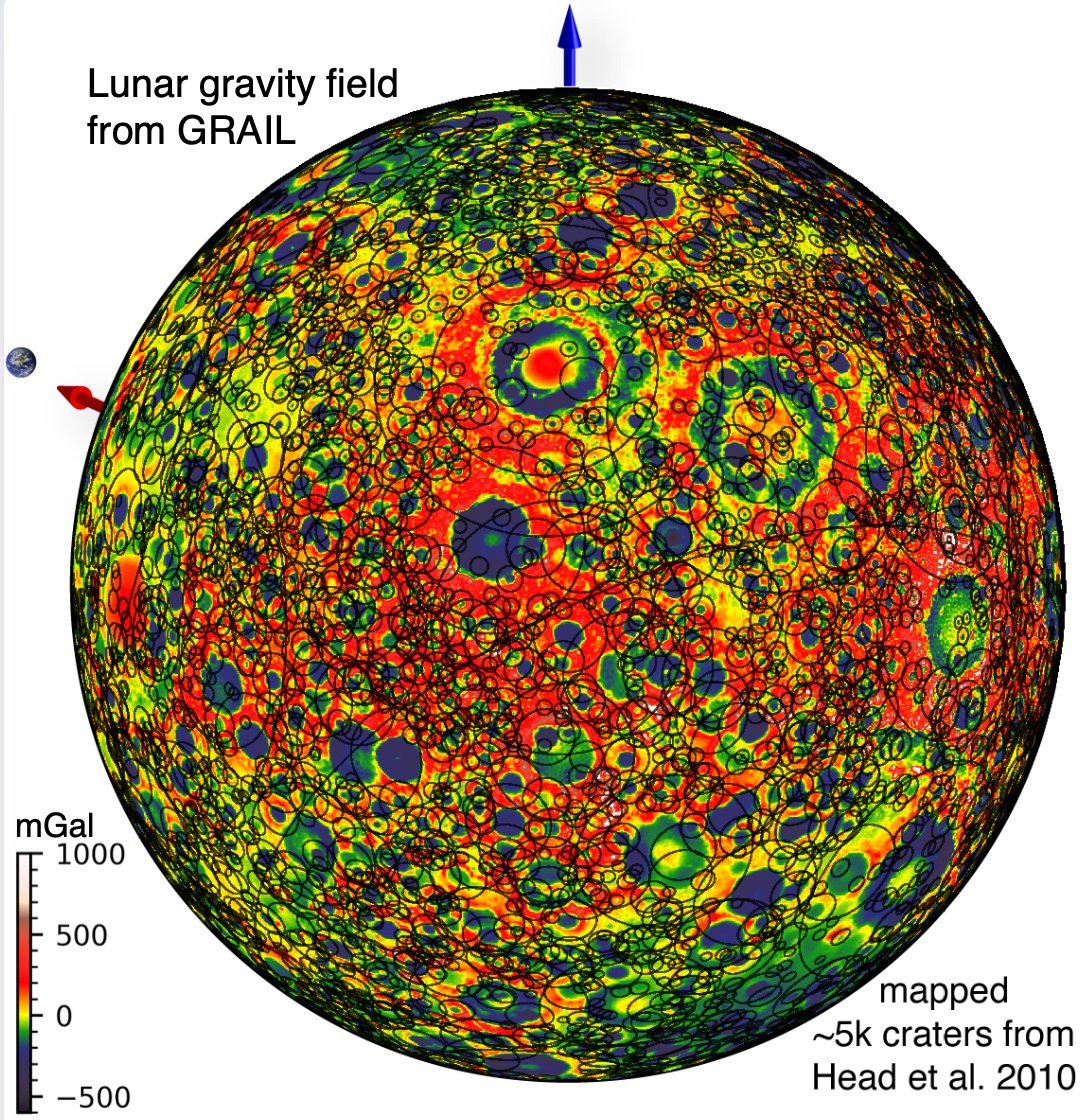
The Moon brings its own difficulty. Its cratered surface is crowded with overlapping events. Newer impacts can disturb older rocks and mix material from different eras. A meteorite such as NWA 12593 therefore requires careful mineral-by-mineral analysis.
That is why the baddeleyite grains are so useful. They preserve a specific high-temperature signature inside a rock made from many pieces. The grains help researchers move beyond the visible surface record and recover an event that has no known crater today.
A wider bombardment across the inner Solar System
The lunar date becomes more interesting when compared with other ancient impact records. The study links the 3.486 billion-year-old Moon event with evidence from Earth and the asteroid Vesta. Those records cluster in a similar window of time.
On Earth, impact-related deposits from the Pilbara region of Australia and South Africa preserve signs of large collisions from roughly the same era. These include layers of tiny molten droplets formed when impacts threw vaporized or melted material through the atmosphere. Such layers can survive even when the original crater has vanished.
Vesta adds a third body to the comparison. Meteorites from that large asteroid preserve a sequence of impact events between about 3.85 and 3.47 billion years ago. When the Moon, Earth and Vesta all show related timing, the pattern becomes harder to treat as a local accident.
Crow captured the significance of that alignment in a short comment. “It’s pretty rare to have all three records line up like this,” she said. The match suggests that the asteroid environment remained active across a broad region of the Solar System.
This finding also touches the long-running discussion of the Late Heavy Bombardment. Many studies place that intense early impact interval around 4.1 to 3.8 billion years ago. The new lunar age points to continued bombardment hundreds of millions of years later, during a quieter but still dangerous chapter.
What it means for early Earth
Early Earth was changing rapidly around 3.5 billion years ago. The oldest fossil evidence of life belongs to this broad span of deep time. Any record of impacts from that era can help scientists reconstruct the setting in which life was taking hold.
Large impacts could have altered surface environments in many ways. They could melt rock, reshape crust, generate heat and throw debris across vast distances. They could also affect oceans and atmospheres depending on the size and location of the collision.
The new Moon record does not show what happened on Earth directly. It strengthens the case that the broader neighborhood still contained impactors capable of striking rocky worlds. That matters because Earth’s own rocks preserve only scattered pieces of the story.
For planetary scientists, the value lies in connecting separate archives. A lunar meteorite, ancient Earth deposits and meteorites from Vesta each preserve a different part of the same era. Together, they hint at a prolonged period of asteroid activity after the Solar System’s earliest chaos had faded.
The next step is to compare more samples with the same level of care. More lunar meteorites, returned Moon rocks and asteroid meteorites could refine the timeline. Each tiny mineral grain may carry another date, another heat signature and another clue to the Solar System’s long aftermath of collision.