A study in Astronomy & Astrophysics suggests that Earth may avoid being swallowed when the Sun swells through its final giant-star phases. The result comes from updated calculations of how an aging Sun will pull on nearby planets while also losing mass into space.
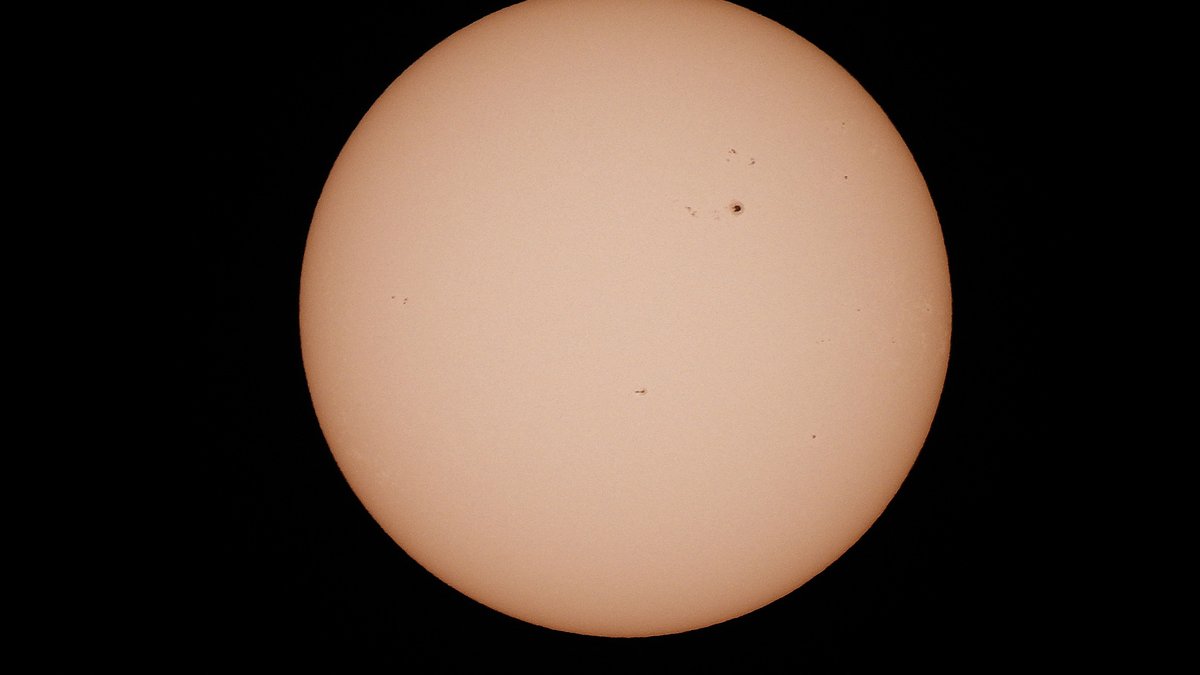
The finding gives a fresh answer to one of astronomy’s oldest future-tense questions. In about 5 billion years, the Sun will exhaust the hydrogen fuel in its core and begin a dramatic transformation. Its outer layers will expand, its gravity will change and the inner solar system will enter a long period of upheaval.
For decades, Earth’s final orbit has been treated as a delicate problem. A larger Sun pulls more strongly on nearby worlds through tides. At the same time, a shrinking solar mass loosens the Sun’s gravitational grip. The new work, led by Mats Esseldeurs of KU Leuven, finds that the outward push from mass loss may be enough for Earth to survive outside the Sun’s bloated edge.
That survival would come with a grim caveat. Long before the Sun reaches those late stages, Earth’s surface environment will become hostile as the Sun brightens. The new study concerns the planet’s orbital fate, rather than the future of oceans, air, or life.
A tug of war around an aging Sun
The central question is simple to ask and hard to calculate. As the Sun grows old, will Earth spiral inward and disappear inside the star, or will its orbit widen fast enough to stay outside?
Two forces drive the answer. The first involves tidal interactions, the same broad family of gravitational effects that links Earth and the Moon today. When a planet orbits close to a giant star, its gravity can raise distortions inside the star. Those distortions dissipate energy and can shift the planet’s orbit inward over time.
The second force comes from solar mass loss. During its giant phases, the Sun will shed large amounts of material through powerful outflows. As the Sun loses mass, its pull on the planets weakens. A planet that once orbited at one distance can then drift into a wider path.
Esseldeurs summarized the balance in stark terms. “Earth’s fate depends on a delicate balance between these two effects,” he said. That balance is the reason the problem has remained open across generations of stellar models.
The study focuses on the Sun’s late evolution after its main life as a steady hydrogen-burning star. It will first expand as a red giant. Later, it will enter the asymptotic giant branch, a turbulent phase when the star becomes even more unstable and loses mass at a high rate.
Weaker tides change Earth’s odds
Earlier calculations often gave tides the upper hand. In those scenarios, the swollen Sun creates enough drag through gravitational tides to pull Earth inward before the planet can move safely outward.
The new study revisits that assumption with more detailed physics. The researchers used updated tidal modeling that reflects major advances made during the past 15 years. Their approach suggests that tidal energy dissipates less efficiently inside giant stars than older models assumed.
That change matters because tides act like a slow orbital brake. If the brake is strong, Earth loses orbital energy and moves closer to the Sun. If the brake is weaker, Earth has more time to respond to the Sun’s mass loss by shifting outward.
The paper’s title highlights this methodological shift through ab initio tidal modelling. In practical terms, the researchers tried to calculate tidal behavior from a more physical description of the star’s interior. That refinement reduces the inward force that had made engulfment look likely in many previous studies.
Esseldeurs described the more dangerous side of the balance clearly. “If tidal interactions predominate, Earth is engulfed by the sun.” In the new calculations, that outcome becomes less favored because the tidal pull appears weaker during the key late stages.
Solar mass loss pushes planets outward
Mass loss gives Earth its possible escape route. As the Sun approaches the end of its life, it will blow off material into space. Those outflows reduce the amount of matter pulling on the planets.
This process changes the architecture of the solar system. A planet’s orbit depends on the central mass it circles. When that mass decreases, the same planet can settle into a larger orbit. In the Sun’s future, that outward migration may become strong enough to keep Earth outside the star’s expanded envelope.
The researchers also considered evidence from L2 Puppis, a nearby evolved star that is often compared with an older version of the Sun. Observations of such stars help astronomers estimate how much mass the Sun could lose during its giant phases. Those estimates are crucial because small changes can alter the final verdict for Earth.
The outward effect is driven by stellar winds, streams of material leaving the aging star. During the asymptotic giant branch, these winds can become especially important. The Sun will shed its outer layers piece by piece and the planets will respond to the changing gravity.
Esseldeurs gave the survival side of the result in equally direct language. “If the sun’s mass loss predominates, Earth escapes into an orbit larger than the radius of its star.” That sentence captures the study’s main surprise. Earth’s orbit may expand beyond the reach of the Sun’s most swollen outer layers.
Mercury and Venus face the closest danger
The study still gives the inner solar system a harsh forecast. Mercury and Venus orbit far closer to the Sun than Earth and that proximity leaves them exposed as the star expands.
Mercury is the most vulnerable. It is already close to the Sun today and its orbit gives it little room to escape when the solar radius grows. Venus also sits deep inside the region most affected by the Sun’s giant expansion.
For these planets, orbital widening from mass loss appears insufficient. Their starting positions are too close to the star. Even if their paths expand, the Sun’s outer layers are expected to overtake them during the giant stages.
Earth occupies a more marginal zone. Its present-day distance from the Sun places it near the boundary where tidal decay and mass-driven orbital expansion compete. That boundary is what makes the new modeling so important.
The result also illustrates why planetary fate depends on timing. A planet may move outward as its star loses mass, while the star’s radius grows through different phases. Survival depends on which process wins at each stage.
Mars may survive with Earth
Mars sits farther from the Sun, giving it a stronger chance of avoiding engulfment. The new calculations suggest that Earth and Mars could both remain outside the Sun’s expanded layers.
For Mars, the case is more comfortable because the planet begins farther away. Solar mass loss should widen its orbit as the Sun ages. Tidal forces also weaken rapidly with distance, which reduces the inward pull compared with Earth.
Earth’s possible survival is more surprising because it lies closer to the danger zone. The study indicates that weaker tidal dissipation can allow Earth’s orbit to grow enough during the Sun’s mass-losing phases. That result shifts the expected outcome toward escape.
This does not mean the solar system remains familiar. The late Sun will transform the inner planets’ environment. The giant phases will reshape or remove worlds close to the star and the white dwarf stage will leave behind a very different central object.
The finding is also a model result. It depends on assumptions about the Sun’s future mass loss and the physics of tides inside evolved stars. The study improves those ingredients, while still treating Earth’s final fate as a problem with uncertainties.
The Sun’s white dwarf ending
After the giant phases, the Sun will cast off its outer layers and leave behind a compact stellar remnant. That remnant is called a white dwarf. It will contain a large fraction of the Sun’s remaining mass packed into an extremely dense object.
The transformation marks the end of the Sun’s life as a normal star. Fusion reactions in the core will cease and the white dwarf will cool slowly across immense stretches of time. Its light will fade as stored heat leaks into space.
For any surviving planets, the Sun’s white dwarf era would be a cold and altered system. Earth, if it avoids engulfment, would orbit far from a small dim remnant. Mars would also circle a very different Sun from the one that lights the solar system today.
The new study changes the framing of Earth’s far future by sharpening the physics behind the final calculation. A planet that once seemed destined to disappear inside the Sun may instead end up in a wider orbit around a fading white dwarf. The story remains one of extreme change, even with Earth’s possible survival as a planet-sized body.
By combining improved tidal theory with updated mass-loss estimates, the researchers offer a more nuanced view of the Sun’s final expansion. The result gives astronomers a clearer benchmark for our own solar system and for exoplanets around aging Sun-like stars.