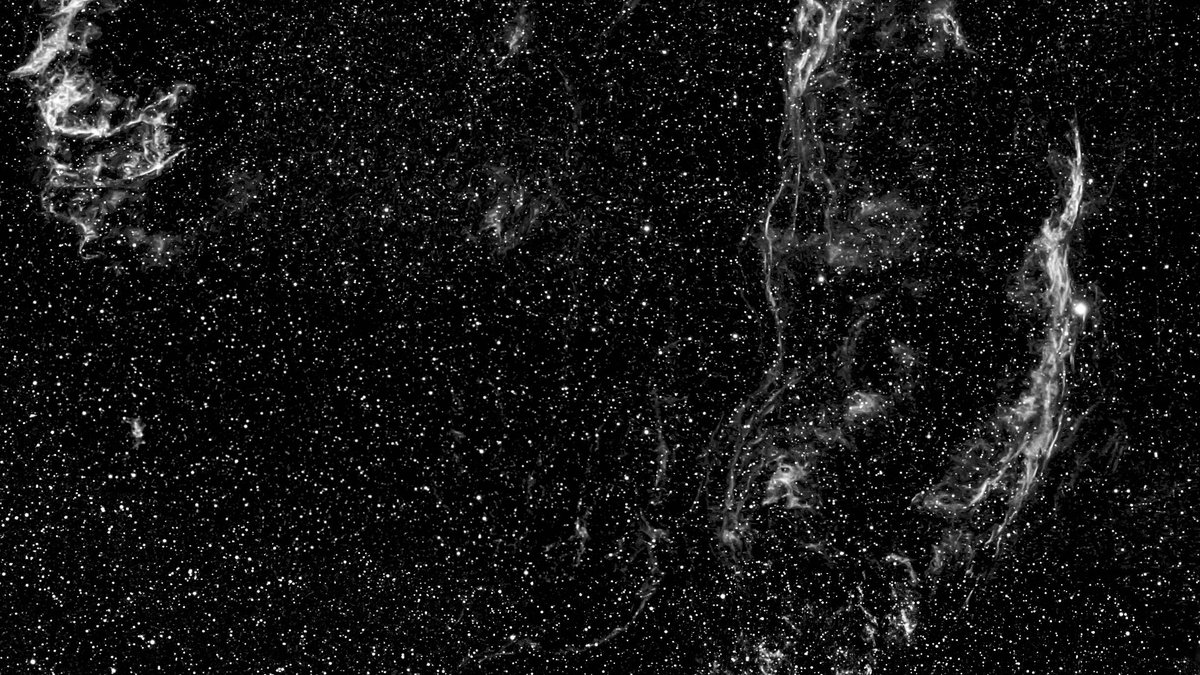
NASA’s Fermi mission has revealed a hidden relationship between two stellar wrecks in Gemini, where a faint supernova remnant appears to share a dramatic origin story with the famous Jellyfish Nebula. Using 16 years of gamma-ray data, researchers traced high-energy emission from the overlooked remnant and found evidence that both explosions may have come from two massive stars that once orbited each other.
The finding centers on G189.6+3.3, a dim remnant that sits near the much brighter Jellyfish Nebula, also known as IC 443. Their overlapping shells, shared gas environment and compatible distances point to a rare cosmic pairing. The NASA announcement describes a possible first known case in which both members of a massive binary star system exploded and left behind separate visible remnants.
That makes the region more than a beautiful patch of glowing gas. It offers astronomers a chance to study how massive stars live together, tear apart their surroundings and die at different times. It also gives scientists a natural laboratory for understanding how stellar explosions accelerate particles to extreme energies.
A Hidden Remnant Beside the Jellyfish Nebula
The Jellyfish Nebula has long stood out as one of the brightest gamma-ray-emitting supernova remnants in the sky. It lies about 6,000 light-years away in the constellation Gemini, where filaments of gas trace the aftermath of a massive stellar explosion. Its glow has made it a favorite target for telescopes that study light across the spectrum.
Beside it sits G189.6+3.3, a fainter remnant that is easier to see in X-rays. It was discovered in 1994 through observations from the German-led ROSAT mission. For years, its high-energy signals were difficult to separate from the Jellyfish Nebula’s powerful emission.
New work with NASA’s Fermi Gamma-ray Space Telescope changed that picture. Fermi has watched the gamma-ray sky for years, building a long record of energetic events that would be hard to interpret from short snapshots. In this case, the extended dataset helped researchers pick out gamma-ray emission tied to the fainter neighbor.
The two remnants appear to partially overlap in X-ray views. NASA’s announcement also notes recent X-ray evidence that hot plasma linked to G189.6+3.3 may stretch across the region. That overlap matters because it hints that the two ancient explosions expanded into the same crowded environment.
Miltiadis Michailidis, a postdoctoral fellow at Stanford University, helped lead the analysis. He said, “The evidence we’ve compiled paints a compelling picture of a dual supernova event,” giving the study a clear but cautious interpretation. The team’s argument depends on several lines of evidence, including gamma rays, X-rays, gas structures, distance estimates and binary-star simulations.
Gamma Rays Reveal a Shared Cosmic Cloud
Gamma rays provided the key clue because they reveal some of the most energetic processes in the remains of exploded stars. When a supernova blast wave plows into surrounding gas, it can accelerate particles to nearly the speed of light. Those particles then collide with interstellar material and create high-energy light.
Fermi’s Large Area Telescope is designed to detect that kind of emission. More than a decade ago, Fermi observations showed that the Jellyfish Nebula produces gamma rays through interactions between accelerated protons and gas. That result helped confirm that supernova remnants can act as powerful particle accelerators.
In the new analysis, researchers found gamma-ray emission linked to accelerated protons in the northern part of G189.6+3.3. That region overlaps a bright filament of gas between the remnants. The filament glows in visible and ultraviolet light and appears to mark where the fainter remnant’s shock wave struck dense interstellar material.
Marianne Lemoine-Goumard, an astrophysicist at CNRS and the University of Bordeaux, described why the shared structure matters. “If both remnants are interacting with the same structure, then they must share a common distance from us.” That distance is estimated at about 6,000 light-years for both remnants.
The team also concluded that the centers of the two explosions are separated by roughly 40 light-years when projected onto the plane of the sky. Their original stars may each have been at least 20 times the Sun’s mass. Together, those measurements support the idea that the remnants are physically connected instead of merely aligned by chance.
Two Massive Stars That Died Thousands of Years Apart
Two different ages make the system especially intriguing. The Jellyfish Nebula is estimated to be about 8,000 to 9,000 years old. G189.6+3.3 appears older, with estimates ranging from 20,000 to 110,000 years. That means the explosions could have been separated by as much as 100,000 years.
The proposed story begins with two massive stars born together as a close pair. Massive stars often form in binary or multiple systems, where gravity links their evolution. If the stars orbit closely enough, they can exchange matter during their lives and change each other’s future.
In the team’s scenario, the more massive star exploded first. That blast likely disrupted the binary system and sent the surviving companion moving through space. After tens of thousands of years, the companion reached the end of its own life and exploded too.
Computer simulations strengthened that interpretation. The researchers modeled a million massive binary systems and found that close pairs can produce two supernova explosions with separations and time delays similar to those inferred for IC 443 and G189.6+3.3. The NASA report also says the chance of randomly encountering the observed alignment and compatible distances is less than 1%.
Elizabeth Hays, Fermi project scientist at NASA’s Goddard Space Flight Center, captured the importance of the connection. “We can now connect the glowing remains of two massive stars to a powerful pair that evolved together over thousands of years.” The statement reflects the study’s central idea, a shared stellar history still visible in the debris.
Why This Pair Matters for Cosmic Rays
Cosmic rays are high-speed particles that zip through the galaxy. Protons make up most of them. For decades, astronomers have studied supernova remnants as likely birthplaces for many of these particles because their shock waves carry enormous energy.
When fast protons hit gas between the stars, they can produce a short-lived particle called a neutral pion. That particle quickly decays into a pair of gamma rays. The energy pattern of those gamma rays gives astronomers a fingerprint that points back to accelerated protons.
Fermi’s observations of the Jellyfish Nebula already showed this process in action in 2013. The new result extends the story to the fainter neighbor, where gamma rays in the northern remnant appear to come from accelerated protons smashing into dense gas. That makes the complex a valuable site for comparing two nearby particle accelerators.
The Jellyfish Nebula is also considered a candidate PeVatron, a cosmic accelerator capable of pushing protons to energies so high that they could nearly escape the galaxy. Finding related high-energy activity in G189.6+3.3 gives scientists a richer setting for studying how remnants reach such extreme particle energies.
Hays summed up the larger role of the telescope with a short statement. “Fermi’s gamma-ray observations of supernova remnants continue to reveal the dynamic lives of stars,” she said. In this case, those observations connect stellar death, particle acceleration and the structure of a shared gas cloud.
A Rare Laboratory for Exploding Binary Stars
A possible sibling pair of supernova remnants gives astronomers a rare view of massive binary evolution after both stars have died. Many massive stars live with companions, yet the aftermath of two separate supernovae from the same original pair is difficult to identify. Expanding shells fade, overlap and blend into the surrounding interstellar medium.
The IC 443 and G189.6+3.3 complex preserves several useful clues at once. There is an overlapping structure in X-rays, a connecting gas filament, gamma-ray emission from accelerated protons and distance estimates that place both remnants in the same region of space. Their ages also fit a sequence in which one star exploded first and the companion followed later.
The system may help researchers understand stellar kicks as well. A supernova can push a surviving companion onto a new path when the binary is disrupted. That motion could explain how the second star traveled before its own explosion created the older-looking remnant now seen as G189.6+3.3.
There are still uncertainties. Age estimates for supernova remnants can span wide ranges, especially when the surrounding gas is complex. The team’s interpretation is built from multiple signs that point in the same direction. Future observations and the forthcoming Nature Communications paper should sharpen the details of the system’s history.
For now, the Gemini region offers a striking example of what long-lived space missions can uncover. After 16 years of watching the gamma-ray sky, Fermi helped reveal that one of astronomy’s familiar glowing nebulae may share its origin with a quieter neighbor. The result turns a crowded patch of sky into a record of two massive stars that lived together and died in sequence.