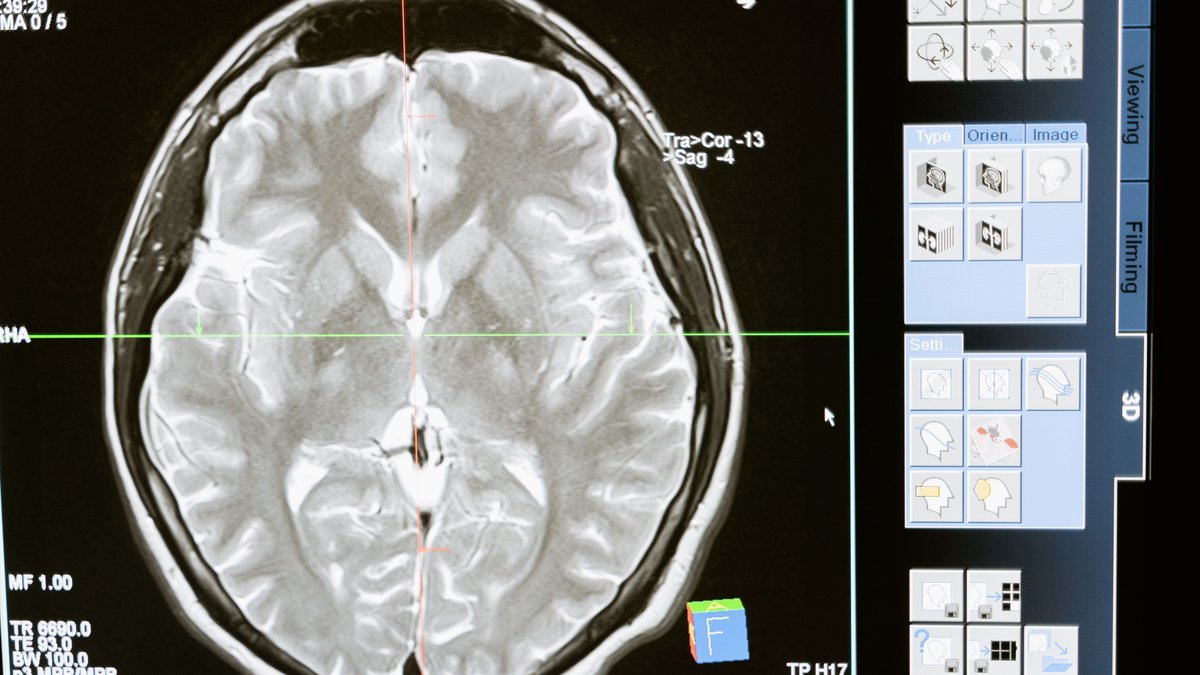
A study in Nature recorded activity from hundreds of individual neurons in eight people as they took part in natural English conversations. The work, led by researchers associated with Massachusetts General Hospital, shows that single brain cells carry information about upcoming speech before a person says a word.
The findings give scientists an unusually close look at how the human brain prepares spoken language. The team linked neural activity to the meaning of words, the roles words play in a sentence and the surrounding context that helps speech make sense. That level of detail has usually been out of reach in living people.
The research used recordings from patients who already had electrodes implanted for epilepsy monitoring. During that clinical window, the scientists recorded conversations and matched each moment of speech to brain activity in the frontotemporal cortex. Previous work from the team had connected this region to speech production.
By combining those recordings with AI-based language tools, the researchers found a division of labor among neurons. Some cells reflected specific word-level information. Others appeared to help organize phrases into larger sentence structures. Together, the activity formed a cellular-scale picture of speech as it was being prepared.
Neurons Tracked Live Conversation
The study drew its power from a rare clinical setting. Eight patients had microelectrode arrays implanted as part of their epilepsy care. These devices can record the activity of individual neurons, giving researchers a direct view of electrical signals in the living human brain.
During the study sessions, participants spoke naturally in English across a wide range of topics. This mattered because everyday speech is messy, fast and flexible. People choose words on the fly, adjust to what another person says and build sentences without pausing to label each piece of language.
The researchers then aligned transcripts of those conversations with neural recordings. Each spoken word could be placed in time and the surrounding brain activity could be examined before speech emerged. This allowed the team to ask whether cells were carrying information about what someone was about to say.
Debara Tucci, M.D., director of NIH’s National Institute on Deafness and Other Communication Disorders, emphasized why this scale matters. “This level of granularity is necessary for us to more completely understand how the brain generates speech.”
That granularity is important because many earlier approaches measure activity from large patches of brain tissue. Those methods can show which regions become active during language tasks. Single-cell recordings can reveal how small groups of neurons share the work of making speech possible.
AI Linked Brain Signals to Language
To connect brain activity with language, the team used natural language processing models. These AI tools analyze words, grammar and context in ways that can be compared with neural recordings. The goal was to look for patterns shared by the models and the brain.
Researchers focused on activity just before participants spoke. That timing is crucial because it points to speech planning rather than sound alone. If neural activity before a word predicts features of that word, the cells may be helping prepare language before it reaches the mouth.
The models helped the researchers examine several layers of speech. They could study the meaning of specific words, the grammatical roles those words played and the context supplied by nearby words. The approach also made it possible to compare similar phrases and words that would otherwise be difficult to separate.
In the Nature study, neural recordings from just before speech predicted many properties of the words that followed. The patterns held across topics, which suggests the signals were tied to general features of language production. The result was a map of how different neurons represented different parts of spoken language.
AI played the role of a measuring tool. It gave the researchers a way to describe language in mathematical terms and then test whether brain cells tracked those same features. The work points to a growing partnership between neuroscience and language models, especially for questions that involve complex human behavior.
Some Cells Encoded Words
One part of the neural code appeared to operate close to the word level. Some neurons reflected basic information about upcoming speech, including aspects of word meaning. Others tracked the roles words would play once they entered a sentence.
This kind of signal helps explain how the brain can select words with precision. In ordinary conversation, a speaker must choose a word that fits the topic, the sentence and the social context. The study suggests that individual neurons contribute to those choices before sound is produced.
The researchers found that neuronal activity could help distinguish between similar phrases and words. That detail is especially important because speech often depends on fine differences. A small shift in wording can change meaning, tone, or grammatical structure.
Words also carry relationships. A noun can act as a subject or object. A verb can anchor an action. Modifiers can narrow meaning. The team’s analysis suggests that some neurons help represent these roles as speech is being assembled.
Jing Cai, Ph.D., a researcher and instructor at Mass General, described the scale of the discovery clearly. “For the first time we’re describing processes not only at the regional but cellular scale that produce speech.”
Other Cells Built Sentence Structure
Speech depends on more than word selection. Words must be grouped into phrases and arranged into sentences. The study found evidence that some neurons handled these higher-level operations, including the organization of phrases into structured speech.
That finding points to a cellular division of labor. Some neurons appear tuned to local features, such as a word’s meaning or role. Other neurons appear linked to broader structure, where the brain keeps track of how pieces of a sentence fit together.
The models could also detect signals related to sentence context. In conversation, each word is shaped by the words that came before it. The meaning of a word can shift depending on the phrase around it and the brain has to maintain that context while speech unfolds.
The study’s approach captured this context in real time. By matching transcripts to neuronal activity, the researchers could see whether cells carried information from the surrounding sentence. Their results suggest that the brain preserves a running linguistic frame as a person speaks.
This helps explain why human speech feels effortless even though it requires many operations at once. The brain must choose words, arrange them, track meaning and control the muscles needed to speak. The Nature study shows that some of those operations can be seen at the level of individual cells.
A Possible Path to Speech-Restoring Technology
The findings could eventually help improve brain-computer interfaces for people who cannot speak because of injury or disease. Today’s speech neuroprosthetic research often tries to decode brain signals linked to attempted speech. A more detailed map of language planning could add new information for future systems.
The work remains early and specialized. The recordings came from people with implanted electrodes for clinical monitoring. That setting provides unusually precise data, while also limiting how broadly the findings can be applied right away. The study offers a research foundation rather than a ready medical device.
Even so, the possible benefit is substantial. People with severe communication disorders may one day use systems that translate neural activity into words or machine-generated speech. A system that understands more than motor commands could potentially capture richer speech-related information.
The study also raises careful questions for future research. Scientists will need to learn how stable these signals are across people, languages and brain regions. They will also need to understand how much information can be decoded safely and reliably. Any future use would require strong attention to consent, privacy and clinical need.
Cai framed the work as a starting point for deeper investigation. “We’ve set the table for us to begin answering some really interesting questions.” For neuroscience, those questions now reach down to the level of single cells. For medicine, they may shape the next generation of tools that help restore speech.