French speleologist Michel Siffre revealed one of the strangest features of human time perception when he spent more than two months alone in a lightless cave in 1962. In a later Cabinet interview, Siffre described how a stay that lasted 63 days in the outside world felt to him like little more than a month underground.
The experiment began as a geological expedition in the Scarasson abyss in the Maritime Alps. It became an early and dramatic test of what happens when a person loses every ordinary signal of time. There was no sunrise, no sunset, no watch, no calendar and no social schedule to divide one day from the next.
When the surface team told Siffre the experiment had reached its planned end date, he was stunned. The outside world had arrived at September 14. Siffre believed the date was still August 20.
That mismatch turned the cave into a landmark case in human chronobiology, the study of biological rhythms. His body kept generating cycles of waking, sleeping, hunger and fatigue. His mental calendar, however, drifted far away from clock time.
The 1962 Descent Into Scarasson Cave
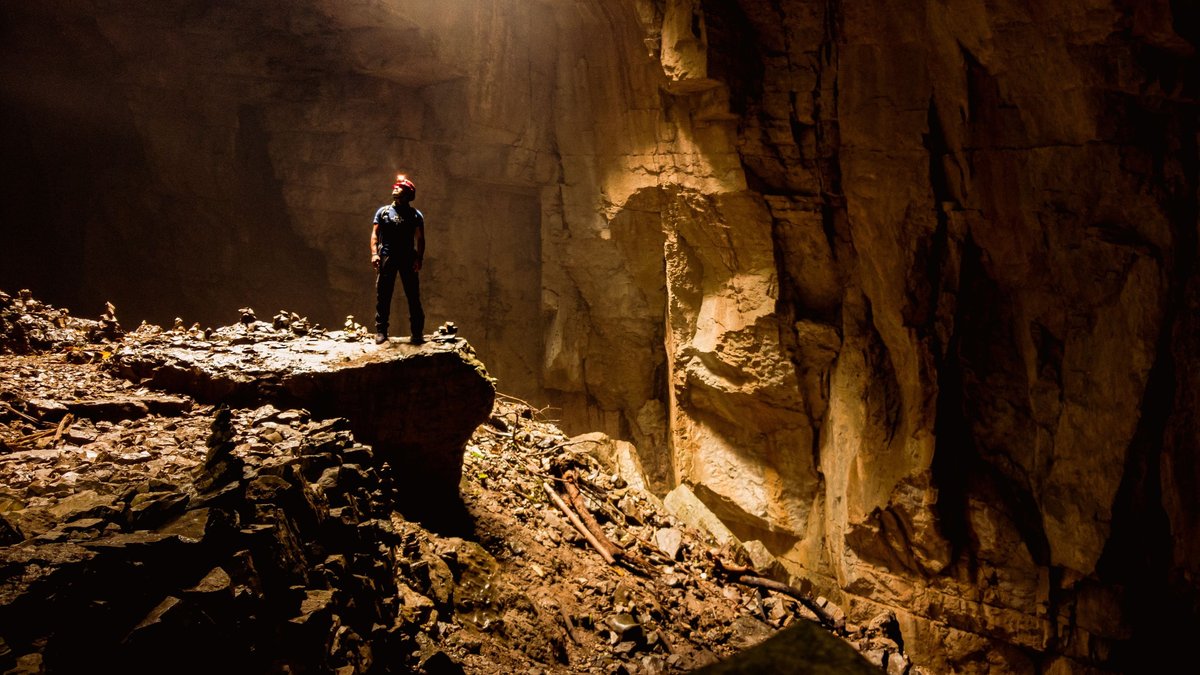
In July 1962, Siffre was 23 years old and working as a geologist and speleologist. He descended into the Scarasson cave, an underground environment that stripped away the main cues people use to orient themselves in time. The cave was cold, damp and physically demanding.
Siffre later recalled the severity of the conditions with a simple detail: “The cave was completely dark, with just a light bulb.” That one bulb gave him practical visibility, yet it could never replace the moving pattern of natural daylight.
His support team remained above ground. They could receive calls from him, but they were barred from calling down with time information. Siffre contacted them when he woke, when he ate and before he went to sleep. This setup allowed researchers to track his rhythm while preserving his isolation from clocks and calendars.
The plan had a scientific purpose. Siffre wanted to see how the body and mind behaved when they were cut loose from the usual 24-hour world. He lived according to internal signals, eating and sleeping when he felt the need.
For general readers today, the scene sounds almost impossibly bare. Yet that simplicity made the experiment powerful. By removing sunlight, schedules and ordinary human contact, Siffre created a raw test of subjective time.
How Two Months Felt Like One
The most famous result appeared at the end of the experiment. Siffre had entered the cave on July 16 and expected the stay to end in mid-September. When his team announced that the date had arrived, he believed August 20 had only just passed.
He later summarized the experience in one striking sentence: “My psychological time had compressed by a factor of two.” The phrase captures the core finding. Siffre’s mind had recorded far less elapsed time than the outside world had measured.
That compression also showed up in a small test he performed during the cave stay. Each time he contacted the surface, he took his pulse and counted from one to 120 at what he believed was a pace of one number per second.
Near the end of the experiment, the counting task took much longer than he expected. “I psychologically experienced five real minutes as though they were two,” Siffre said. The result suggested that the distortion affected short intervals as well as the broader calendar.
This made the cave experiment more than a story about someone losing the date. It showed that the mind’s sense of duration can bend when ordinary reference points disappear. Seconds, days and weeks all rely partly on the world around us.
The Body Clock Kept Running
Siffre’s experience helped popularize a key idea in chronobiology. Humans carry an internal timing system that continues to operate when the day-night cycle vanishes. The body still cycles through sleepiness, alertness, hunger and recovery.
During the 1962 cave stay, Siffre reported a sleep-wake rhythm slightly longer than 24 hours. His estimate was about 24 hours and 30 minutes. That finding became part of the early history of research into the internal body clock.
Later laboratory studies refined the picture under stricter conditions. A 1999 study in Science led by Charles A. Czeisler found that the intrinsic human circadian pacemaker is much closer to 24 hours than some older isolation experiments had suggested. The mean period in that work was near 24.18 hours.
The difference is important because Siffre’s cave was a harsh field environment. It was wet, cold and lit by artificial light he could control. A modern sleep laboratory can regulate light exposure, posture, activity and other factors with far more precision.
Even so, Siffre’s experiment made the problem vivid. The body continued to make time underground. The calendar in his mind drifted, while his biological rhythms kept pulsing beneath the surface.
Why Darkness Collapsed the Calendar
Siffre’s own explanation centered on memory. In the cave, the days became too similar. There was no morning light through a window, no evening street noise, no commute, no social appointment and no weekend pattern to mark one day as different from another.
Without those markers, experience flattened. A long sleep could feel like a short one. A day could blend into the next. The mind had fewer anchors for turning lived experience into a countable sequence.
Siffre later called it “the problem of psychological time.” The phrase points to a familiar fact made extreme by the cave. Human time is built from clocks, but it is also built from events, memory, anticipation and routine.
Most people notice this in milder ways. A packed day can feel long in memory because it contains many distinct events. A repetitive week can seem to vanish because few moments stand apart. Siffre’s cave pushed that everyday effect into a scientific extreme.
The absence of time cues changed the structure of experience. Darkness removed the most powerful daily signal, while isolation removed the social patterns that usually reinforce it. The result was a mind that kept living forward without a reliable sense of how far it had traveled.
Why Space Researchers Paid Attention
The cave mattered because it resembled other enclosed environments that were becoming urgent in the early 1960s. Submarines, bunkers, polar stations and spacecraft all raised questions about how people would sleep, think, remember and work without ordinary time cues.
Siffre linked the timing of his experiment to the early space age. Yuri Gagarin had flown in 1961. The nuclear submarine era was also reshaping military planning. Researchers were asking how human beings would function inside sealed environments for long periods.
In the Cabinet interview, Siffre said NASA analyzed his first experiment and funded mathematical analysis. The cave gave planners a living example of time isolation, even though a cave and a spacecraft are very different environments.
The connection still makes sense. Spaceflight depends on engineered schedules and carefully managed sleep. Astronauts on the International Space Station circle Earth many times per day, seeing repeated sunrises and sunsets that can scramble ordinary expectations.
For missions beyond low Earth orbit, circadian rhythm management becomes an operational issue. Light, workload, meal timing, sleep windows and crew routines all help keep people anchored. Siffre’s underground experiment showed why those anchors matter.
The Lesson From Siffre’s Cave
The lasting lesson from Siffre’s 1962 stay is both simple and unsettling. Human beings carry clocks inside their bodies, yet their sense of lived time depends heavily on the outside world.
His biological rhythm continued in the cave. He woke, slept, ate, read, wrote and ran tests on himself. At the same time, his mind lost its reliable grip on the calendar. By the end, he thought he had weeks left underground.
That split between body time and psychological time remains one reason the experiment still attracts attention. A clock can measure seconds with precision. The brain turns experience into time through memory, change and context.
Siffre’s cave also reminds scientists to treat isolation as a full-body and full-mind condition. Light exposure, social contact, activity and environmental variety shape how people experience duration. These factors matter in caves, laboratories, submarines, hospitals, polar stations and spacecraft.
The 63-day cave experiment became famous because it made an invisible system visible. Once sunlight and calendars vanished, Siffre’s mind revealed how much ordinary time depends on cues we rarely notice.