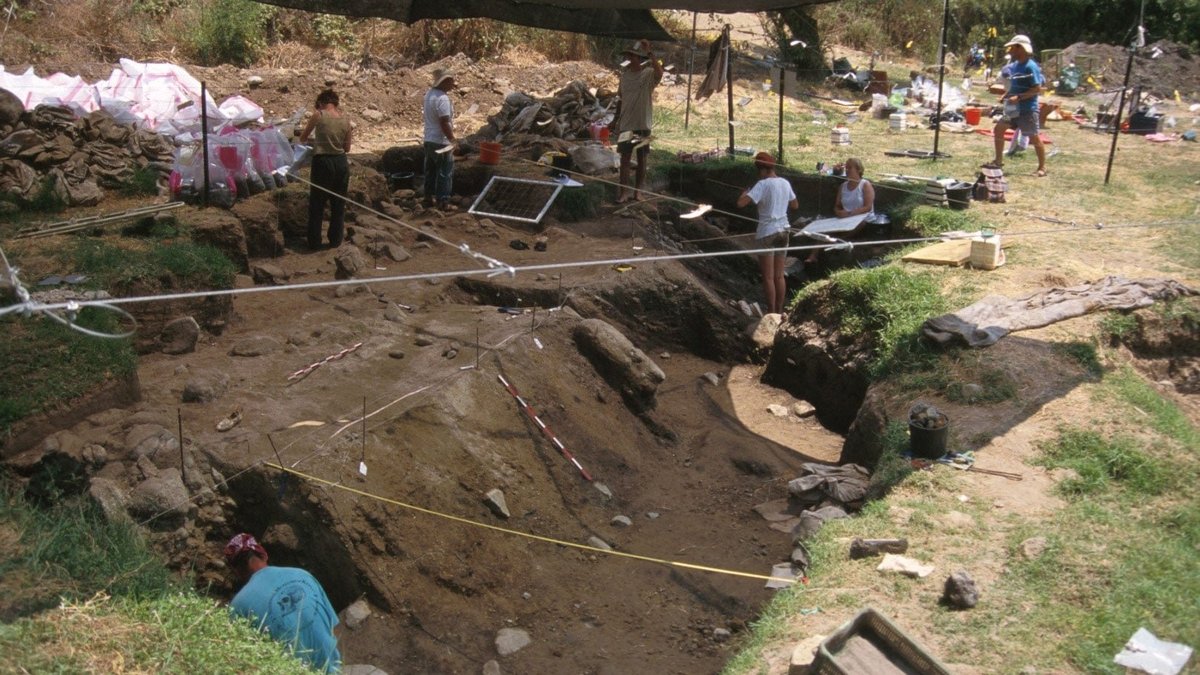
A study in Quaternary Science Reviews has found that rare charcoal fragments from Gesher Benot Ya’aqov in northern Israel preserve a surprisingly detailed record of how early humans kept fires burning nearly 780,000 years ago. The work suggests that firewood was a major part of daily survival at the ancient lakeshore site.
The study focused on Gesher Benot Ya’aqov, often called GBY, an Acheulian site on the shore of the ancient Lake Hula. Generations of hominins returned there again and again. The site offered water, stone for tools, edible plants, fish, large animals and a supply of wood that could be gathered with relatively little effort.
Fire has long been central to debates about early human evolution. It gave warmth, light, protection and a way to transform food. Yet a campfire only matters when people can feed it. The new charcoal evidence shows that the simple work of gathering fuel may have shaped where early humans chose to live.
The researchers examined one of the oldest and largest prehistoric charcoal collections known from an archaeological site. In those burned fragments, they found traces of trees and shrubs that once grew around the lake. The mix points to a rich landscape, with wet shoreline plants and Mediterranean woodland close at hand.
A Lakeshore Campsite Built Around Fire
Nearly 780,000 years ago, the land around GBY looked very different from northern Israel today. The site sat beside ancient Lake Hula, a freshwater environment surrounded by wetlands, open woodland and abundant wildlife. For mobile hunter-gatherers, that setting would have offered many resources in a compact area.
Archaeological work at GBY has revealed more than 20 occupation layers. That means hominin groups came back repeatedly over long periods. The finds include stone tools, plant remains, fish and the bones of large animals. Together, they form one of the clearest windows into Lower Paleolithic life.
One of the best-known discoveries from the site is the remains of a straight-tusked elephant. This huge animal could weigh several times more than a modern African elephant. The arrangement of its bones suggests that it was butchered at the site, adding to the evidence that GBY was a place where food was processed and shared.
Fire adds another layer to that picture. A hearth requires fuel, attention and repeated action. A group that uses fire regularly needs a dependable wood supply. The study’s authors argue that this practical demand helped make the lakeshore especially attractive.
In the study abstract, the researchers write, “The demanding task of maintaining fires likely shaped hominin base camp selection.” That sentence captures the core idea. Fire use depended on the landscape around the camp as much as the knowledge of how to control flame.
The Charcoal Clues Beneath the Microscope
The new analysis centered on ancient charcoal fragments, small pieces of burned wood that survived in the archaeological layers. Charcoal from such deep time is valuable because it carries anatomical details from the original plant. Under magnification, those details can reveal the tree or shrub that supplied the fuel.
The research team studied 266 charcoal pieces. Their method belongs to anthracology, the study of wood charcoal from archaeological sites. By looking at the structure of each fragment, researchers can identify plant types and reconstruct parts of the ancient environment.
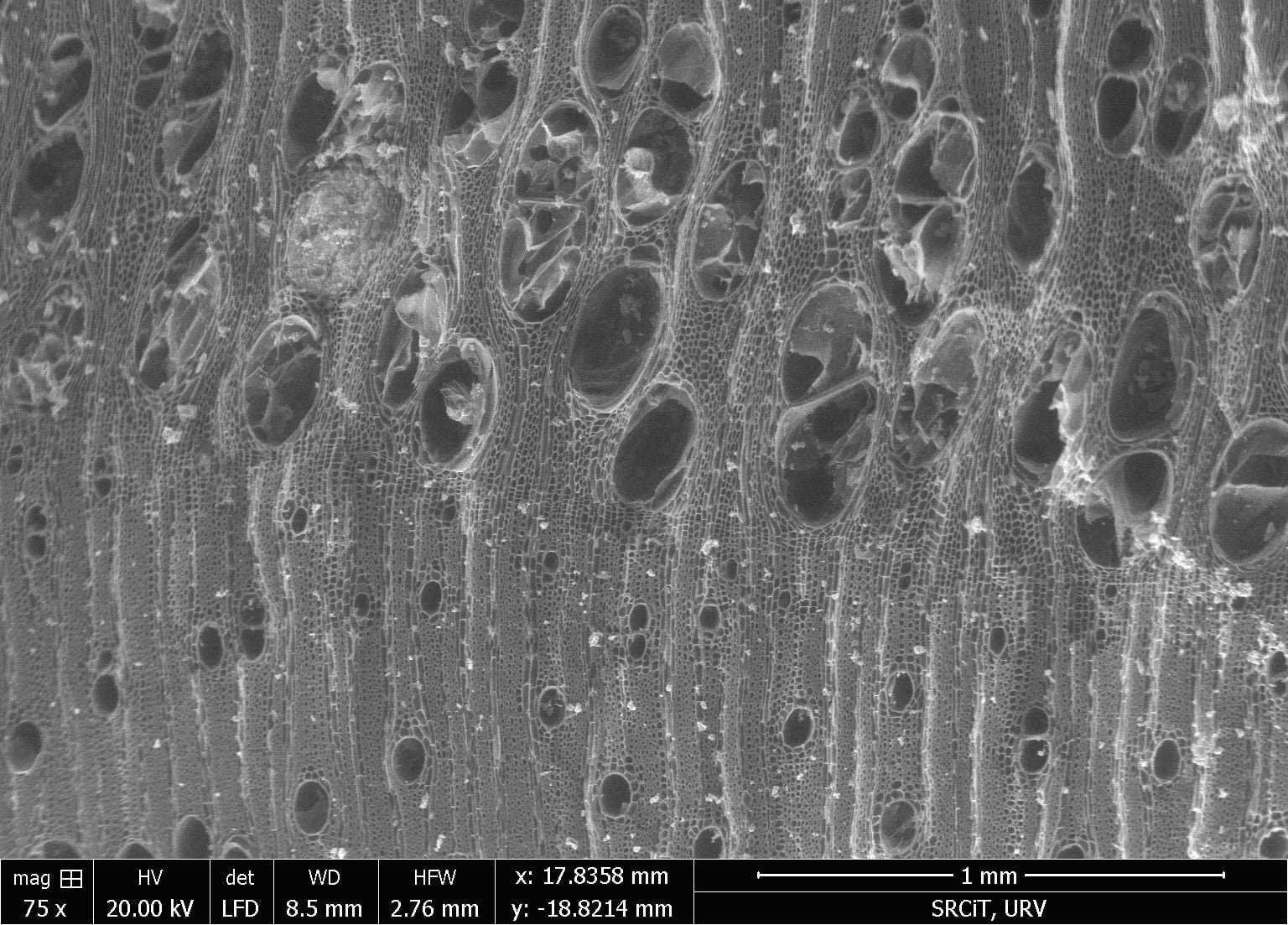
Traverse section of a charcoal fragment of ash observed under an ESEM microscope. Credit: M. MoncusilPHES
The results showed a broad mix of plants. The charcoal included ash, willow, grapevine, oleander, olive, oak, pistachio and pomegranate. These plants point to a varied setting, with lakeshore vegetation near wetter ground and woodland plants growing nearby.
The pomegranate result stands out. The study identifies Punica granatum, the pomegranate tree, among the charcoal remains. According to the research summary, this is the earliest known evidence of the fruit tree in the Levant. That pushes its documented regional history much deeper into the past.
The charcoal assemblage also showed greater taxonomic diversity than other plant remains found at the site, including seeds, fruits and unburned wood. That matters because burned wood may record plants gathered from a wider zone. It can preserve a different slice of the ancient landscape than edible plant remains alone.
Driftwood May Have Made the Site Worth Returning To
At first glance, a diverse charcoal collection might suggest that early humans carefully chose many kinds of wood. The study points to a more practical pattern. Much of the fuel appears to have come from lakeshore driftwood deposited naturally by water along the edge of Lake Hula.
Driftwood would have been a valuable resource. Branches and trunks carried by water can gather along shorelines, where they dry and become easy to collect. For people living without metal tools or storage systems, such a supply could reduce the time and energy needed to keep fires going.
The study abstract states, “The charcoal from GBY reveals habitual firewood gathering, likely driven by the availability of lakeshore driftwood.” This suggests a repeated behavior. Hominins returned to a place where fuel was often close to the living area.
That interpretation also fits the wider pattern at GBY. The site had stone materials for tools, fish in the lake, plants in the surrounding wetlands and woodland and large animals in the broader landscape. Firewood completed that resource package. A good camp needed all of these things within reach.
The charcoal evidence gives firewood a larger role in early settlement decisions. Food and water are obvious needs. Tool stone also mattered. The study shows that firewood availability may have ranked alongside them as a practical reason to return to the same place.
Fire, Fish and Daily Life at Lake Hula
Fire at GBY appears closely tied to daily activities. The study and related public research summaries describe charcoal concentrations that overlap with clusters of fish remains, especially the teeth of large carp. This spatial pattern supports the idea that fish were cooked or processed with fire at the site.
That is an important clue because fish are a nutrient-rich food. Cooking can make some foods easier to chew and digest. It can also change texture and safety. At GBY, the association between charcoal and fish remains shows how controlled fire may have been woven into routine subsistence.
Professor Brigitte Urban of Leuphana University, a member of the international team, described the central role of fire in plain terms. “The study also shows that fire played a central role in the daily lives of hominins,” she said. The evidence includes charcoal remains alongside fish bones and burned flint micro-artefacts.
The finds suggest a living space organized around recurring tasks. Some areas held burned wood. Other materials point to tool work, food processing and animal butchery. These patterns help archaeologists move from isolated artifacts toward a fuller picture of behavior.
Fire also changes how people use time and space. A maintained flame allows activity after sunset. It can support shared meals and protection. At GBY, the evidence points to groups that could manage a complex landscape and bring its resources together around a campsite.
A Rare Window Into Early Human Planning
The charcoal collection from GBY is valuable because it links three kinds of evidence at once. It records the environment, the fuel supply and human behavior. Each fragment is small, yet the full assemblage shows how early humans interacted with the landscape around them.
The study credits an international team including Ethel Allué, Naama Goren-Inbar, Yoel Melamed, Brigitte Urban and Nira Alperson-Afil. Their work builds on decades of excavation and analysis at GBY. The site has become a key location for studying early fire use and the organization of Lower Paleolithic life.
The findings also show a balanced picture of early planning. Hunting large animals and making tools likely required coordinated effort. Keeping fire alive required persistence and local knowledge. Gathering driftwood may have been routine, yet that routine helped sustain one of the most important technologies in human evolution.
The charcoal evidence supports the idea that GBY hominins understood their surroundings in practical ways. They recognized where useful materials accumulated. They returned to a lakeshore where the essentials of life were concentrated. Over time, that choice left traces in burned wood, fish remains, stone tools and animal bones.
For archaeologists, the study adds detail to the story of early fire use. It shows that the history of fire includes fuel, landscape and repeated human decisions. At Gesher Benot Ya’aqov, the campfire was part of a broader survival system shaped by water, wood, food and skill.