A study in Personnel Psychology found that future deep-space crews may need more than technical expertise to work safely across millions of miles. The NASA-funded research points to collective attention, the shared focus that helps astronauts and ground teams stay locked on the same problem during delayed communication.
The finding comes from researchers including Dorothy Carter of Michigan State University, who studied how virtual teams perform when messages arrive late. The work has direct relevance for Mars missions, where astronauts and Mission Control could wait many minutes for a message to cross interplanetary space.
That delay changes the rhythm of teamwork. A crew may be diagnosing a spacecraft issue while specialists on Earth are still responding to an earlier update. In that gap, priorities can drift. The study suggests that high-performing teams need ways to keep their attention synchronized even when conversation can’t happen in real time.
A Shared Focus Across Millions of Miles
The central result is simple and striking. Teams separated by time delay perform better when they can keep their attention on the same target at the same time. The study calls this state collective attention, which the paper describes as “the synchronous focus of team members on a shared target.”
For a Mars crew, that shared target could be a medical decision, a damaged system, a science objective, or a navigation problem. The task itself may be complex. The deeper challenge is making sure the people involved are mentally organized around the same issue.
Mission Control on Earth is usually a powerful extension of the spacecraft crew. Flight directors, engineers, scientists, physicians and other specialists help interpret data and plan next steps. Near Earth, this support can feel almost immediate. Farther out, delayed messages can turn teamwork into a slower exchange of carefully prepared updates.
Carter explained the scale of the collaboration in the research summary. “NASA realized the collaboration that a long-duration mission, like sending a team of humans to Mars, goes far beyond just the members of the crew on the spacecraft. The astronauts have to continue to collaborate with many people on Earth,” she said.
This is why the study looked beyond small-team chemistry. Future exploration depends on a multiteam system, a network of linked groups with different expertise. When that network holds a shared focus, decisions can stay coherent across distance.
How NASA Simulated a Mars Communication Delay
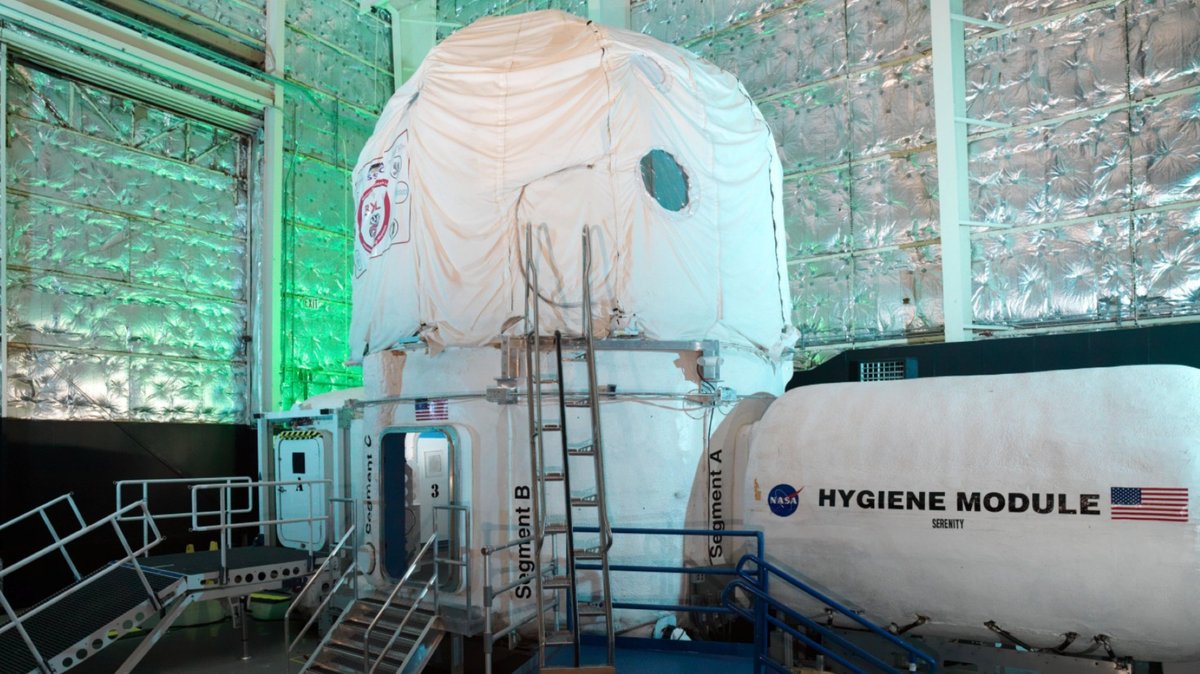
To test the problem, the researchers used NASA’s Human Exploration Research Analog, or HERA, at Johnson Space Center in Houston. HERA is a ground-based habitat built to mimic parts of a long-duration space mission, including isolation, confinement, structured operations and delayed communication.
In the study, participants inside the HERA habitat played the role of a spaceflight crew. Other participants at Michigan State University acted as Mission Control. Together, they worked through simulated mission tasks while researchers changed the amount of delay in their communication.
The design let the team watch how attention moved across the group. The researchers then used the results to calibrate a computational model. That model allowed them to test how larger systems might behave under different combinations of delay, experience, clarity and leadership structure.
The first study involved a 45-day simulated spaceflight mission to Mars. According to the journal article, the experiment included 84 people organized into seven 12-person virtual teams. Each team had four spaceflight crew members and eight mission control members.
The Mars setting matters because real missions will face communication limits set by physics. Signals travel at the speed of light and the distance between Earth and Mars changes as the planets move. Under some mission conditions, a simple question and answer could take long enough for a situation onboard to evolve before the reply arrives.
Why Delays Disrupt Mission Teams
Communication delay creates a coordination problem that can grow quietly. One group may still be discussing a first concern while another group has shifted to a second one. Both groups can be working hard and acting responsibly while their focus begins to separate.
The study’s abstract states that “communication delays impair team performance by disrupting collective attention.” That wording captures the mechanism. The delay weakens the shared mental spotlight that helps a distributed team act as one system.
In spaceflight, the cost of that split attention can be serious. A crew facing an equipment failure may need to decide which procedure to start. Meanwhile, engineers on Earth may be studying telemetry that arrived minutes earlier. If both sides organize around different versions of the problem, the next message can add more confusion instead of resolving it.
Delayed communication also changes how people phrase their messages. A quick spoken exchange allows immediate repair. Someone can ask for clarification, correct a misunderstanding, or narrow the question. With a long lag, every message needs to carry more context because the next chance to clarify may come much later.
That pressure affects attention. People must remember older information, predict what others will need and decide which issue deserves priority. The research suggests that communication delays reduce performance by making that shared focus harder to maintain from moment to moment.
The Three Habits That Keep Teams Aligned
The second part of the research used a computational agent-based model to explore possible ways to protect collective attention. The model examined how attention networks changed under different conditions. Three factors stood out: task experience, message simplicity and shared leadership.
Task experience gives people a stronger base for coordination. Experienced team members understand the work, the likely failure points and the cues that matter. That helps them infer what others may be thinking when direct conversation slows down.
Message simplicity helps because delayed teams rely heavily on each message. Clear, direct communication acts like a stronger signal. It gives others a cleaner cue about what deserves attention now. In a Mars mission, that could mean using structured updates, explicit priorities and language that avoids unnecessary complexity.
Shared leadership is the third factor. The study links distributed influence with better connectivity across the team. In practical terms, this means leadership can shift toward the person best positioned for the moment. A medical issue may call for a physician’s lead. A power problem may call for an engineer’s lead. A crew safety decision may require rapid onboard authority.
Carter described several possible interventions in the research summary, including trust-building before launch, simple communication training, structured debriefs, communication protocols and a clear sense of each person’s strengths. The goal is to help the whole system know where to look when the mission becomes difficult.
What This Means for Moon and Mars Missions
As NASA and its partners prepare for longer missions beyond low Earth orbit, the human side of exploration is becoming a more visible part of mission design. Spacecraft, habitats and life-support systems remain essential. So do the social and cognitive systems that let people use them under pressure.
The study is especially relevant to future Moon and Mars missions. Lunar crews will experience shorter delays than Mars crews, but they will still operate farther from Earth than astronauts aboard the International Space Station. Mars missions will push that separation much further.
For mission planners, the finding suggests that teamwork training should include attention management. Crews and ground teams may need rehearsals that simulate delayed exchanges, incomplete context and shifting leadership. These exercises can reveal where attention breaks down before a real mission depends on it.
The work also reaches beyond spaceflight. Many modern organizations already operate through delayed or asynchronous communication. Medical teams, emergency managers, remote engineers, research groups and global companies all face versions of the same problem. When people work across time zones or disrupted networks, collective attention can determine whether a group responds as one unit.
For deep space, the lesson is especially clear. Astronauts will need advanced machines around them and they’ll need dependable human networks behind them. The study gives that network a name and a target: keep everyone focused on the same thing when distance makes every message arrive late.