A study in PNAS reports that researchers from the Shanghai Institute of Organic Chemistry, Chinese Academy of Sciences, have developed Void-X, a generative AI model that predicts how atoms pack inside protein-protein interfaces. The work gives scientists a new way to think about protein design at the smallest structural scale.
Proteins drive much of life’s chemistry. They fold into precise shapes, attach to other molecules and form temporary or stable partnerships that help cells grow, communicate, repair damage and fight disease. When these interactions fail, the effects can ripple through the body.
The new model focuses on the crowded contact zones where proteins meet. Instead of starting with a whole protein shape, Void-X learns how atoms fit into tiny gaps at an interface. That atomic view could help researchers design future proteins that bind more tightly or behave more predictably.
The advance remains a computational result. It points toward new design strategies, while future experimental work would be needed to test whether protein complexes generated with this approach perform as intended in the lab or in living systems.
Void-X Builds Protein Interfaces From Atomic Clues
Void-X was designed around a simple physical idea. Stable protein complexes depend on how well atoms pack together across the places where two protein chains touch. A protein interface can look smooth at a larger scale, yet at the atomic level it contains cavities, ridges and chemical details that determine whether the partners hold together.
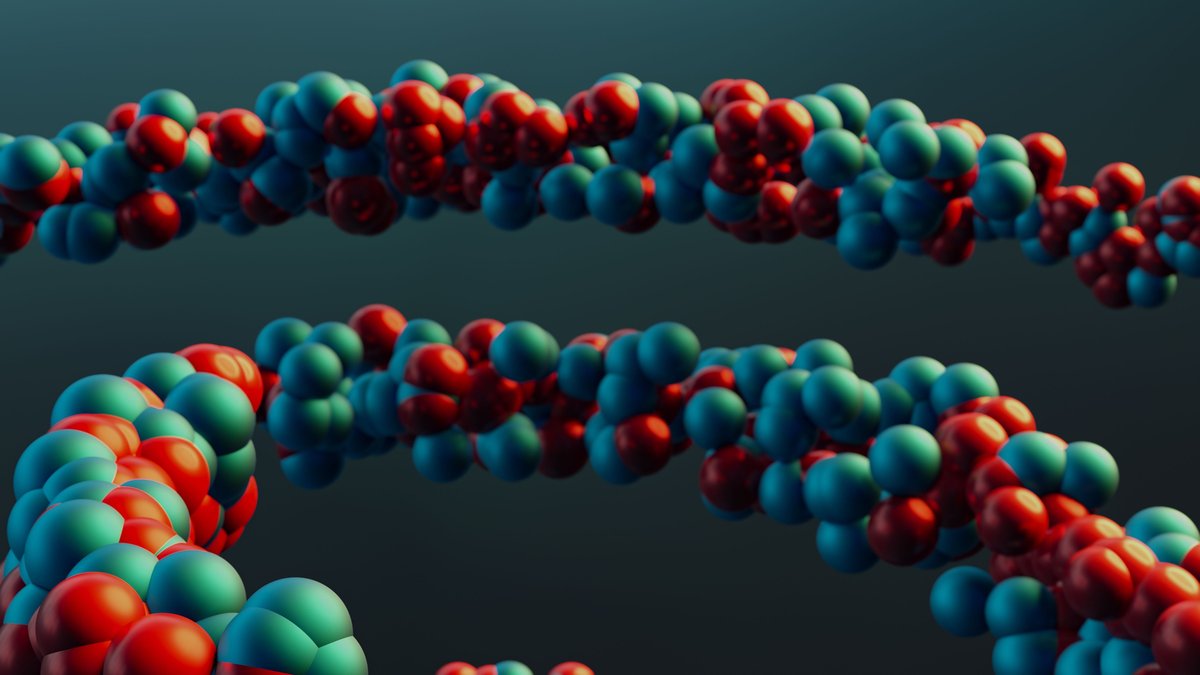
The model treats those contact zones as small three-dimensional puzzles. It sees a local arrangement of atoms as context, then predicts the missing atoms that would complete the packing pattern. This gives the system a way to learn the physical logic of protein interfaces from existing structures.
Many modern AI protein design systems begin with a broader shape. They generate a protein scaffold that matches a target region, then refine the amino acid sequence to improve binding. atomic-scale prediction starts closer to the interface itself. Void-X learns the local packing rules before a larger design is assembled around them.
That approach matters because proteins are built from atoms with specific sizes and chemical behaviors. A small mismatch can weaken a binding surface. A well-placed atom can help stabilize a complex. By working at this level, the model aims to capture the kind of detail that governs real molecular contact.
The researchers describe Void-X as an atomic filling model. In practical terms, it learns to fill structural voids in protein interfaces. The goal is to generate atomic clusters that fit tightly within a chosen region, giving designers a physically grounded starting point for building protein-protein interactions.
Why Protein Binding Matters for Medicine
Protein interactions sit at the center of many biological processes. Cells rely on them to relay signals, assemble molecular machines, recognize threats and control gene activity. A protein may briefly touch another partner to pass along a signal, or it may lock into a larger complex that performs a specific job.
Medicine already makes use of these interactions. Antibody therapies can bind disease-related proteins with high specificity. Insulin therapy replaces a protein hormone that the body needs for blood sugar control. Other treatments work by blocking, mimicking, or modifying protein activity.
For drug discovery, the ability to design protein binding surfaces could be powerful. Researchers may want to create a protein that attaches to a cancer target, interrupts a harmful interaction, or recruits immune cells to a diseased site. In each case, binding depends on fine structural details at the interface.
protein-protein interactions are especially difficult because the contact areas can be broad and flexible. Small molecules often fit into pockets. Protein partners may meet across larger surfaces that shift as they approach each other. That complexity makes atomic packing an important part of the design problem.
Delivery technologies are also improving. The research summary points to advances such as adeno-associated virus delivery and mRNA lipid nanoparticles. These tools can help move biological instructions or therapeutic molecules into the body. Better protein design could complement those delivery methods by expanding what researchers can build.
The Model Learns From Millions of Protein Clusters
To train Void-X, Jing Yang, Junying Yuan and James J. Chou assembled a large dataset from experimentally determined structures in the Protein Data Bank. Those structures gave the model examples of how atoms are arranged in real proteins and protein complexes.
The dataset contained more than 8 million spherical atomic clusters. Each cluster represented a small neighborhood of atoms taken from known protein structures. This let the model study local geometry across a huge number of examples, rather than relying on a few complete protein complexes.
During training, the researchers masked about 30% of the peripheral and spatially connected atoms in each cluster. The remaining atoms became the context. Void-X then learned to predict the missing part of the cluster from that context.
This setup resembles a fill-in-the-blank task at the atomic scale. A language model may learn by predicting missing words from surrounding text. Void-X learns by predicting missing atoms from a surrounding molecular environment. The comparison has limits, but it captures the broad training logic.
The model itself contains 172 million parameters. In AI systems, parameters are adjustable internal values that change during training. They help the model encode patterns from data. Here, those patterns involve distances, atom types and the packing relationships that appear in protein structures.
How Well Void-X Predicted Missing Atoms
The PNAS study reports two main accuracy results. Void-X reached 78.3% accuracy for intrachain atomic clusters and 68.2% accuracy for interchain clusters. Intrachain clusters come from within a single protein chain. Interchain clusters cross the boundary between protein chains, where binding occurs.
As the study abstract states, “Void-X achieves an overall accuracy of 78.3% and 68.2% for intra- and interchain spherical clusters, respectively.” That result is important because protein interfaces are often harder to predict than internal packing within one chain.
interchain clusters are challenging because they capture contacts between separate molecular partners. Those regions can depend on shape matching, chemistry and the orientation of both proteins. A model that can recover missing atoms there has learned useful information about how protein partners pack together.
The researchers also found that information entropy served as a useful indicator of prediction accuracy. In this setting, entropy reflects how uncertain the model is about possible atomic arrangements. Lower uncertainty can signal a more reliable prediction. Higher uncertainty can warn researchers that a local region may be harder to fill confidently.
This uncertainty signal could be valuable for design work. A predicted interface with many high-confidence local regions may deserve closer attention. A region with higher uncertainty may need more sampling, redesign, or experimental caution. That kind of self-assessment can help scientists decide which designs to pursue.
A New Route for Protein Design
Void-X adds a bottom-up route to the growing toolkit for protein engineering. It starts with atomic packing at a specified structural region, then generates local clusters that may help form a strong interface. This gives researchers another way to build candidate interactions from physical detail.
The model’s focus on atomic packing also makes the work useful as a conceptual shift. Protein design often involves large shapes and sequences. Void-X emphasizes the tiny contact patterns that make those shapes useful. Those patterns include local interactions among neighboring atoms and longer-range couplings with atoms farther away.
The study’s authors frame the method as complementary to existing protein design approaches. A broader design system could propose an overall protein shape. An atomic filling model could then help refine the contact region. Used together, these strategies may improve how scientists search the enormous space of possible protein interfaces.
Applications could reach drug discovery, synthetic biology and biomolecular engineering. In drug discovery, designers may seek binders that recognize disease-related proteins. In synthetic biology, engineered protein interactions could help build new cellular circuits or molecular assemblies. In basic research, models like Void-X can also test ideas about how proteins achieve stable contact.
The findings should be read with the right level of caution. Void-X has shown strong performance in computational prediction tasks using structural data. The next steps for the field would involve connecting such predictions to experimentally validated proteins, binding measurements and functional tests.
Even so, the work shows how generative AI can move deeper into molecular detail. By learning from millions of atomic neighborhoods, Shanghai Institute of Organic Chemistry researchers have built a system that treats protein contact as a matter of atoms fitting into place. For future protein engineering, that level of precision could become an important design advantage.