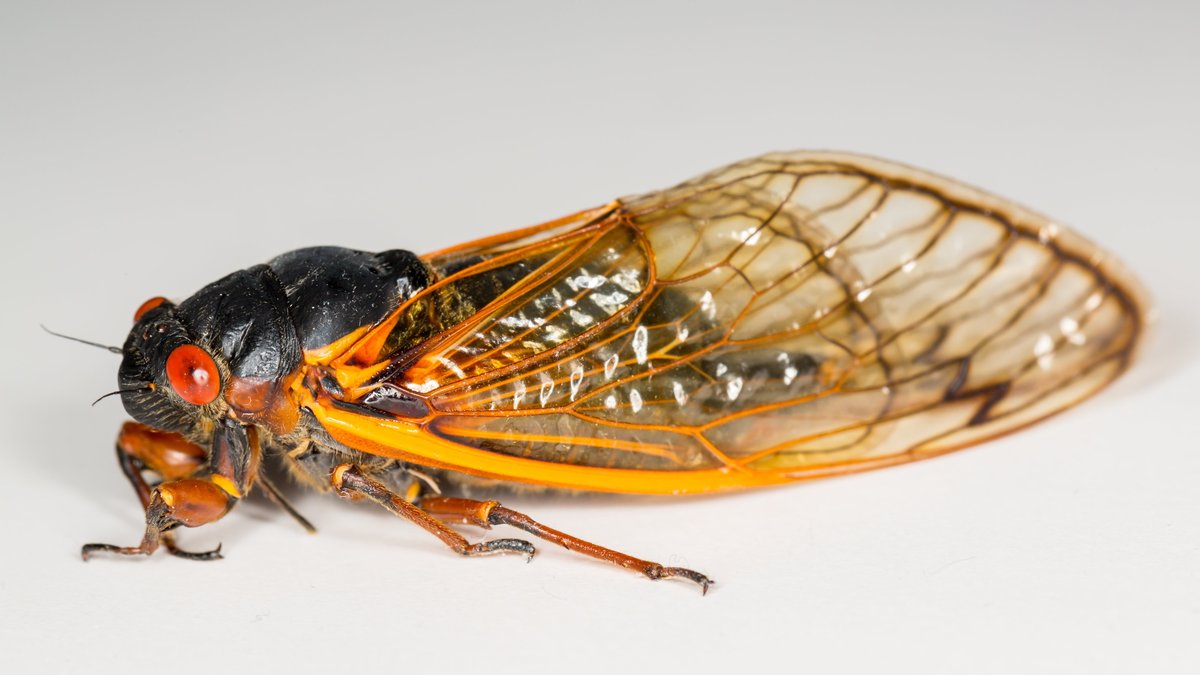
Eight and a half times more ants appeared on ground-level baits than on baits placed atop the clay towers of an Amazonian cicada, according to a study in Biotropica published on February 23, 2026. The research points to a surprisingly practical purpose for the strange rainforest chimneys: they help young cicadas avoid ants and may help manage airflow before the insects emerge as adults.
The study was led by Marina Mega of the Federal University of Rio de Janeiro, with coauthors Izadora N. Gonzalez, Maria Luiza Busato, Sara S. Feitosa, Rodrigo F. Fadini and Pedro A. C. L. Pequeno. Working in central Amazonia near Manaus, the team tested clay towers built by the Amazonian architect cicada, Guyalna chlorogena, during the underground juvenile stage of its life.
These small structures have puzzled naturalists because they rise from the forest floor like miniature smokestacks. They are made by cicada nymphs that spend most of their lives underground, feeding on root sap. Before adulthood, the nymph must climb out, split its old skin and transform into a winged insect. The new work suggests the tower gives that risky moment a better chance of success.
The paper’s abstract states, “Here, we show experimentally that towers of the Amazonian cicada Guyalna chlorogena reduce predation risk.” That sentence captures the heart of the discovery, though the study also points to a second role tied to gas exchange. In wet tropical soil, breathing can become complicated for a small animal sealed inside mud.
The Mystery of the Cicada Towers
On the rainforest floor near Manaus, the clay towers can look oddly engineered. They stand above the soil, often beside trees whose roots provide food for the cicada nymphs below. Their shape invites comparison to chimneys because each one rises from a vertical tunnel that leads down into the ground.
For years, scientists had described the towers and the behavior of the insects that make them. Earlier work showed that a tower can be occupied by a single nymph, repaired when damaged and reopened after certain changes in conditions. The structure also seemed tightly connected to the final stage before the insect becomes an adult.
The open question was function. A tower might shield the nymph from flooding, help with oxygen, reduce contact with predators, or serve several roles at once. Careful observation gave clues, but observation alone could leave multiple explanations alive.
The new study tackled that uncertainty with field experiments. Instead of only measuring tower shape, the researchers tested what happened when the towers were placed under two kinds of pressure. One experiment looked at ants. Another blocked the normal movement of air through the structure.
That approach makes the paper stand out. It turns an odd natural history puzzle into a testable case of insect engineering. The result is a clearer picture of cicada towers as useful structures built at a vulnerable point in an animal’s life.
How Young Cicadas Build Their Clay Chimneys
A cicada’s adult life is the loud and visible part, but the quieter work happens underground. Nymphs of Guyalna chlorogena live beneath the surface and feed on root sap. As adulthood approaches, they build a tower above the tunnel they already occupy.
The construction is remarkable because the animal works from inside. Earlier descriptions cited by the study report that the nymph softens clay with a clay and urine mixture, carries material on its head and pushes it upward. The top can be extended without the insect fully exposing itself at the surface.
That detail matters because exposure is dangerous. During metamorphosis, the nymph emerges at the top of the tower and remains there while it molts. Its new adult body needs time to harden. During those hours, escape is limited and ants become a serious threat.
The tower gives the insect a raised platform at exactly the moment it needs one. The new study found that height beyond basic elevation may matter less for ants than the simple fact that the bait and by extension the emerging cicada, is above the leaf litter. A small climb can change an ant’s path through the forest floor.
The structure also creates a connection between the underground tunnel and the surface air. In a humid rainforest, soil pores can fill with water after rain. A clay tower may help the nymph maintain a workable internal environment while it waits for the right conditions to emerge.
Ant Tests on the Rainforest Floor
The ant experiment had a deliberately simple design. The team placed bait on top of towers and on the nearby ground, then counted ant occurrence. The bait mixed water, wheat flour and sardines, which made it attractive to local ants.
Simple field methods were a strength here. In dense tropical forest, equipment-heavy approaches can become fragile fast. A repeatable bait test let the researchers compare tower tops and ground spots under real rainforest conditions.
The contrast in ant presence was large. The study reported ant occurrence around 80 percent on the ground and around 9 percent on towers. In statistical terms, ants were about 8.5 times more likely to occur at ground baits than at tower baits.
This finding supports an anti-predator function for the towers. During emergence, a cicada nymph sits where the bait was placed in the experiment, at the top of the structure. If ants are less likely to reach that position, the tower can buy time during molting.
Tower height itself did not appear to drive ant occurrence in the same way. The study found that the presence of a tower mattered more than fine differences in height for the ant test. In plain terms, getting off the ground may provide much of the benefit.
The Airflow Experiment
The second major question concerned breathing. The nymph lives inside a clay structure connected to a deep tunnel. If air exchange matters, blocking the tower should change how the insect responds after the blockage is removed.
To test this idea, the researchers sealed towers in the field. The source material describes an unusual tool choice: latex condoms were used because their shape and stretch helped cover the tower tops. The goal was practical, which was to obstruct normal air movement through the clay structure.
The setup turned each tower into a small natural experiment. With airflow restricted, oxygen and carbon dioxide exchange would likely shift inside the tower and tunnel system. After the seals were removed, the researchers could measure whether the nymphs changed tower growth or repair behavior.
The study also included a water addition experiment. That treatment produced growth rates comparable with controls. The sealing treatment, by contrast, showed a size-linked pattern. Larger towers had a stronger growth response after obstruction.
This result suggests that the towers may help regulate the air available to the nymph. The study remains cautious about the exact mechanism. Even so, the pattern fits the idea that a tower can function as part of the insect’s respiratory environment.
Why Bigger Towers Reacted Differently
Larger towers responded differently after sealing and that size effect is one of the most intriguing parts of the work. In the sealing treatment, growth rate increased with original tower size. The paper identified a threshold near 19.6 centimeters, above which sealing had a positive effect on growth.
That does not mean every large tower works the same way. Natural structures vary because soils vary, nymphs vary and rainfall can change the conditions around a tower overnight. The study’s result gives a pattern, then points to the need for more testing.
One likely explanation involves geometry. A taller or larger tower may have more internal space and more clay surface involved in air exchange. That could change how quickly stale air builds up when the top is sealed.
Small towers may have less buffer during obstruction. When airflow is blocked, the nymph inside could face a more immediate challenge. Larger towers may allow a stronger rebuilding or growth response once normal conditions return.
The size finding also helps explain why the towers can become so conspicuous. Some are tall enough to look extravagant for an insect. If tower size affects air movement or recovery after stress, then bigger construction may carry a survival advantage under some conditions.
A Mud Structure That Acts Like Biology
The researchers describe the towers as an extended phenotype. That phrase means a trait expressed outside the body through something an organism builds or changes. A spider web, a termite mound and a beaver dam are familiar examples.
For Guyalna chlorogena, the tower is built from clay, but its effects reach into survival. It changes the nymph’s relationship with ants on the forest floor. It may also change the flow of gases around a buried insect that depends on oxygen while waiting to emerge.
This idea makes the tower feel less like debris from digging and more like a constructed tool. The cicada nymph maintains the structure, repairs it and adjusts it while staying mostly hidden. That behavior links the animal’s body to the physical world around it.
The study’s field setting matters as well. The work was conducted in July 2025 in the Biological Dynamics of Forest Fragments Project area in central Amazonia. That landscape gives the research ecological realism because the experiments took place where the towers naturally occur.
The project was supported by Instituto Serrapilheira and field procedures were carried out under Brazilian conservation authorization cited in the paper. Those details underscore that the discovery came from hands-on rainforest biology, with simple tests designed for difficult terrain.
What the Discovery Reveals About Rainforest Survival
The discovery shows how much engineering can be packed into a small patch of rainforest soil. A cicada nymph that spends much of its life unseen can reshape its surroundings before the brief, dangerous passage into adulthood.
That passage is especially risky because molting leaves the insect exposed. Ants are abundant on tropical forest floors and a newly emerging cicada has limited defenses. A raised clay tower can reduce encounters long enough for metamorphosis to proceed.
The airflow side of the study adds another layer. Wet tropical soils can create difficult gas conditions for underground animals. A tower that improves exchange between a tunnel and the atmosphere could help the nymph handle heavy rain, waterlogged soil, or other environmental stress.
The work also opens new questions. Future research could test how soil type changes tower performance, how rainfall affects the need for rebuilding and whether taller towers improve survival across many seasons. Researchers may also examine whether tower size influences the timing of adult emergence.
For general readers, the lesson is wonderfully concrete. A small clay chimney in the Amazon can serve as a predator shield and a possible breathing aid. Built grain by grain by a hidden insect, it turns mud into a survival system.