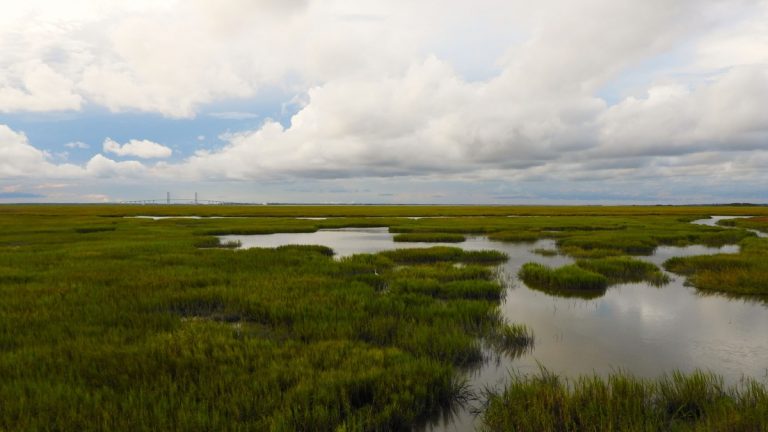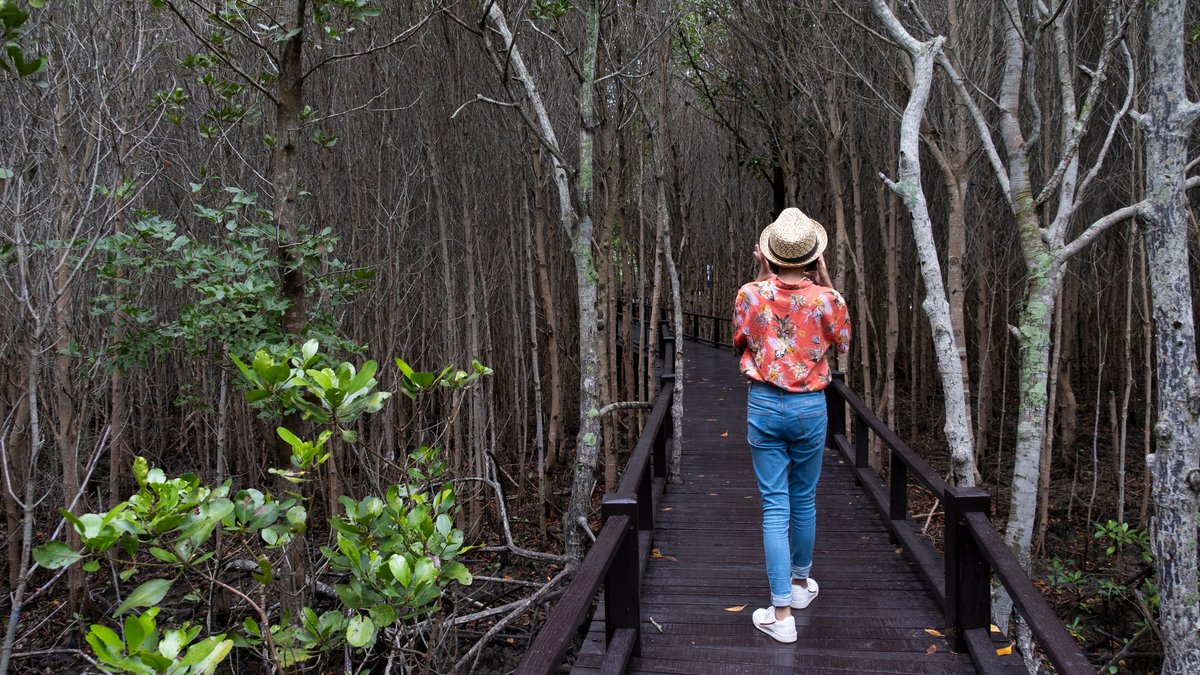
Mangrove forests might not look impressive at first. Their tangled roots rise out of muddy, dark water and their thick trunks crowd the shoreline. The air is hot, the water is salty and the ground feels unstable. But despite this rough appearance, mangroves play a powerful and important role in coastal environments.
These forests are valuable because they do many things at once. They act as natural barriers, helping protect coastlines from waves, storms and flooding. Their roots create safe spaces where young fish and other marine animals can grow. They also trap and build up sediment, which helps keep shorelines from eroding. As climate change brings rising sea levels and stronger storms, these benefits are becoming even more critical.
What surprises many people is how much impact mangroves have, even though they cover only a small part of the Earth. Their presence supports fisheries, coastal communities, birds, crabs and even ecosystems connected to coral reefs. When mangroves are healthy, nearby waters and wildlife tend to thrive. But when they are lost, the damage can spread quickly across the entire coastal system.
Life at the Land – Sea Interface
Mangroves are special coastal plants that grow where land meets the sea, thriving in salty, waterlogged conditions that most plants cannot tolerate. Found mainly in tropical and subtropical regions, they have unique adaptations that help them survive changing tides and low oxygen levels. Mangroves are important because they protect coastlines from erosion, provide habitat for many animals and support healthy coastal ecosystems.
Mangroves grow in conditions that most plants couldn’t survive. The water constantly shifts between fresh and salty, the soil is soaked and there’s very little oxygen in the mud. On top of that, tides rise and fall every day. Yet mangroves have adapted to all of this, turning a harsh coastal edge into one of the most productive ecosystems around.
Those tangled roots are part of what makes this ecosystem so remarkable. They slow the flow of water, trap drifting debris and form a maze of shelter where small animals can hide. Over time, leaves, algae and other organic matter build up among them, creating a rich source of food for tiny creatures. As these small organisms thrive, larger ones begin to arrive as well. Gradually, a vibrant and complex living system develops around the trunks, the mud and the shifting waterways.
Mangroves also help hold coastlines together. Their roots trap sediment that would otherwise be washed away, gradually building up the land. This is especially important in areas constantly shaped by waves and currents. Over time, a mangrove forest becomes a living structure – growing, shedding leaves and reshaping the shoreline season after season.
For nearby communities, mangroves provide steady, often unseen support. They improve fishing grounds, calm coastal waters and filter materials flowing from rivers into the sea. Many people rely on these ecosystems for food, protection from storms and their livelihoods.
More broadly, mangroves show how powerful a small habitat can be. Even a narrow strip of forest can influence both the land behind it and the sea in front of it. Few ecosystems have such a wide-reaching impact for their size.
Carbon Trapped in Mud
Scientists pay close attention to mangroves because of their remarkable ability to store carbon. Most of this carbon is not held in the trees themselves, but deep in the soil beneath them.
As mangroves grow, they absorb carbon dioxide from the atmosphere. Over time, fallen leaves, dead roots and other organic material build up and become buried in waterlogged soils. Because these conditions contain very little oxygen, decomposition happens slowly. As a result, carbon is locked away for long periods instead of being quickly released back into the air. This long-term underground storage is a major reason mangroves are so important in regulating the climate.
What makes mangroves especially striking is where they store most of their carbon. In many land forests, attention is usually on the trunks and branches, but in mangroves, a large share of carbon is actually stored underground. This is known as “blue carbon,” which refers to carbon captured and held in coastal ecosystems, especially within their soils. Beneath mangrove forests, waterlogged mud accumulates layers of slowly decomposed plant material, forming a deep natural archive that locks away carbon for long periods and strengthens their role in regulating the climate.
A Nature study on mangrove soils found that coastal setting strongly shapes how much carbon those soils hold. It also showed that some earlier estimates missed the mark by a wide margin, with underestimates in certain carbonate settings and overestimates in some deltaic ones. That matters because climate policy depends on getting the numbers right.
A study published in PLOS ONE found that tropical coastal wetlands are among the most carbon-rich ecosystems on Earth. In the Mexican Caribbean sites it examined, mangrove forests stored more carbon than many land-based forests, with most of it found in the soil rather than in the trees. This shows how a seemingly shallow, muddy coastline can actually hide a vast soil carbon reserve.
However, this stored carbon is vulnerable. When mangroves are cleared, wetlands are drained, or natural water flows are disrupted, the buried organic matter can be exposed and begin releasing carbon back into the atmosphere. This means that protecting the trees alone is not enough – preserving the underlying soil is just as important.
This is why mangroves are often highlighted in climate discussions. They continuously store carbon while also supporting biodiversity and protecting coastlines from storms and erosion. Few natural systems provide so many benefits in such a small area.
Natural Barriers Against Waves
Mangroves protect coastal areas from storms and surges by acting as a natural barrier between the sea and the land. Their dense roots and closely packed trunks slow down strong winds and reduce the height and force of incoming waves before they reach the shore. During storm surges, they help absorb and spread out floodwaters, which lowers the speed and impact of flooding inland. Their roots also hold soil in place and trap sediments, reducing erosion and helping coastlines stay more stable even in extreme weather.
Mangroves are most effective when they are part of a wider coastal protection system. They work alongside features like mudflats, coral reefs, sand dunes and even human-made structures such as dikes and seawalls. In some areas, mangroves grow in front of these defenses, forming a natural first line of protection that weakens waves before they reach harder infrastructure. This layered approach is increasingly being explored in climate adaptation planning because it offers more flexible and resilient protection against coastal risks.
Their value is also measurable in economic and human terms. Recent flood modeling suggests that mangroves combined with dike systems could prevent around $800 million in flood damages globally each year and help protect about 140,000 people from flooding. As climate change intensifies storms and sea-level rise, these benefits are expected to grow even further – highlighting just how important these coastal forests are.
Still, the appeal of mangroves goes beyond simple calculations. Unlike a seawall, which is fixed and unchanging, a healthy mangrove forest can grow, expand and recover after damage if conditions allow. This makes it a living form of coastal protection, one that can strengthen over time rather than gradually wear down.
That said, mangroves are not a one size fits all solution. Their ability to protect coastlines depends on factors like forest width, species present, tidal conditions, local landscape and overall ecosystem health. Even so, in the places where they naturally belong, mangroves can make shorelines more resilient and less vulnerable to erosion and storm damage, something many coastal areas urgently need.
Safe Havens for Young Marine Life
Ask a marine biologist why mangroves matter and fish are often one of the first answers. The submerged roots create sheltered, shallow habitats that are ideal for young marine animals. Within this tangled structure, predators have a harder time moving, food is more abundant and water conditions are calmer than in the open sea. For many juvenile fish and other species, this environment can mean the difference between surviving early life or not.
Research even shows that some fish are guided toward mangroves by chemical cues. A study in Scientific Reports found that several fish species are attracted to the scent of mangrove habitats, likely because they signal safety, food and structural protection. In simple terms, young fish are naturally drawn to places that improve their chances of survival.
This nursery function supports much more than just fish. Coastal fisheries depend on species that spend their early stages in mangroves. Crabs, mollusks and other invertebrates thrive among the roots and mud, while birds also feed and nest in these rich environments. Nutrients move through the system and help sustain nearby estuaries, seagrass beds and even coral reefs. In this way, mangroves help hold entire coastal food webs together.
The physical structure of mangroves adds to this protection. Their roots create shade, slow water movement and allow fine sediments to settle. What might otherwise be an open, exposed shoreline becomes a complex habitat filled with shelter and hiding places – crucial for species that cannot afford constant exposure.
Many coastal communities rely on these nursery areas more than they realize. A large portion of the fish caught offshore once depended on mangrove habitats during their earliest life stages. When mangroves are lost, the effects are not limited to the shoreline – they can ripple outward through fisheries and entire marine ecosystems.
How Mangrove Loss Accelerates
Mangroves are resilient ecosystems, but they are also highly vulnerable to human activity. Coastal development can clear large areas, waterways may be redirected and pollution can alter the flow of sediments and nutrients they depend on. One of the most significant pressures is land conversion, especially for agriculture and aquaculture. When the natural water flow is disrupted, mangrove forests can decline even if many trees are still standing.
A PLOS ONE study on Mexican coastal wetlands identified several key drivers of mangrove loss and degradation, including pollution, coastal development, hydrological changes, agriculture and aquaculture expansion. The latter is particularly important because shallow coastal areas are often seen as economically valuable, yet replacing mangroves with ponds or infrastructure can remove multiple ecosystem benefits at once.
Because mangroves function as connected systems, damage in one area can quickly spread. Losing even a small section can shift sediments, increase flood risk, reduce habitat for juvenile marine life and make stored carbon more likely to be released. What may appear as a local change can therefore have wider regional effects, especially in densely populated coastal zones.
At the same time, climate change adds further pressure. Rising sea levels, stronger storms and shifting rainfall patterns all stress these ecosystems. A 2024 assessment highlighted in recent reporting suggests that more than half of the world’s mangroves could be at risk of collapse by 2050, underscoring the urgency of protection efforts.
Aquaculture conversion and poorly planned development often draw the most attention, but smaller disruptions can also be highly damaging. A blocked tidal channel, changes in freshwater flow, or repeated trampling from poorly executed planting efforts can all weaken a mangrove area that may still look healthy at first glance. In reality, mangroves depend on a precise balance of water movement and timing and even subtle changes to that rhythm can gradually undermine the entire ecosystem.
That’s why mangrove conservation needs a systems approach. A mangrove forest is not just trees, but a connected system of roots, mud, tides, species and water flow all working together. If one part is protected but the others are ignored, the entire coastline can still become unstable and gradually fall into decline.
Restored Mangroves, Restored Coastal Protection
The good news is that mangroves can recover when restoration is done properly. The most successful projects begin by understanding the basics of the site – how water flows, how sediment moves and what the land used to be like. If tides can move freely and the physical conditions still support mangroves, natural regrowth or careful planting can help restore a damaged coastline. In the end, success depends on choosing the right approach for the specific environment.
Mangrove restoration is important because it helps rebuild a vital coastal ecosystem that protects both nature and people. Mangroves reduce wave impact and prevent coastal erosion, offering natural defense against storms and flooding. Their complex root systems also serve as nurseries for fish, crabs and other marine life, supporting biodiversity and helping local fisheries recover. In addition, mangroves improve water quality by trapping sediments and filtering pollutants, while also storing large amounts of carbon that help combat climate change. Overall, restoring mangroves strengthens coastal protection, supports livelihoods and enhances the health of marine environments.
A recent 2025 paper estimated that restoring 1.10 million hectares of mangroves worldwide could remove about 0.93 gigatons of carbon dioxide, at an implementation cost of about $10.73 billion in 2022 international dollars. It also mapped where restoration could deliver high impact at lower cost, which is exactly the kind of detail governments and funders need.
That same work helps ground public discussion in reality. Mangrove restoration is often framed as a simple feel-good environmental effort, but the data shows a more practical picture shaped by costs, feasibility and long-term returns. In many regions, the climate benefits alone are already significant. When fisheries support and flood protection are included, the long-term payoff becomes even stronger.
An expert quoted in an expert report put it neatly. Climate adaptation specialist Timothy Tiggeloven said, “We used a published mangrove restoration tool,” to identify where mangroves had been lost and where conditions still favored a return. That approach matters because a tree planted in the wrong place is only a photo opportunity.
In practice, restoration is most effective when it is paired with protection. Preserving healthy, intact mangrove forests is usually far more cost-effective than trying to rebuild them after they are gone. While restoring degraded areas can deliver major ecological and climate benefits, the most effective strategy is often a combination of both: protecting what still exists, restoring what can recover and avoiding the practices that led to the damage in the first place.
For a world facing hotter temperatures, rising seas and increasingly crowded shorelines, mangroves offer a rare combination of benefits. They store carbon-rich soils and support young marine life by providing safe nursery habitats. They also reduce flood risk, help stabilize coastlines and hold shorelines in place. All of this happens at the constantly shifting edge between land and sea. That is why mangroves matter so much and why protecting them is one of the most reliable investments a coastline can make.
Mangroves are one specialized form of wetland forest. Compare their coastal setting with trees that grow in swamps, floodplains and marsh edges and wetland landforms.
Mangroves are one part of the coastal blue-carbon system shared with salt marshes and seagrass.