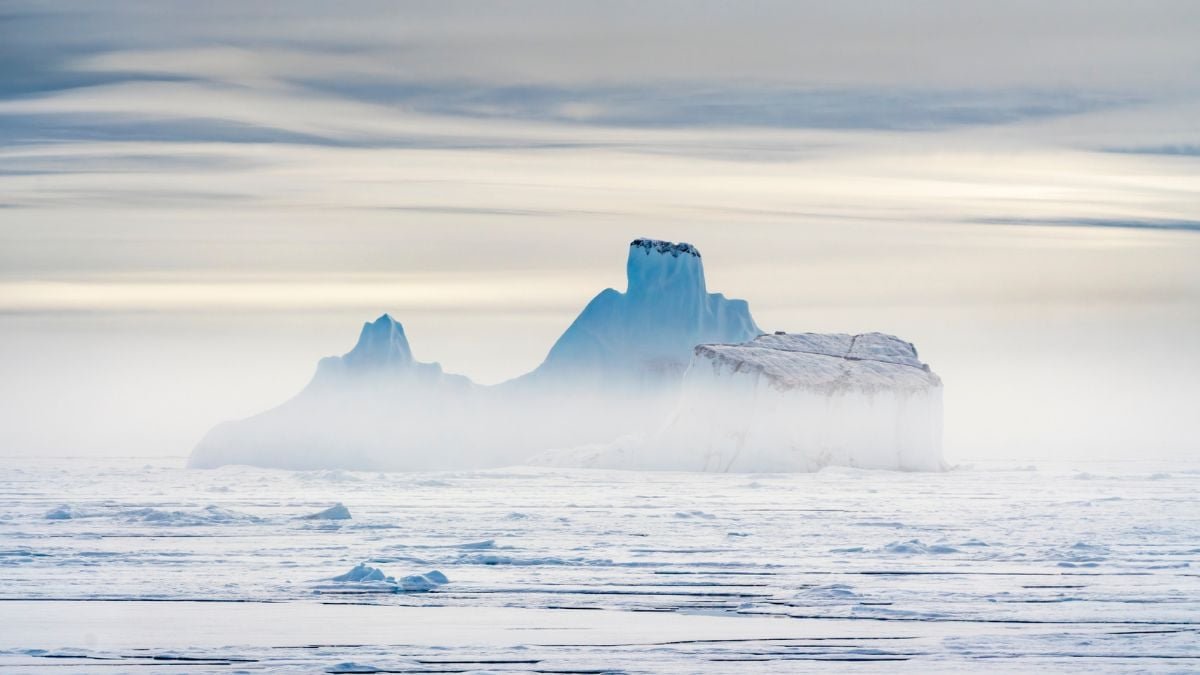
A study in Nature found that climate-driven iceberg traffic is carrying the effects of warming glaciers into deep Arctic ecosystems. The work links glacier change near the surface to new hard-bottom habitat on the seafloor, where life can take hold nearly 2,500 meters below the ocean surface.
Researchers led by the Alfred Wegener Institute and the Woods Hole Oceanographic Institution, with collaborators including DTU Space, analyzed decades of iceberg observations in the Arctic. Their results show a sharp rise in icebergs moving through the Fram Strait, the gateway between northeast Greenland and Svalbard.
The finding gives climate change a deeper footprint. Icebergs that break from glaciers can carry rocks and sediment far offshore. As they melt, those materials fall to the ocean floor and create patches where sponges, sea anemones and other seafloor animals can attach.
Iceberg Traffic Has Quadrupled Since 2000
The clearest number in the study comes from the Fram Strait. Since the year 2000, the occurrence of icebergs there has quadrupled. The strait sits between northeast Greenland and Svalbard and it serves as a major pathway for ice moving out of the Arctic Ocean.
To build that picture, the researchers combined nearly 40 years of iceberg observations with satellite data, sea-ice models and seabed studies. That mix allowed them to connect changing glacier behavior with drifting icebergs and with life on the deep ocean floor.
The study also found that iceberg groupings have changed. The share of groups containing more than five icebergs from Greenland and the Russian Arctic has increased by 4.5 percent per decade since the turn of the century. That trend points to more frequent clusters of ice moving through Arctic waters.
For climate scientists, the result adds a new layer to the familiar story of melting ice. “When Greenland’s ice melts, sea levels rise,” said Shfaqat Abbas Khan, a professor at DTU Space and co-author of the study. The same melting also sends more drifting ice into ocean pathways that reach far from the glaciers themselves.
How Icebergs Seed the Deep Seafloor
Icebergs begin as pieces of glacier ice that break away and enter the ocean. Some carry embedded stones, gravel and fine sediment that were picked up as the glacier moved across land. Once afloat, the iceberg can drift for hundreds of kilometers before it releases that cargo.
As the ice melts, heavier material sinks through the water column. Coarser stones eventually settle on the seabed. Scientists often call these stones dropstones, a plain name for a powerful ecological effect.
Much of the deep seafloor in these regions is soft sediment. Animals that need firm surfaces have fewer places to anchor themselves there. A stone dropped by an iceberg changes that local setting and can become a small island of hard substrate.
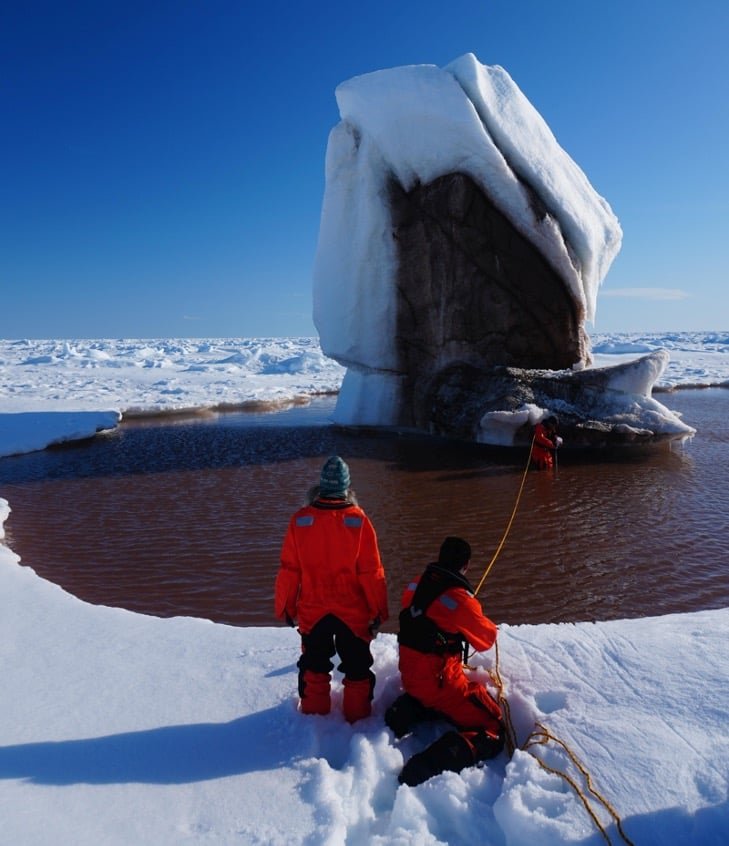
Those hard patches matter because many seafloor organisms live attached to surfaces. Sponges and sea anemones can use stones as footholds. Over time, those footholds may support a more varied community than the surrounding muddy bottom.
“The effects can be traced from the glaciers in Northeast Greenland to the seabed several thousand meters below the ocean surface,” Khan said. That connection is the study’s central message. The movement of ice above the sea can reshape habitat far below it.
New Habitat 2,500 Meters Below the Surface
Nearly 2,500 meters beneath the ocean surface, the deep Arctic seafloor is dark, cold and slow to change by human standards. The new study shows that iceberg-borne rocks can alter that setting by adding hard-bottom habitats to areas otherwise dominated by soft sediment.
For animals that attach to surfaces, the difference can be decisive. A sponge larva that settles on mud may have little chance to persist. A stone offers stability, height and a surface that can support growth.
The researchers describe this as a change in benthic biodiversity. Benthic life includes the organisms living on or near the seafloor. In the Arctic deep sea, where conditions are harsh and food is limited, even scattered rocks can have outsized ecological importance.
These habitats are created by a chain of events that starts on land. Glaciers loosen and carry sediments. Icebergs calve into the sea. Drift and melting distribute that material offshore. The final result appears on the bottom, where the rocks become new structure for marine life.
The study stays focused on a specific mechanism. More icebergs mean more opportunities for transported debris to reach the seabed. That process can expand the availability of hard surfaces where attached organisms can live.
Why Greenland’s Glaciers Are Sending More Icebergs North
Several large glaciers in northeast Greenland have become less stable over recent decades, according to the DTU account of the study. As these glaciers release more ice, iceberg traffic through the Arctic increases. The Russian Arctic also contributes to the growing movement of icebergs described by the research team.
Sea ice conditions help explain why more icebergs can travel farther. As sea ice has shrunk and become more mobile, icebergs have fewer barriers to long-distance drift. That lets glacier fragments move through Arctic waters and carry their embedded material away from land.
The result is a direct pathway between warming, glacier behavior and deep-ocean habitat. The researchers describe a climate-driven link connecting glacier change at the surface, amplified iceberg traffic and hard-bottom habitats on the deep seafloor.
This pathway also shows why the Arctic can respond in linked ways. A change in glacier stability affects iceberg formation. A change in sea ice affects iceberg movement. A change in iceberg movement affects where stones and sediment land on the seafloor.
The work highlights Greenland glaciers as drivers of change beyond sea level. Their retreat and instability can send physical material into the marine environment, where it becomes part of the ecology of the deep ocean.
A Growing Risk for Arctic Shipping
Icebergs also matter above the surface. As reduced sea ice opens more navigable water, cruise ships, cargo vessels, fisheries and other Arctic activities may face more encounters with drifting ice. The study points to that risk as part of the broader consequences of increased iceberg traffic.
The Arctic shipping picture is changing because sea ice is declining and routes are becoming more accessible during parts of the year. In that setting, more icebergs can create a practical hazard. A vessel traveling near ice-covered waters needs reliable information about where icebergs are moving.
Icebergs can be difficult to manage because they drift with winds, currents and sea-ice conditions. Their paths can shift as surrounding ice breaks up or changes speed. Larger numbers of icebergs increase the need for careful monitoring.
The study therefore supports improved ice monitoring and warning systems. Better observations could help shipping, fisheries and research operations plan safer routes through Arctic waters. Those systems would also help scientists track where iceberg debris may reach the seafloor.
For the public, the shipping risk makes the finding easier to picture. The same icebergs that create new ecological structure on the deep seabed can also affect human movement at the ocean surface.
What Scientists Need To Track Next
Future work will depend on watching the full system, from glacier fronts to the deep sea. The study draws strength from combining many kinds of evidence, including long-term iceberg observations, satellite records, sea-ice modeling and direct seabed research.
That combination is important because no single measurement captures the whole chain. Satellites can help show where icebergs move. Models can help estimate how sea ice shapes drift. Seabed studies reveal the ecological effects after rocks and sediment settle.
Scientists will need to keep tracking how often icebergs appear, where they come from and how they travel. The Fram Strait will remain a key region because it funnels ice between Greenland and Svalbard. Changes there can reveal how the Arctic Ocean is exporting the effects of glacier melt.
“The Arctic is responding faster to global warming than most other places on Earth,” Khan said. That speed raises the value of long-term records. It also means that ecological changes in remote deep-sea habitats may be unfolding while the surface climate shifts.
The study gives researchers a practical target for future observation. By following iceberg drift, glacier stability, sea-ice conditions and seafloor communities together, scientists can better predict how Arctic warming will change both marine ecosystems and human activity in the region.